

Summary Findings
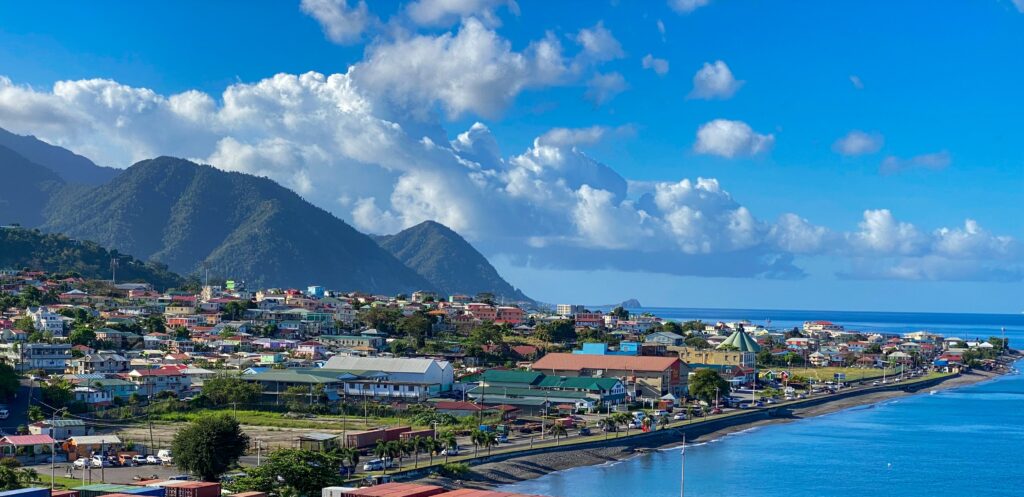
Dominica is a small volcanic island located in the eastern Caribbean Sea as part of the Windward Islands chain. Due to its location, the country is susceptible to frequent impacts from hurricanes and storms, which disrupt the lives and livelihoods of Dominica’s population of just over 70,000 people. Five days after Hurricane Maria devastated the island in 2017, Prime Minister Skerrit declared that Dominica would become the world’s first climate-resilient nation, outlining a plan to reduce the impacts of, and time to recover from, extreme weather events, as well as boosting the country’s overall development trajectory. This plan would become the Climate Resilience and Recovery Plan 2020-2030.
This CORVI Rapid Assessment has identified three major clusters of climate risk and vulnerability in Dominica.1For more details about the CORVI methodology, please see Appendix 3 [internal link]. The first cluster relates to economic damage from the impacts of extreme weather, especially hurricanes, heavy rainfall (including consequent flooding and landslides), and extreme heat events. Dominica’s economy relies on industries that are vulnerable to climate change impacts, especially tourism (12% of GDP and 11% of employment) and agriculture (22% of GDP and 40% of employment).2“Dominica: Selected Issues”. IMF Country Report No. 23/247. International Monetary Fund. July 2023. The government has identified these industries as key growth areas,3“National Resilience Development Strategy – Dominica 2030”. https://observatorioplanificacion.cepal.org/sites/default/files/plan/files/Dominica%202030The%20National%20Resilience%20Development%20Strategy.pdf and this growth must be climate resilient. Tourism is susceptible to flooding and landslides which can destroy hotels, hiking trails, and beaches while flooding and extreme heat can also damage or kill crops, wiping out incomes. Market Losses from Extreme Weather Events scored as the third-highest vulnerability indicator in the assessment (score of 8.2 out of 10.0).4All indicators are scored on a 1 (lowest vulnerability) to 10 (highest vulnerability) scale relative to other countries in the Caribbean. In addition, many of Dominica’s coastal communities are located at the base of steep mountains and their houses are often damaged, destroyed or swept away by landslides, strong winds, and flooding. The frequency of category 4 and 5 hurricanes is projected to increase by 25-30%,5“Commonwealth of Dominica Country Analysis: Resilience to Climate Change at a Glance”. OECS Climate and Disaster Resilience Unit. August 2021. https://rcc.cimh.edu.bb/files/2021/08/WW-DOMINICA_V3.pdf storms are now twice as likely to strengthen to become a Category 3+ hurricane within 24 hours,6Erdenesanaa, Delger. “Atlantic Hurricanes Are Getting Stronger, Faster, Study Finds”. The New York Times. October 19, 2023. https://www.nytimes.com/2023/10/19/climate/hurricane-intensity-stronger-faster.html and extreme heat events are becoming more frequent.7“Commonwealth of Dominica Country Analysis: Resilience to Climate Change at a Glance”. The damage from extreme weather events to commercial infrastructure and ports was also identified as medium-high risks, as was the capacity of the current disaster response.
The second cluster points to the need for protection for vulnerable marine and coastal ecosystems. These ecosystems protect against storm surges, provide habitat for marine life, sequester carbon, reduce coastal erosion, and attract tourists. Dominica’s 0.8 km2 of coral reefs play an important role in the country’s tourism industry and provide habitat for many of the country’s fish species. Approximately 10-15% of coral coverage was lost between 2005 and 2015,8Kramer PR, Roth LM, Constantine S, Knowles J, Cross L, Steiner S. 2016. “Dominica’s Coral Reef Report Card”. The Nature Conservancy. 2016. https://www.agrra.org/wp-content/uploads/2016/06/DMA-Report-Card_2016_WebLowRes.pdf and the Level of Coral Reefs Coverage scored as the highest vulnerability indicator in this assessment (9.2 out of 10.0). Seagrasses are another important marine ecosystem that helps protect coral reefs and sequester carbon dioxide at high rates. Only five percent of Dominica’s 10 km2 of seagrasses are located in the country’s marine-managed areas, and sediment runoff, storms, and the invasive seagrass Halophila stipulacea all threaten native seagrasses.9Ibid. Both corals and seagrasses provide habitat for Dominica’s fish stocks. These fish stocks are an important component of the country’s resilience to extreme weather events, as residents often turn to subsistence fishing when the tourism industry suffers a downturn. Dominica’s marine and coastal ecosystems are adversely affected by direct removal and damage, overfishing, coastal development, pollution, sedimentation, warming ocean temperatures, inadequate wastewater treatment, and increasingly large and frequent sargassum (Sargassum spp.) blooms.10Ibid. Nearshore and offshore fish stocks were both identified as medium-high risk, which may increase vulnerability to extreme weather events as local fisheries can provide food security and a source of income in the aftermath of an extreme storm event.
The third cluster is the technical and financial resource constraints to improving resilience by the Government of Dominica and other actors. The Climate Resilience Execution Agency of Dominica (CREAD), the lead and coordinating agency for building climate resilience in Dominica, established after Hurricane Maria in 2017, has coordinated a cutting-edge effort to plan for climate resilience and unlock investment in support of Dominica’s goal of becoming the world’s first ‘climate resilient nation’. Stakeholders in the CORVI workshops observed that CREAD’s efforts are hampered by a limited pool of people on the island with the necessary technical capacity, driven in part by “brain drain”. Dominica has one of the highest net emigration rates in the world,11“Commonwealth of Dominica: Updated Nationally Determined Contribution”. Government of Dominica. July 4, 2022. https://unfccc.int/sites/default/files/2022-07/The%20Commonwealth%20of%20Dominica%20updated%20NDC%20July%204%20%2C.pdf and experts rated the Percent of Adult Citizens Living Outside the Country as the second-highest vulnerability in this assessment (score of 8.4 out of 10.0). A high level of public debt and a large informal economy also constrain the ability of the government to invest in climate resilience. Although public debt has fallen since its peak in 2020, the World Bank and IMF rated Dominica as at a high risk of debt distress in 2020.12“Dominica: Joint World Bank-IMF Debt Sustainability Analysis”. World Bank Group. May 2022. https://documents.worldbank.org/en/publication/documents-reports/documentdetail/440801653321436579/dominica-joint-world-bank-imf-debt-sustainability-analysis Debt repayment costs reduce available funding and elevated debt levels make it more difficult for Dominica to access international finance. A large informal economy, which the IMF estimates accounts for nearly half of Dominica’s economy, limits tax revenue as informal firms pay little or no tax. Both public debt and the informal economy were rated as medium-high risks.
During the in-person workshop, some participants also raised two additional concerns. The first was that government data collection and data sharing have worsened in recent years. The statistics department has reportedly suffered from a loss of resources and capacity, and the government is still using population data from the 2011 census and a previous project to build a digital data-sharing platform has fallen short. The second concern is that project implementation has suffered, including a decline in the creation and use of standard operating procedures. This loss of capacity is due in part to a loss of legacy knowledge when the government is unable to replace technical staff who leave the country.
Priority Recommendations
Based on the above risks and vulnerabilities we developed three priority areas of action to build climate resilience in Dominica.
Strengthen the Institutional Framework for Integrated Climate Resilience
The scheduled conclusion of CREAD’s mandate at the end of 2023 provides an opportunity to build on ongoing efforts while also presenting the risk of losing momentum toward building a climate-resilient nation. The following recommendations are designed to help the government of Dominica take advantage of this opportunity.
- Designate a lead coordinating agency, such as the Resilience Unit within the Ministry of Finance, to prevent the fragmentation of authority and lack of coordination following the conclusion of CREAD’s mandate.
- Establish a structure to facilitate engagement between the lead coordinating agency, the private sector, non-governmental organizations, and private voluntary organizations, potentially modeled on the structure of the National Emergency Planning Organization.
- Establish a national disaster review board to provide a standardized and independent process to review disaster preparedness, response, and recovery actions in the wake of an extreme weather event and offer recommendations and technical assistance to improve policies, operational structures, and actions across key actors.
- Build technical capacity within key government ministries, notably around the creation and use of standard operating procedures for project implementation together with post-action review and assessment.
Co-develop a Sustainable and Equitable Marine Management Plan
A sustainable and equitable Marine Management Plan (MMP) would allow Dominica to build on the momentum of the recently established marine reserve for sperm whales while establishing a framework for protecting and leveraging marine ecosystem assets and providing increased resilience to climate impacts across the island. The following recommendations can help support the further development and implementation of the draft Coastal Master and Marine Spatial Plan developed in 2021 to enhance sustainable management and restoration.
- The government of Dominica should work with private sector interests, and the Kalinago Territory Council to identify key marine ecosystems and develop and implement a plan for their sustainable management and restoration.
- Update the previous assessment of the health and extent of coral reef systems, along with the economic and cultural benefits they provide.
- Use the assessment to identify and implement coral reef risk reduction measures, such as the expansion of protection for coral reef systems and seagrass beds on the north and west coasts, and to help the government of Dominica to access innovative climate financing mechanisms such as parametric insurance.
- Work with the private sector to advance efforts to integrate coral reef restoration and monitoring opportunities into the development of a sustainable blue economy and engage Dominica’s youth.
- Develop efforts to advance the markets for the re-use of sargassum into new products such as fertilizer and biofuels.
Improve Accessibility and Sharing of Climate Risk and Resilience Information
Making data on climate risk and information on resilience initiatives more accessible and available can help improve accountability for adaptation projects and unlock climate adaptation financing. It can also allow the private sector to assess how climate risk will affect their current and planned operations, and improve coordination between government departments.
- Rebuild the technical capacity of the Statistics Office and designate it as a central data clearinghouse.
- Direct government ministries to share the data they collect with the Statistics Office on a regular and timely basis.
- Develop an online data platform for government officials, the private sector, academia, civil society, and other stakeholders to assess climate risk and monitor adaptation projects.
- Hold data-sharing workshops across government and with the public.
- Add information on ecosystem monitoring, population patterns, rainfall records, local rates of coastal erosion and accretion, agricultural practices, transportation networks, ongoing adaptation projects, and other climate risk and resilience information to the data platform.
A complete list of the risk indicators used for this rapid assessment is provided in Appendix 1, a list of organizations that responded to surveys is included in Appendix 2, and a detailed methodology is provided in Appendix 3.
CORVI Analysis
The following sections provide a greater level of detail on the climate vulnerabilities faced by Dominica delineated by the 35 selected indicators across ecological, financial, and social/political risk areas.
Ecological Risk
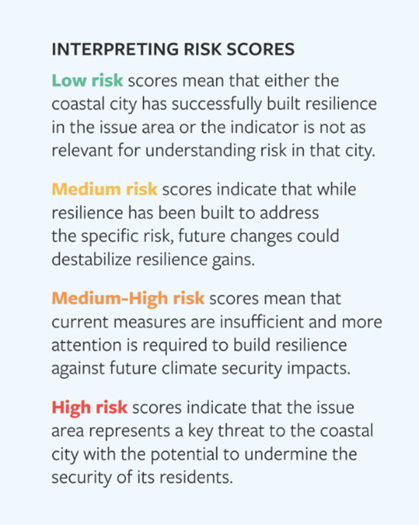
Dominica’s communities and its varied marine ecosystems are vulnerable to the growing risks from both acute and slow-onset climate hazards. The Ecological risk area includes three of the six high risk scores in this CORVI assessment, with another eight Ecological risk scores classified as medium-high risk. All indicators are scored on a 1 (lowest vulnerability) to 10 (highest vulnerability) scale relative to other countries in the Caribbean.
- The ECOSYSTEMS category includes the indicator with the highest risk score in the entire assessment, Level of Coral Reefs Coverage (9.17), reflecting the vulnerability of Dominica’s small area of critically important coral reefs. The medium-high risk score for Health of Existing Coral Reefs (7.22) shows the threat posed to these reefs by numerous climate- and non-climate-driven threats. Incidence of High Sargassum Abundance (7.50) and Level of Sea Grass Bed Coverage (5.81) are also medium-high risks, highlighting the risks posed by invasive marine species and limited coverage of marine protected areas.
- The CLIMATE CHANGE category includes the fourth-highest risk score in the assessment, Total Number of Extreme Heat Events (7.91). The Total Number of Hurricanes (5.20) and Number of Flood Events (4.89) reflect the comparatively lower frequency of hurricanes in Dominica compared to other countries in the region. These storms, however, are very strong and growing in intensity, as reflected in other indicators in the assessment.
- In the GEOLOGY/WATER category, the Level of Geophysical Risk of Landslides (7.88) is a high risk due to the location of many Dominica’s communities at the base of steep mountain slopes. Intense rainfall can wash boulders down those slopes, flattening houses, schools, and other buildings. The risk indicators Percent of Study Area at Risk of Flooding (6.12) and Projected Change in Sea Level Rise (5.68) are both medium-high risks, while Rate of Coastal Erosion (5.00) is a medium risk.
- In the FISHERIES category, both Offshore Fish Stock Status (6.33) and Nearshore Fish Stock Status (6.27) are medium-high risks, reflecting the vulnerability of Dominica’s fisheries to warming seas, overfishing, and loss of habitat. Fish Consumption Per Capita (4.50) is a medium risk.
Over the last decade, two major named storms have hit Dominica. Tropical Storm Erika struck in 2015, followed two years later by Hurricane Maria. Hurricane Maria was “one of the most rapidly intensifying storms in recent history, escalating to a category 5 hurricane within 24 hours of being upgraded from a tropical storm.”13“Dominica’s Journey to become the World’s First Climate Resilient Country”. World Bank Group. September 26, 2023. https://www.worldbank.org/en/news/feature/2023/09/26/dominica-s-journey-to-become-the-world-s-first-climate-resilient-country The hurricane killed 31 people, with another 37 missing, and directly affected 80% of Dominica’s population.14“Dominica: The impact of Hurricane Maria – Disaster Profile – January 2018”. ACAPS. January 31, 2018. https://reliefweb.int/report/dominica/dominica-impact-hurricane-maria-disaster-profile-january-2018 Total losses and damages from the hurricane totaled $1.3 billion, equal to 226% of the country’s gross domestic product (GDP), according to a Post-Disaster Needs Assessment by the government. This included damage to 90 percent of the country’s housing stock, widespread and severe damages to the electricity network that resulted in the complete cessation of electricity provision in the hurricane’s aftermath, and the major losses of crops and livestock.15“Post-Disaster Needs Assessment Hurricane Maria”. Government of Dominica. November 15, 2017. https://www.gfdrr.org/sites/default/files/publication/Dominica_mp_012418_web.pdf The disaster accelerated efforts to build climate resilience in Dominica, with Prime Minister Skerrit declaring to the UN General Assembly days after the hurricane that Dominica had “actively and decisively” chosen to be a global example of how to rebuild and rebound from a disaster to become climate resilient.16“Dominica’s Journey to become the World’s First Climate Resilient Country”. This effort included the National Resilience Development Strategy (NRDS) – Dominica 2030 released in June 2018, followed in December of that year by the establishment of the Climate Resilience Execution Agency for Dominica (CREAD). CREAD then led the drafting of the Dominica Climate Resilience and Recovery Plan (CRRP), published in April 2020. The CRRP includes 20 climate resilience targets to guide and inform the protection against, and recovery from, climate hazards.17“Dominica Climate Resilience and Recovery Plan 2020-2030”. Climate Resilience Executing Agency of Dominica and the Ministry of Economic Affairs, Planning, Resilience, Sustainable Development, Telecommunications and Broadcasting, Commonwealth of Dominica. 2020. https://odm.gov.dm/wp-content/uploads/2022/02/CRRP-Final-042020.pdf
As a result of climate change, hurricanes in the Caribbean are gaining increasingly higher wind speeds and precipitation.18“Hurricanes and Climate Change”. Center for Climate and Energy Solutions. https://www.c2es.org/content/hurricanes-and-climate-change/ Although it is not clear how climate change will affect the Total Number of Hurricanes (medium-high risk, score of 5.20), hurricanes have been intensifying more rapidly since the 1980s, as was the case with Hurricane Maria in 2017.19“Atlantic Hurricanes Are Getting Stronger, Faster, Study Finds” The New York Times. October 19, 2023. https://www.nytimes.com/2023/10/19/climate/hurricane-intensity-stronger-faster.html Similar to hurricanes, the assessment risk scores suggest that the intensity of flooding events and the total Area at Risk of Flooding (medium-high risk, score of 6.12) is a bigger risk than the Number of Flood Events (medium risk, score of 4.89). In addition to the direct damage caused by winds and flooding, hurricanes and other storms can also trigger landslides, which can destroy houses, key infrastructure, and make roads impassable. Hurricane Maria caused nearly 10,000 landslides,20“Dominica: The impact of Hurricane Maria – Disaster Profile – January 2018”. and the Level of Geophysical Risk of Landslides (high risk, score of 7.88) was rated a high risk by local experts. Two types of communities are most vulnerable to the impacts of landslides. The first are those that have just a single road connecting them to the rest of the island. Landslides can cut off these communities for days, particularly in eastern and southeastern Dominica,21National Resilience Development Strategy – Dominica 2030 blocking deliveries of food, medical aid, and other supplies. The second type of especially vulnerable communities are those located along the coastal strip at the base of steep mountains slopes. Landslides can destroy houses, schools, and other buildings in these communities. Given their location near the coast and often near rivers, these same communities are some of the most vulnerable to both coastal and riverine flooding. Although there have been some efforts to relocate the most vulnerable communities, little progress has been made to date, and much remains to be done.
The current and Projected Change in Sea-Level Rise (medium-high risk, score of 5.68) is threatening Dominica’s coastal communities and infrastructure and making these people and places more vulnerable to storm surge. There is limited data on projected sea-level rise (SLR) in Dominica, specifically, but SLR in the Caribbean region is projected to be approximately 2.5mm per year.22“Climate Change, The Caribbean Sea, And the Ocean Economy – Securing Livelihoods of Caribbean People”. La Comisión Económica para América Latina (CEPAL). July-Sept 2022. https://repositorio.cepal.org/server/api/core/bitstreams/c94d4b38-7867-4049-b500-e2ca09f21e1e/content Although Dominica’s terrain is quite mountainous, nearly 9 percent of its population lives below 4 meters above sea level.23Strauss, Benjamin and Scott Kulp. “Sea-Level Rise Threats in the Caribbean: Data, tools, and analysis for a more resilient future”. Climate Central. February 2018. https://sealevel.climatecentral.org/uploads/ssrf/Sea-level-rise-threats-in-the-Caribbean.pdf In addition, the country’s beaches, several of its biggest towns, and Edward Olivier Leblanc Highway which runs along the island’s west are all located on or near the coastline, making them vulnerable to SLR. The impacts of SLR are further exacerbated by the Rate of Coastal Erosion (medium risk, score of 5.00), which can undermine housing and coastal infrastructure. Coastal erosion can also result in saline intrusion into aquifers, though Dominica’s abundant rainfall and surface water sources mean that this will likely be less of a problem than in other Caribbean countries.24“Water Resources Assessment of Dominica, Antigua, Barbuda, St. Kitts and Nevis”. US Army Corps of Engineers. December 2004. https://www.sam.usace.army.mil/Portals/46/docs/military/engineering/docs/WRA/N_Caribbean/N%20CARIBBEAN%20WRA%201%20DEC%202004.pdf
In addition to reducing the impacts of storm surge and stabilizing coastlines to reduce coastal erosion,25“How Blue Carbon Can Tackle the Climate, Biodiversity and Development Crises”. World Resources Institute. June 28, 2023. https://www.wri.org/insights/what-is-blue-carbon-benefits-for-people-planet Dominica’s marine ecosystems have a critical role in the country’s economic and cultural life. Coral reefs and seagrass beds provide important habitat for commercial fishing and locally caught fish, which is an important food resource. Coral reefs are also an important tourist attraction. Despite these benefits, these ecosystems are under threat. The Level of Coral Reef Coverage (high risk, score of 9.17) was identified as the highest vulnerability in this assessment. Only 0.8 km2 of coral reefs still exist, according to the 2016 Coral Reef Report Card, and 10-15 percent of that coverage had been lost in the preceding decade.26PR, Kramer & LM, Roth & S, Constantine & L, Cross & Steiner, Sascha. (2016). “Commonwealth of Dominica Coral Reef Report Card”. https://www.agrra.org/wp-content/uploads/2016/06/DMA-Report-Card_2016_WebLowRes.pdf The largest reef, Calibishie, is located in the northeast, but coral reefs located off the west coast have a higher level of diversity, especially between Batali and Mero. The Grand Savanne Area, located about halfway between Roseau and Portsmouth on the west coast, is another area with comparatively large, diverse, and healthy coral reefs.27Ibid. Seagrass beds are more common, covering 10 km2 and extending into even deep waters, reflected in the lower score for the Level of Seagrass Bed Coverage (medium-high risk, score of 5.81). However, only 5 percent of them are protected. Seagrass beds are principally located on the west coast, dominated by manatee grass, and the northeast, where both turtle and manatee seagrasses are found in the calm waters behind coral reefs and in protected bays.28Ibid.
Threats to the health of Dominica’s coastal and marine ecosystems persist, reflected in the score for the Health of Existing Coral Reefs (medium-high risk, score of 7.22). The major threats to these ecosystems identified in the 2016 Coral Reef Report Card include direct human removal and damage, overfishing, coastal development, poor water quality, and warming ocean temperatures.29Ibid. Coral reefs face additional threats from coral bleaching – including major episodes in 2005, 2010, and 202330Irfan, Umair. “It’s even hot underwater”. Vox. July 21, 2023. https://www.vox.com/climate/23801858/caribbean-heat-wave-dominica-ocean-marine-sea-coral-fish – along with stony coral tissue loss disease and invasive lionfish.31Ibid. Native seagrasses face additional threats from sediment runoff, storms, and the invasive seagrass Halophila stipulacea, native to the Indian Ocean, which has replaced native seagrass on the west coast. H. stipulacea has not been observed in the northeast as of 2016.32“Commonwealth of Dominica: Coral Reef Report Card”. The increasing Incidence of High Sargassum Abundance (medium-high risk, score of 7.50) is another risk to Dominica, where it can damage marine life, contribute to beach erosion, drive away tourists, and reportedly increase the population of unwanted pests.33Malaguti, Luca. “Sargassum whale”. Oceanographic Magazine. https://oceanographicmagazine.com/features/sargassum-whale-in-dominica-2/
Dominica will face a large increase in the Total Number of Extreme Heat Events (high risk, score of 7.91), both on land and at sea, according to projections from the Caribbean Institute for Meteorology & Hydrology. The frequency of both hot days and hot nights is expected to increase rapidly, reaching near 100 percent by the 2040s.34“Commonwealth of Dominica Country Analysis: Resilience to Climate Change at a Glance”. Increased terrestrial heat can have severe negative impacts on both human and ecosystem health.35“Heat and Health”. World Health Organization. June 1, 2018. https://www.who.int/news-room/fact-sheets/detail/climate-change-heat-and-health Marine heatwaves, which can cause large scale coral bleaching and other damage to marine ecosystems, are also projected to increase in frequency and severity as global temperatures rise.36P. Cetina-Heredia and M. E. Allende-Arandía. “Caribbean Marine Heatwaves, Marine Cold Spells, and Co-Occurrence of Bleaching Events”. JGR Oceans. September 28, 2023. https://agupubs.onlinelibrary.wiley.com/doi/10.1029/2023JC020147
Damage to Dominica’s marine ecosystems and the proliferation of invasive species are key threats to the health of the country’s Offshore Fish Stocks (medium-high risk, score of 6.33) and Nearshore Fish Stocks (medium-high risk, score of 6.27). In addition to the loss of habitat and increasing incidence of invasive species, local fish stocks are threatened by overfishing, warming and rising seas, and pollution.37“Commonwealth of Dominica Country Analysis: Resilience to Climate Change at a Glance”.
Although Fish Consumption Per Capita (medium risk, score of 4.50) is significant, reaching 27.1 kg in 2017, two-thirds of this consumption comes from imports according to the Food and Agriculture Organization (FAO).38“Fishery and Aquaculture Country Profiles: The Commonwealth of Dominica”. Food and Agriculture Organization. https://www.fao.org/figis/pdf/fishery/facp/DMA/en?title=FAO%20Fisheries%20%26%20Aquaculture%20-%20Fishery%20and%20Aquaculture%20Country%20Profiles%20-%20The%20Commonwealth%20of%20Dominica Many locals fish for subsistence and much of the local seafood trade is informal and may therefore “not be accounted for in official statistics”, according to a 2019 report from the United Nations Development Programme (UNDP).39Roberts, Julian. “Blue Economy Scoping Study for Dominica”. UN Development Programme. January 31, 2019. https://www.undp.org/sites/g/files/zskgke326/files/migration/bb/Dominica-Blue-Economy-Scoping-Study_Final_January-2019.pdf In addition to its role in strengthening food security, the country has a long tradition of fishing, which plays an important cultural role, including in the annual festival for the tiny titiwi fish.40Irfan, Umair. “How a tiny island is adapting to climate change … on its dinner plates”. Vox. October 12, 2023. https://www.vox.com/climate/23906822/climate-change-caribbean-dominica-fish-sea-level-rise-maria Fishing is also important to Dominica’s disaster resilience, as “fisheries provide important immediate and medium-term coping after storms, with key roles for food security and livelihoods.”41Shelton, Clare, Carole S. White, Johanna Forster, Susan Conlon, Georg H. Engelhard, John K. Pinnegar. “Disaster risk in Caribbean fisheries: How vulnerability is shaped and how it can be reduced in Dominica and Antigua and Barbuda” Marine Policy. Volume 160, February 2024. https://doi.org/10.1016/j.marpol.2023.105951 Similarly, during the height of the COVID-19 pandemic, many people who had been employed in the tourism industry turned to small-scale fishing to provide food and income.
A strong network of Marine Protected Areas helps improve ecological conditions and mitigates climate impacts on marine ecosystems. Dominica has two coastal marine reserves, located on the most northwest and southwest coasts of the island. The Cabrits Marine Reserve, part of Cabrits National Park, protects 7 km2 of coastal marine habitats, including key fish nursery areas and the islands only stand of white mangroves (Laguncularia racemosa)42“Commonwealth of Dominica Coral Reef Report Card”. . The Soufriere-Scott’s Head Marine Reserve (SSMR) is a 4.9 km2 marine reserve that encompasses Soufriere Bay, and the area adjacent to Scott’s Head, where the Atlantic Ocean meets the Caribbean Sea. Comprised of shallow- and deep-water habitats, SSMR protects coral reefs and seagrass beds, as well as underwater sulfur vents and wall reefs. However, the lack of wastewater treatment is a concern in this area. In November 2023, Dominica announced the creation of the world’s first marine reserve for sperm whales off the west coast of the island. This new reserve covers 788 km2, larger than the island itself, and increases Dominica’s marine protected areas by 70%.
Economic Risk
Dominica’s economic reliance on tourism and agriculture leave it vulnerable to climate hazards, especially extreme weather events, which can also damage key infrastructure. This risk area includes two of the six high risk scores in the assessment, with another eight risk scores that are classified as medium-high risk. All risk indicators are scored on a 1 (lowest vulnerability) to 10 (highest vulnerability) scale relative to other countries in the Caribbean.
- The ECONOMICS category includes the third-highest risk score, Market Losses from Extreme Weather Events (8.22), which reflects the extremely high losses and damages from Hurricane Maria and other extreme weather events. The medium-high risk for the Level of Informal Economy (6.72) highlights the large number of small firms operating in the informal sector, which rarely have sufficient capital to invest in climate resilience measures. A significant Debt Ratio (5.99) limits Dominica’s access to financial resources.
- In the INFRASTRUCTURE category, the risk indicators for the Level of Resilience for Ports and Shipping (6.88) and for the Level of Commercial Infrastructure Damage from Extreme Weather Events (6.66) are scored as medium-high risk. Both of these scores reinforce the country’s vulnerability to hurricanes and other climate disasters. The medium-high risk score for Proportion of Wastewater Safely Treated (6.54) highlights how inadequate wastewater management can increase the risks to human and ecosystem health.
- The MAJOR INDUSTRIES category highlights the large share of Dominica’s Economy Based in Tourism (7.90), which is vulnerable to climate change. Agriculture (6.2) also plays an important role in the economy, while the port and shipping industries (6.10) serve as the country’s principal connection to the rest of the world.
As described in the previous section, Hurricane Maria caused massive losses and damages in 2017, with the total reaching $1.3 billion, equivalent to 226 percent of the country’s gross domestic product (GDP). “Torrential rains and 160mph gusts tore off roofs, smashed through walls, uprooted trees … Communication towers snapped in two, schools were flattened and electricity cut.”43Elie, Janise. “’It feels like Dominica is finished’: life amid the ruins left by Hurricane Maria”. The Guardian. November 1, 2017. https://www.theguardian.com/global-development/2017/nov/01/it-feels-like-dominica-is-finished-life-amid-the-ruins-left-by-hurricane-maria These impacts came two years after Tropical Storm Erika in 2015, which “swamped villages, destroyed homes, and wiped out roads.”44“Tropical Storm Erika kills at least 20 in Dominica”. BBC News. August 29, 2015. https://www.bbc.com/news/world-latin-america-34091475 Total losses and damages reached $480 million, equivalent to approximately 90 percent of Dominica’s GDP.45“Rapid Damage and Impact Assessment. Tropical Storm Erika – August 27, 2015”. The Government of Dominica. September 25, 2015. https://documents1.worldbank.org/curated/en/142861467995411564/pdf/104251-WP-PUBLIC-Rapid-Damage-and-Needs-Assessment-Final-Report-Oct5.pdf In addition to the direct losses and damages, in the immediate aftermath of two devastating storms, economic activity slowed to a crawl, as business owners and workers left the country.46“’It feels like Dominica is finished’: life amid the ruins left by Hurricane Maria”. Interviewees cited the lack of contingency plans and inadequate insurance as also contributing to these impacts. The economic damage inflicted by these two storms, in addition to other extreme weather events, is reflected in the assessment’s third-highest risk score, Market Losses from Extreme Weather Events (high risk, score of 8.22).
One of the most important impacts of these events is to Dominica’s tourism sector, reflected in the Percent of National Economy Based in Tourism (high risk, score of 7.90). Tourism accounted for nearly 33 percent of GDP and 82 percent of total exports prior to the COVID-19 pandemic,47“Sectoral Recovery Capacity Assessment for Dominica’s Tourism Sector.” World Bank Group. December 21, 2022. http://documents.worldbank.org/curated/en/099755211302234226/P1712560eb6e250eb0b0dc0d4924983f512 including a rapid 42 percent increase in the number of tourists between 2018 and 2019 as the country recovered from Hurricane Maria.48“Future Tourism: Rethinking Tourism and MSMEs in times of COVID-19”. UN Development Programme. June 2022. https://www.undp.org/sites/g/files/zskgke326/files/2022-09/undp_diagnostic_report_dominica_2022_insides_final_single_pages.pdf The heaviest damage to the tourism industry from Hurricane Maria was the destruction of hotel rooms. Nearly 40 percent of rooms were severely damaged, with another 34 percent suffering enough damage to remove them from operation.49“Post-Disaster Needs Assessment Hurricane Maria”. However, Dominica’s tourism sector recovered quickly; total visitor expenditures in 2019 were higher than any year since 2015.50“Future Tourism: Rethinking Tourism and MSMEs in times of COVID-19”. The recovery was particularly strong for stay-over visitors drawn to the unique attractions that give Dominica the nickname of the “Nature Island”. These types of tourists are much more economically valuable than cruise passengers, with the latter accounting for just 6.3 percent of total visitor spending in 2019.51Ibid. While Dominica’s prioritization of nature- and adventure-based tourism avoids some of the vulnerabilities associated with the sun-sand-sea tourism that is dominant in many other regional countries, the country’s tourism depends heavily on maintaining healthy terrestrial and marine ecosystems.
The damage to infrastructure from extreme weather events, highlighted by Level of Commercial Infrastructure Damage from Extreme Weather Events (medium-high risk, score of 6.66), hinders both the short-term recovery and longer-term economic recovery. The damages to roads and bridges, which made up over half of the total damage from Tropical Storm Erika,52“Rapid Damage and Impact Assessment. Tropical Storm Erika – August 27, 2015”. slows the distribution of aid, particularly to inland communities with limited ground connections to the rest of the island. Damage to the power grid complicates the operation of businesses that depend on electricity for their operations, while the damage to transport infrastructure limits the circulation of labor and goods. This slows the economic recovery, increasing the National Unemployment Rate (medium-high risk, score of 5.96), and increases the pressure on local fisheries as unemployed workers fall back on them to fill income gaps.
Local experts highlighted the Level of Resilience for Ports and Shipping (medium-high risk, score of 6.88) as an area of concern. Hurricane Maria destroyed the roofs of many key port buildings in both Roseau and Portsmouth, severely damaged the ferry terminal in Roseau, and rendered inoperable the cruise ship terminals in both Roseau and Portsmouth.53“Post-Disaster Needs Assessment Hurricane Maria”. The shipping sector also suffered a substantial loss of traffic as the port operations were redirected to accommodate principally relief and recovery activities. In total, revenues from port and shipping operations fell by 75 percent in the aftermath of the hurricane.54Ibid. Dominica’s ports and shipping play critical roles in Dominica’s economy, reflected in the Percent of National Economy Based in Port and Shipping Industries (medium-high risk, score of 6.09). This role has grown in recent years with the rapid rise in imports in the years before the pandemic, reaching 78 percent in 2018.55“Imports of goods and services (% of GDP) – Dominica”. World Bank Open Data. Accessed on February 15, 2024. https://data.worldbank.org/indicator/NE.IMP.GNFS.ZS?locations=DM Given this importance, the government of Dominica has prioritized the restoration of port operations within one week of an extreme weather event.
Agriculture currently accounts for approximately nine percent of Dominica’s exports.56“Dominica”. Observatory of Economic Complexity. Accessed on February 15, 2024. https://oec.world/en/profile/country/dma?yearSelector1=1995&depthSelector1=HS4Depth Although banana production once employed over one-third of Dominica’s labor force and accounted for 25 percent of the country’s exports in 1998, the sector has faced compounding setbacks from the loss of preferential market treatment in the European Union and diseases like Black Sigatoka.57“Country profile: Dominica”. Caribbean Agricultural Research and Development Institute (CARDI). Accessed on February 15, 2024. https://www.cardi.org/country-offices/dominica/ However, the Percent of National Economy Based in Agriculture (medium-high risk, score of 6.23) remains significant thanks to the small family farms and kitchen gardens that serve subsistence and local markets, accounting for approximately 17 percent of Dominica’s GDP.58“Dominica”. Caribbean Agribusiness. Accessed on February 15, 2024. https://agricarib.org/dominica-2/ Hurricane Maria inflicted serious losses on Dominica’s agriculture, with 80 to 100 percent of crops destroyed along with 45 to 90 percent of livestock.59“Post-Disaster Needs Assessment Hurricane Maria”. Reducing agricultural losses from extreme weather events is one of the 20 Climate Resilience Targets by 2030 established by the Government of Dominica in its Climate Resilience and Recovery Plan 2020-2030. Key actions to increase resilience in the sector that have been identified by the Caribbean Agricultural Research and Development Institute (CARDI) include a shift to root and tuber crops, which are less vulnerable to extreme weather events, and the use of integrated pest management.60“Country profile: Dominica”. Caribbean Agricultural Research and Development Institute (CARDI).
The high costs of recovering from extreme weather events have increased Dominica’s Debt Ratio (medium-high risk, score of 5.99). The COVID-19 pandemic compounded the debt challenges the country was already experiencing due to Hurricane Maria and Tropical Storm Erika and public debt peaked at 106 percent of GDP in 2020.61“Dominica: Joint World Bank-IMF Debt Sustainability Analysis”. An IMF-World Bank analysis found that although Dominica’s remains at a high risk of debt distress, the government’s commitment to the 2020 fiscal consolidation plan is projected to bring the country’s debt down to sustainable levels.62Ibid. Further extreme weather events are a key risk to this trajectory, however, and Dominica’s current high debt levels restrict the financial resources available for the government to spend on building climate resilience. This situation is further exacerbated by the Level of the Informal Economy (medium-high risk, score of 6.72). The informal sector, especially in agriculture and fisheries, does provide a valuable fallback way of providing food security and income when workers lose their jobs due to extreme weather events or other economic shocks. Workers in the informal sector, however, are not taxed, reducing the government’s revenue.63Ibid. In addition, businesses and workers operating in the informal economy often have weak links to the government, increasing the difficulty of incorporating them into resilience planning and recovery efforts.
Another vulnerability highlighted by this assessment is the Proportion of Wastewater Safely Treated (medium-high risk, score of 6.54). Although 95 percent of Dominica’s population has access to piped water, only 15 percent are connected to the sewerage system, principally in Roseau.64“Dominica”. The CARIBSAN Project. Accessed on February 15, 2024. https://www.caribsan.eu/en/partners/dominica.html Septic tanks are the most common type of sanitation, covering 53% of the population.65Ibid. The Dominica Water and Sewerage Company Ltd. (DOWASCO) is planning to undertake a project to treat wastewater using constructed wetlands, in collaboration with Caribbean Sanitation with Nature (CARIBSAN).66“DOWASCO embarks on wastewater treatment project with CARIBSAN”. Dominica News Online. February 3, 2022. https://dominicanewsonline.com/news/homepage/dowasco-embarks-on-wastewater-treatment-project-with-caribsan/ Although the Dominica Climate Resilience and Recovery Plan 2020-2030 includes an initiative on solid waste management, it does not include any measures related to wastewater management,67“Dominica Climate Resilience and Recovery Plan 2020-2030”. raising the risk of post-disaster damage to human and ecosystem health from untreated wastewater due to damage to septic tanks and other existing wastewater management systems.
Social Risk
Dominica faces important social and political constraints in their effort to build the world’s “first climate resilient nation”. The impacts of climate change can drive outmigration from the island, reducing the technical capacity of the remaining population, thereby weakening the implementation of future adaptation measures. The Social/Political risk area includes one high risk score, Percent of Adult Citizens Living Outside the Country (8.4) with another five risk scores that are classified as medium-high risk. All indicators are scored on a 1 (lowest vulnerability) to 10 (highest vulnerability) scale relative to other countries in the Caribbean.
- In the GOVERNANCE category, the medium-high risk score for Capacity of Current Disaster Response (6.88) reflects continuing capacity constraints across government. The Level of Perceived Transparency within Government (3.67) was scored as a medium risk and local stakeholders emphasized concerns around internal and external communication around climate resilience projects. The level of Investment in Climate Resiliency Projects was rated as low risk (2.01)
- The SOCIAL/DEMOGRAPHICS category includes the second-highest risk score in the assessment, Percent of Adult Citizens Living Outside the Country (8.42), reflecting Dominica’s ongoing brain drain. The medium-high risk score for Percent of Population Below the Poverty Line (6.16) highlights the higher level of vulnerability of people living in poverty.
- In the STABILITY category, medium-high risk scores for the Percent of People Employed in Agriculture (6.74) reflects the larger role that the agriculture sector for Dominica’s labor force, subsistence, and food security. Medium-high risk scores also for the Percent of People Employed in Port and Shipping Industries (5.13) and Employed in Tourism (5.07) highlight other areas of climate-vulnerable employment.
Dominica has one of the highest net emigration rates in the world,68“Dominica Country Profile (as of July 2021)”. UN Office for the Coordination of Humanitarian Affairs. July 31, 2021. https://reliefweb.int/report/dominica/dominica-country-profile-july-2021 reflected in the score for Percent of Adult Citizens Living Outside the Country (high risk, score of 8.42), which is the second-highest risk score in this assessment. Two major drivers of this brain drain are persistent underemployment and extreme weather events. Local stakeholders emphasized that a lack of good employment opportunities in Dominica and the higher salaries often available outside of Dominica are commonly cited reasons why many Dominicans stay or go abroad after concluding their studies. This is particularly evident in healthcare, especially nurses,69Pandey, Ansh. “Caribbean nations are hitting the panic button amid a massive ‘brain drain’ in the health sector”. TFI Global News. December 29, 2022. https://tfiglobalnews.com/2022/12/29/caribbean-nations-are-hitting-the-panic-button-amid-a-massive-brain-drain-in-the-health-sector/ but extends to most technical fields.70“Dominica’s ever-flowing brain drain”. The Sun Dominica. June 18, 2017. http://sundominica.com/articles/dominicas-ever-flowing-brain-drain-4335/ Hurricane Maria accelerated the outflow, with informal estimates suggesting that up to 20 percent of the population fled the island in the first month after the hurricane,71“’It feels like Dominica is finished’: life amid the ruins left by Hurricane Maria”. although some undoubtedly returned over the subsequent months. In addition to the loss of technical expertise, brain drain means that remittances are an important source of income for many Dominicans, making them vulnerable to exchange rate fluctuations.72“Dominica Country Profile (as of July 2021)”.
The loss of technical talent is a constraint on Dominica’s Capacity of Current Disaster Response (medium-high risk, score of 6.88). Stakeholders emphasized that the difficulty in attracting and retaining personnel with the necessary technical knowledge is a key limitation for the country to effectively implement their resilience plans and initiatives. An assessment of the recovery capacity for the tourism sector from the Global Facility for Disaster Reduction and Recovery (GFDRR) echoed this finding. Although there is a large Percent of People Employed in Tourism (medium-high risk, score of 5.07), which accounts for 36 percent of the total labor force,73“Sectoral Recovery Capacity Assessment for Dominica’s Tourism Sector (English)”. World Bank Group. December 21, 2022. https://www.gfdrr.org/en/publication/sectoral-recovery-capacity-assessment-dominicas-tourism-sector-english the GFDRR assessment found that limited technical and operational capacity in the Ministry of Tourism “limit the planning, implementation, and monitoring of recovery projects.”74Ibid.
Talent exodus and technical capacity constraints also affect Dominica’s agriculture sector. Although the sector has faced setbacks from plant disease and changes in international trade policy, described in the previous section, small family farms play a critical role in Dominica’s food security and mean that there is a significant Percent of People Employed in Agriculture (medium-high risk, score of 6.74). Although agriculture employs approximately 21 percent of the labor force,75“Dominica”. Caribbean Agribusiness. The sector is also facing a labor shortage due to brain drain, an aging workforce, and a lack of information management.76“Development of the Agricultural Sector in Dominica by Strengthening Migration Governance”. International Organization of Migration. Accessed on February 15, 2024. https://www.iom.int/project/development-agricultural-sector-dominica-strengthening-migration-governance Dominica’s agriculture sector is also highly vulnerable to extreme weather events. In addition to major crop (80-100 percent losses by crop) and livestock (45-90 percent losses by animal), Hurricane Maria also damaged or destroyed much of the agricultural equipment and infrastructure.77“Post-Disaster Needs Assessment Hurricane Maria”. Two years earlier, lowland flooding and landslides caused by Tropical Storm Erika damaged or destroyed crops, agricultural processing facilities, and key farm-to-market roads.78“Rapid Damage and Impact Assessment. Tropical Storm Erika – August 27, 2015”. Dominica is receiving support from numerous international organizations to strengthen its agricultural sector and improve its climate resilience, including the Caribbean Agricultural Research and Development Institute (CARDI),79“Country profile: Dominica”. Caribbean Agricultural Research and Development Institute (CARDI). the International Labor Organization (ILO),80“Dominica farmers and fisherfolk gain skills for socio-economic resilience through ILO-led capacity building”. International Labour Organization. June 28, 2023. https://www.ilo.org/caribbean/newsroom/WCMS_887037/lang–en/index.htm the World Bank,81“Emergency Agricultural Livelihoods and Climate Resilience Project”. The World Bank Group. Accessed on February 15, 2023. https://projects.worldbank.org/en/projects-operations/project-detail/P166328 the International Organization for Migration (IOM),82“Development of the Agricultural Sector in Dominica by Strengthening Migration Governance”. and the Inter-American Institute for Cooperation on Agriculture (IICA).
The climate vulnerability of Dominica’s small-scale and subsistence agricultural sector is especially relevant to the country’s rural population and the indigenous Kalinago people. Both have a higher Percent of Population Below the Poverty Line (medium-high risk, score of 6.16), with the figure reaching almost 50 percent in the Kalinago territory according to the most recent data from 2009.83“Dominica Climate Resilience and Recovery Plan 2020-2030”. In both the Kalinago territory and rural areas in the rest of the island, that data also showed that a higher share of the population was employed in subsistence agriculture.84“Enhancing Gender Visibility in Disaster Risk Management and Climate Change in the Caribbean: Country Assessment Report for the Commonwealth of Dominica”. UN Development Programme. 2009. https://www.undp.org/sites/g/files/zskgke326/files/migration/latinamerica/UNDP_RBLAC_GenderVisibilityDRRDominica.pdf Given the major economic changes that have occurred since 2009, updated data would be critical to providing an accurate understanding of national patterns of poverty and designing policy accordingly. Although these populations often lack the resources to make major investments in climate resilience, in recent years the Kalinago people have taken important steps to shift cultivation in the direction of hardier root crops, such as cassava and yam, which are less vulnerable to extreme weather events.85Ferrol, Richie. “The Climate Pains of the Kalinago”. Caribbean Investigative Journalism Network. July 2, 2022. https://www.cijn.org/the-climate-pains-of-the-kalinago/ The government of Dominica included an initiative to enhance the social safety net in its Climate Resilience and Recovery Plan 2020-2030, which should help address the ways poverty increases vulnerability to climate impacts.86“Dominica Climate Resilience and Recovery Plan 2020-2030”. Stakeholders also highlighted other public programs designed to assist the rural poor and the Kalinago, including the Kalinago Development Fund, coastal infrastructure projects, and agricultural support programs.
Such efforts should also account for the specific patterns of poverty in Dominica. In addition to higher poverty in rural areas and in the Kalinago territory, there is a high incidence of female-headed households among the poorest populations in Dominica.87“Enhancing Gender Visibility in Disaster Risk Management and Climate Change in the Caribbean: Country Assessment Report for the Commonwealth of Dominica”. Additionally, although local experts did not rate the Dependency Ratio (medium risk, score of 3.81) as a major concern, elderly populations are particularly vulnerable to climate impacts. This is compounded by Dominica’s brain drain, as those who emigrate to seek work often leave children in the care of the elderly, further increasing their vulnerability to climate disasters.88Ibid.
According to both local experts and international indices,89Specifically, the Corruption Perception Index from Transparency International and the Rule of Law Index (Absence of Corruption and Open Government factors) from the World Justice Project. The Level of Perceived Transparency within Government (medium risk, score of 3.67) is broadly in line with regional averages. One program that has received some criticism from domestic and international sources is the Citizenship by Investment (CBI) program, one of the largest in the world, which brought in $1.2 billion between 2017 and 2020.90“Dominica: Passports of the Caribbean”. Organized Crime and Corruption Reporting Project. October 11, 2023. https://www.occrp.org/en/dominica-passports-of-the-caribbean/implausible-budget-numbers-undisclosed-names-raise-red-flags-about-dominicas-citizenship-by-investment-program Criticisms have principally focused on limited availability of detailed information on the program, much of which is only available in paper form on the island, and some incidents of insufficient due diligence of the backgrounds of those who acquired Dominica citizenship.91Jolly, Jasper. “Revealed: thousands who bought ‘golden passports’ through Dominica’s $1bn scheme”. The Guardian. October 11, 2023. https://www.theguardian.com/world/2023/oct/11/golden-passports-dominica-citizenship-by-investment-cbi-scheme
A related area of concern according to both international and local experts is the accessibility of government data. Publicized laws and government data is Dominica’s worst score under the Open Government category of the 2023 WJP Rule of Law Index, though the score is only slightly below the regional average.92“Rule of Law Index: Open Government – Dominica”. World Justice Project. Accessed on February 15, 2024. https://worldjusticeproject.org/rule-of-law-index/country/2023/Dominica/Open%20Government Stakeholders emphasized the increasing difficulty of accessing public data in the CORVI workshops, especially around climate risk and vulnerability, as well as a lack of recently updated data. The GFDRR assessment of Dominica’s tourism sector also highlighted limitations in the availability of hazard and risk information.93“Sectoral Recovery Capacity Assessment for Dominica’s Tourism Sector (English)”. Improving the availability and accessibility of this data would help international partners, the private sector, civil society, and the government incorporate climate risk into their decision-making and investments, strengthening Dominica’s resilience. It would also help the public and external partners monitor the progress of Investment in Climate Resiliency Development Projects (low risk, score of 2.01), as local stakeholders described the implementation of climate adaptation investments as a key shortcoming.
Priority Recommendations to Build Resilience
Dominica has become a global leader in climate change adaptation since it set the goal of becoming the world’s first ‘climate resilient nation’ in 2017 in the immediate aftermath of the devastation caused by Hurricane Maria. The government established the Climate Resilience Execution Agency of Dominica (CREAD) in December 2018 to lead and coordinate the initiatives needed to achieve this goal. CREAD led the drafting of the Dominica Climate Resilience and Recovery Plan 2020-2030 (CRRP) together with the Ministry of Economic Affairs, Planning, Resilience, Sustainable Development, Telecommunications, and Broadcasting and based on consultations with internal and external partners, including the UK Department for International Development, the Government of Canada, the European Union, the UN Development Programme, and the Dominica Association of Industry and Commerce, a model of interagency and public-private partnership.
The CRRP built on the National Resilience Development Strategy 2030 (NRDS), which had established three pillars of resilience:
- Climate Resilient Systems
- Prudent Disaster Risk Management
- Effective Disaster Risk Response and Recovery
The CRRP expanded these three pillars into six results areas:
- Strong Communities
- Robust Economy
- Well-planned and Durable Infrastructure
- Enhanced Collective Consciousness
- Strengthened Institutional Systems
- Protected and Sustainably Leveraged Natural and Other Unique Assets
Based on these six results areas, the CRRP identified 20 Climate Resilience Targets and 10 critical climate resilience initiatives.94“Dominica Climate Resilience and Recovery Plan 2020-2030”. CREAD was established with a four-year mandate, which was extended by a further one year, and was dissolved on December 31, 2023.95“CREAD to dissolve on December 31”. Dominica News Online. December 18, 2023. https://dominicanewsonline.com/news/homepage/news/cread-to-dissolve-on-december-31/ This transition presents both an opportunity and a moment of vulnerability, and the government of Dominica should ensure that it takes the steps necessary to build on the success of the past four years.
Strengthen Institutional Framework for Integrated Climate Resilience
During its four-year mandate, CREAD provided a clear lead agency to coordinate and lead climate resilience planning in Dominica. CREAD based its work on a multidimensional understanding of climate risk and vulnerability, and its planning efforts similarly integrated initiatives to address environmental, economic, and social dimensions of risk, including cross-cutting and compounding risks. Following the dissolution of CREAD, the Ministry of Finance, Economic Development, Climate Resilience and Social Security is likely to take a leading role. Another important entity will be the Office of Disaster Management, housed within the Ministry of National Security and Legal Affairs. Local stakeholders raised the risk of fragmentation of authority and lack of coordination stemming from this institutional split.
Given Dominica’s high level of environmental, economic, and social vulnerability to extreme weather events, it is critical that government efforts to build resilience continue to be prioritized, streamlined, and coordinated. This will help minimize work that is duplicative or at cross-purposes and recognize the full benefits for solutions operating across the purview of multiple government bodies. A step that could help such an effort would be to designate a lead coordinating agency within the Ministry of Finance that possesses convening power across government agencies and is endowed with clear political support. They could serve as a clearinghouse for expertise on climate risk and integrate it into the work of all the government’s ministries. The lead agency should also establish a structure to support consistent engagement with the private sector, non-governmental organizations (NGOs), and private voluntary organizations, potentially modeled on the structure of the National Emergency Planning Organization. This lead agency’s work should be supported by an effort to build technical capacity within relevant government ministries to improve their implementation of climate adaptation projects. This technical capacity should include the revival of the use of standard operating procedures to structure and monitor progress.
Another step which could strengthen Dominica’s resilience to extreme weather event is the establishment of a national disaster review board. Such a board would provide a standardized and independent process to review disaster preparedness, response, and recovery actions in the wake of an extreme weather event. The board’s purpose would be to assess effectiveness and identify potential improvements. It could offer recommendations to improve policies, operational structures, and actions across government and non-government actors to ensure that past lessons are learned and not repeated. The board could also offer technical assistance to carry out its recommendations. Establishing the review board under the Office of Disaster Management could help avoid the fragmentation of authority. Some interviewees highlighted a potential conflict with the National Emergency Planning Organization’s existing practice of post-disaster review, while others affirmed that a new disaster review board could be helpful.
Co-Develop and Implement a Sustainable and Equitable Marine Management Plan
Dominica’s marine ecosystems are the foundation for the development of a sustainable blue economy, providing economic and cultural benefits, which align with the branding of Dominica as “The Nature Island”. The establishment of the sperm whale reserve shows progress, both in increasing opportunities to grow a sustainable blue economy and improving the health and resiliency of marine ecosystems. However, threats to coral reefs and seagrass ecosystems may hamper continued improvements in marine ecosystem health. For instance, stakeholders noted the need to balance increased tourism, in areas such as Portsmouth, with degraded water quality and other negative impacts to the environment. A sustainable and equitable Marine Management Plan (MMP) would allow Dominica to build on the momentum of the recently established marine reserve for sperm whales and on the draft Coastal Master and Marine Spatial Plan while establishing a framework for protecting and leveraging marine ecosystem assets and providing increased resilience to climate impacts across the island.
The government of Dominica should work with private sector interests, and the Kalinago Territory Council to identify key marine ecosystems and develop and implement a plan for their sustainable management and restoration. Co-developing an MMP would help to ensure buy-in with the Kalinago and local stakeholders and would also help strengthen implementation. An initial focus on an updated assessment of the health and extent of coral reef systems (identified as critical vulnerabilities in this assessment), and accounting of the services provided by these ecosystems — along with the identification and implementation of risk reduction measures, would help the government of Dominica to access innovative climate financing mechanisms such as parametric insurance products in the Caribbean. The protection and enhancement of coral reef systems, would in turn, provide additional benefits for sea grass beds protected by fringing reefs on the north and west coasts of Dominica, and enhance nearshore fisheries. Ridge-to-reef management approaches would help to reduce the impact of sediment runoff and wastewater treatment concerns.
As part of such a management plan, the government of Dominica could continue work with the private sector to advance efforts to integrate coral reef restoration and monitoring opportunities into the development of a sustainable blue economy and engage Dominica’s youth in this effort. Engaging youth would not only bring enthusiasm and innovation to these efforts but may also help to reduce the troubling “brain drain” noted in this assessment. The management plan should build on and integrate already existing, sector-specific planning efforts, such as Dominica’s Strategic Sargassum Preparedness Plan (SSPP).96“Strategic Sargassum Preparedness Plan”. Resilify Incorporated. April 5, 2019. https://uwaterloo.ca/planning/sites/default/files/uploads/documents/strategic_sargassum_preparedness_plan.pdf The SSPP highlights the relatively recent influx of sargassum on Dominica’s shores, which can present ecological and economic challenges including toxic gases that affect human health and drive away tourists, disruption of the reproductive patterns of sea turtles and other key species, and high cleanup costs. However, sargassum can also be used in several key industries, including animal feed, agricultural fertilizer, biomass energy generation, and some pharmaceuticals.97Ibid. The government of Dominica should consider shifting from the short-term strategy identified in the SSPP (raking and burying the sargassum and implementing beach signage) to longer-term actions that support these industries, including collecting data on the location and quantity of sargassum, and collection and transport/storage for on-island use or export.
Improve Accessibility and Sharing of Climate Risk and Resilience Information
During the CORVI workshops, participants emphasized the need for improved processes around the accessibility and sharing of information on climate risk and resilience. Given the cross-cutting nature of climate vulnerabilities described in this assessment, there is a broad range of information that is relevant to assessing climate risk and building resilience. Stakeholders described shortcomings in internal data sharing between government departments, which often do not share the data they collect as part of their normal operations, even if it is relevant beyond their jurisdiction. This is an important gap, as effective data sharing and management is a key part of effective policymaking, climate adaptation, and disaster preparedness, response, and recovery.
One way of improving internal data sharing would be to designate the Statistics Office as a central data clearinghouse and implement standard operating procedures (SOPs) that direct government ministries to share all data they collect. To avoid unduly increasing the burden on the personnel of the Statistics Office, it could be helpful to design a standardized data-sharing platform into which ministry staff can upload data without needing the Statistics staff to serve as an intermediary. Such a platform could include information on ecosystem monitoring, population patterns, weather and rainfall records, local rates of coastal erosion and accretion, agricultural practices, transportation networks, and more. It could also include planning and progress for new coastal development and climate resilience projects.
In addition to inadequate internal data sharing, workshop participants highlighted that in recent years it has gotten more difficult for the private sector, NGOs, and other external partners to access data the government has collected. Designating a central data clearinghouse could streamline the process for external partners to access climate risk and resilience data. The process could be further improved by making the data-sharing platform publicly accessible. Regular data-sharing workshops both within the government and with the public can help disseminate relevant cross-cutting information, ensure that internal and external stakeholders are able to make the greatest use of the available data and support the long-term sustainability of data-sharing protocols.
A publicly accessible platform for data on climate risk and resilience, broadly defined, could have several benefits. It could help mainstream climate risk and resilience into the work of government ministries, increasing their capacity to anticipate how climate impacts will affect their work and how their work may increase or decrease climate vulnerability. Similarly, it could allow the private sector to assess how future climate impacts can affect their current and planned operations, strengthening climate resilience and reducing the likelihood of stranded assets that are made unprofitable by future climate change. The platform could also increase accountability for Dominica’s climate resilience projects, which can serve as leverage to improve implementation. Finally, improving the accessibility of climate risk and resilience information can help unlock increased funding from international funders as well as Dominica’s diaspora by increasing their confidence that the funds are addressing the highest priority risks and that the funds will be used effectively.
Appendices
Appendix 1: Full List of Indicators for CORVI Dominica
Ecological Risk Categories and Indicators
| Category | Indicator |
|---|---|
| Climate Change | Total Number of Flood Events |
| Total Number of Extreme Heat Events | |
| Total Number of Hurricanes | |
| Ecosystems | Health of Existing Coral Reefs |
| Incidence of High Sargassum Abundance | |
| Level of Coral Reefs Coverage | |
| Level of Seagrass Bed Coverage | |
| Fisheries | Fish Consumption Per Capita |
| Nearshore Fish Stock Status | |
| Offshore Fish Stock Status | |
| Geology/Water | Level of Geophysical Risk of Landslides |
| Percent of Study Area at Risk of Flooding | |
| Projected Changed in Sea-Level Rise | |
| Rate of Coastal Erosion |
Financial Risk Categories and Indicators
| Category | Indicator |
|---|---|
| Economics | Debt Ratio (% of GDP) |
| Level of Informal Economy | |
| Market Losses from Extreme Weather Events | |
| National Unemployment Rate | |
| Infrastructure | Level of Commercial Infrastructure Damage from Extreme Weather Events |
| Level of Resilience for Ports and Shipping | |
| Level of Resilience for Roads | |
| Percent of Low-Income Housing in Relation to Flood Zones | |
| Proportion of Wastewater Safely Treated | |
| Major Industries | Percent of National Economy Based in Agriculture |
| Percent of National Economy Based in Port and Shipping Industries | |
| Percent of National Economy Based in Tourism Industry |
Political/Social Risk Categories and Indicators
| Category | Indicator |
|---|---|
| Governance | Capacity of Current Disaster Response |
| Investment in Climate Resiliency Development Projects | |
| Level of Perceived Transparency within Government | |
| Social and Demographics | Dependency Ratio |
| Percent of Adult Citizens Living Outside of the Country | |
| Percent of Population Below Poverty Line | |
| Stability | Percent of People Employed in Agriculture |
| Percent of People Employed in Port and Shipping Industries | |
| Percent of People Employed in Tourism Industry |
Appendix 2: Surveyed Organizations
| 100% GREEN Inc |
| ACE Engineering Ltd |
| Aimes Enterprises Ltd |
| Benjo’s Seamoss & Agro Processing Co. Ltd |
| Caribbean Youth Environment Network |
| Carolton A. Phillip & Co Ltd |
| Central Statistics Office |
| CREAD |
| Dominica Chamber |
| Dominica Meteorological Service |
| Dominica Police Force |
| Dominica Red Cross |
| Dominica Social Security |
| Dominica Youth Business Trust |
| EALCRP |
| Finance & Economics Industry |
| Fireman |
| Fisheries Division |
| Forestry, Wildlife, & Parks Division |
| Government of Dominica |
| Graduate Student- Midwestern State University |
| Independent Regulatory Commission |
| IsraAID |
| Jollys Pharmacy |
| Labour Division |
| Lands and Surveys Division |
| Millennium Freight Services |
| Ministry of Education |
| Ministry of Environment, Rural Modernisation, Kalinago Upliftment and Constituency Empowerment |
| Ministry of Labor |
| Ministry of Public Works |
| National Bank of Dominica |
| Soufriere Outdoor Centre |
| UNICEF |
| UWI |
| WildDominique |
Appendix 3: The Climate and Ocean Risk Vulnerability Initiative
It is clear that urban coastal areas are likely to experience the earliest onset and potentially most severe impacts from climate change. The risks associated with climate change for specific coastal cities, however, are much more difficult to untangle. In order for coastal cities to efficiently allocate resources and enact effective adaptation strategies, it is critical that they understand their multidimensional climate risk. However, these efforts are impeded by poor and incomplete data.98Hunt, Alistair, and Paul Watkiss. “Climate change impacts and adaptation in cities: a review of the literature.” Climatic change 104, no. 1 (2011): 13-49. Data on climate risks is rarely available at the city level, and when it does exist, it is often poorly managed and stored in silos that make it difficult to access and use, even for city government officials.99Hardoy, Jorgelina, and Gustavo Pandiella. “Urban poverty and vulnerability to climate change in Latin America.” Environment and Urbanization 21, no. 1 (2009): 203-224. This issue is compounded by technical, financial, and capacity gaps, trapping coastal cities in a vicious cycle where they cannot develop holistic strategies to prioritize investment and access the funds needed to implement resilience actions.
Without data at the appropriate geographic scale, decision-makers are often left with the choice of either waiting for greater data availability or attempting to downscale national-level data, neither of which are ideal solutions for effective climate change adaptation. This problem is particularly acute in small and intermediate cities, which along with absorbing the bulk of East Africa’s future urban population growth, often lack the resources to gather and maintain necessary data.100“Demographic Trends and Urbanization,” World Bank, last modified May 19, 2021. Accessed August 16, 2021. https://www.worldbank.org/en/topic/urbandevelopment/publication/demographic-trends-and-urbanization.
Despite these challenges, decision-makers need to act now in the face of uncertainty to build resilience to the climate crisis. To do this, they need tools that will enable them to consider multidimensional climate risks, develop cohesive strategies, and utilize this information to unlock additional climate finance and implement resilience actions.
In response, the Stimson Center developed the Climate and Ocean Risk Vulnerability Initiative (CORVI). CORVI is a decision support tool which compares a diverse range of climate-related risks across the land-seascape to produce a coastal city risk profile.101Stuart, J and Sally Yozell, 2020, CORVI: Understanding
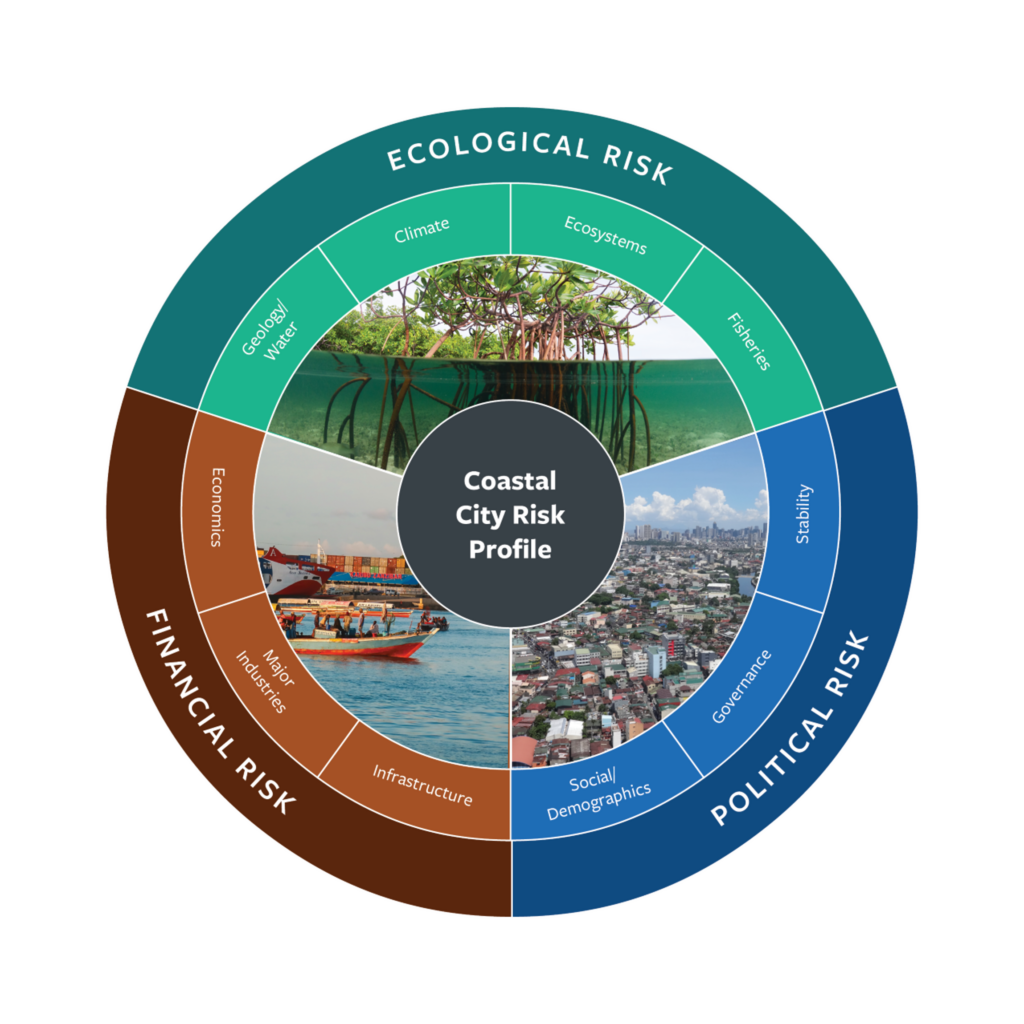
and measuring climate risk, A guide to the Climate and Ocean Risk Vulnerability Index, The Stimson Center, Environmental Security Program. Accessed August 16, 2021. https://www.stimson.org/2020/corvi-understanding-and-measuring-climate-risk/. These risks are displayed across 10 categories, grouped under three risk areas: ecological, financial, and political (see Figure 2). The 10 categories are in turn made up of close to 100 indicators, covering a range of issues including the vulnerability of vital infrastructure, the health of marine ecosystems, and urbanization dynamics in the chosen coastal city. Each indicator and category are scored using a 1-10 risk scale relative to other cities in the region, offering a simple reference point for decision-makers looking to pinpoint and categorize climate risks. The CORVI risk scores, which form the basis of a coastal city risk profile, are augmented with existing academic and grey literature, government documents, and key informant interviews to develop a comprehensive narrative and understanding of the coastal city’s climate risks and identify priority policy recommendations.
How CORVI is Different
CORVI builds on the work of previous indices but is distinct in three ways.
- Locally-Based: Unlike many other indices which tend to focus on the national or regional level, CORVI is city or small-island-based, providing sub-national level detail on the nature and impact of climate and ocean risks. This focus is based on extensive interviews with potential issuers of the CORVI tool, who noted that climate change is local and the difficulty of down-scaling national-level risk and vulnerability data to inform policy action to build climate resilience in specific communities.
- Holistic: CORVI looks across a broad set of ecological, economic, social and political risk factors connected to climate change impacts and that influence vulnerability of coastal cities and their residents. As part of the category and indicator selection process, indicator inclusion was primary based on its ability to capture and explain climate change risks in coastal cities, and not if data was available. This approach promotes a holistic understanding of climate change impacts to coastal cities.
- Data Driven: Through using Structured Expert Judgment (SEJ), CORVI is suited to producing actionable insights in data sparse environments. By combining empirical and survey data across a wide range of indicators, CORVI fill data gaps to provide a holistic assessment, while reducing data availability bias. This approach provides a contextual and data-driven assessment of climate and ocean risk vulnerability.

CORVI began in 2018, with the first two assessments – of Castries, Saint Lucia, and Kingston, Jamaica – completed and published in 2020. CORVI is now operating in 16 countries around the world, from the Caribbean to the South Pacific. The project now includes both full assessments, which incorporate around 100 risk indicators distributed across the 10 risk categories, along with rapid assessments, which incorporate 30-35 risk indicators across the same 10 risk categories.
Advancing the Sustainable Development Goals
CORVI also aims to contribute to the delivery of the SDGs – an essential framework to guide lasting, positive change. By providing data and information to measure climate risks in coastal cities, this project supports the delivery of the following SDGs:

CORVI operates in collaboration with national government authorities for every assessment. As a locally driven, comprehensive assessment of ocean and climate risk and vulnerability, the CORVI team engages with a wide range of partners on the ground, including national and local government, the private sector, civil society, and academia.
CORVI Rapid Assessments Completed
- Western Province, Sri Lanka
- Southwestern Urban Corridor, Barbados
- Tarawa, Kiribati
CORVI Full Assessments Completed
- Basseterre, St. Kitts and Nevis
- Castries, St. Lucia
- Chattogram, Bangladesh
- Dagupan, Philippines
- Dar es Salaam, Tanzania
- Kingston, Jamaica
- Mombasa, Kenya
- Suva, Fiji
CORVI Assessments Underway
- Aruba
- Belize City, Belize
- Dominica
- Mauritius
- Toamasina, Madagascar
Indicators
To ensure that the CORVI indicator scores provide a holistic risk rating, each is made up of five factors: current, past, and expected trends, the rate of change of the risk, and the impact of this risk on the coastal city.
- The BASELINE measures the current level of risk for each indicator relative to other coastal cities in the region. Baseline data for economic and social indicators is derived from the most recent year of complete data. Climate indicators use a longer time period of 15 years.10230-year time horizons are traditionally used to calculate the seasonal cycle and other long-term averages of climate variables. However, as the climate changes, current conditions are more dissimilar to those from 30 years ago than they are from 10 years ago. In this environment, the optimum climate normals (OCN) method can be used to calculate the minimum number of years required to accurately produce the climatological average for climate variables. The National Oceanic and Atmospheric Administration suggests that a 10-year time series for temperature and a 15-year time series for precipitation are acceptable minimum limits to produce an accurate climatology within a non-stationary period. CORVI follows the same limits that NOAA uses in their experimental seasonal forecast product by using a similar 15-year time horizon to measure climate indicators. For more information on OCN, see Wilks 2013.
- PAST TREND assesses the trend of risk for the past 10 years, measured from the baseline year. The only exception to the 10-year trend measure are the climate indicators, which use a 15-year trend horizon to account for slow onset changes.
- EXPECTED TREND assesses the anticipated trend of risk in the next 10 years, measured from the baseline year. The only exception to the 10-year trend measure are the climate indicators, which use a 15-year trend horizon to account for slow onset changes.
- MAGNITUDE assesses the degree of expected future trend change relative to other cities in the region. Change that happens quicker than expected is assumed to increase risk when compared to changes that take place over a longer time scale. This assumes that longer time periods of change contribute to less risk, as decision-makers have more time to adapt and build resilience.
- Finally, IMPACT assesses the importance of change for each indicator in describing future risk in the coastal city.
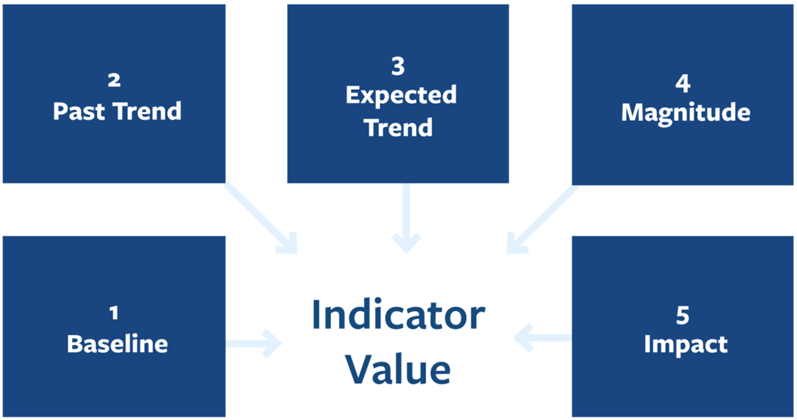
Data Collection and Structured Expert Judgement
To overcome data gaps, CORVI employs structured expert surveys to collect data that is otherwise unavailable. This primary data is combined with secondary data using the approach of structured expert judgement (SEJ) to produce a comparative score for each indicator in the assessment.103For an introduction to structured expert judgement, see Cherie Maestas, “Expert Surveys as a Measurement Tool: Challenges and New Frontiers,” in Lonna Rae Atkeson and R. Michael Alvarez (eds) The Oxford Handbook of Polling and Survey Methods (Oxford: Oxford University Press, 2018). SEJ is well-established social science technique that seeks to quantify risk when pre-existing secondary data is inadequate. Through interviews and surveys, as well as a series of weighting procedures to ensure data is representative, SEJ allows researchers to quantify topics that might otherwise be challenging to study in such a systematic fashion.
To apply SEJ to CORVI, subject matter experts across academia, government, civil society, and the private sector are identified through research and extensive outreach to stakeholders in the target coastal cities. These experts then refer the project team to other experts and stakeholders with appropriate expertise using “snowball sampling.”104Snowball sampling or chain-referral sampling is a non-probability sampling technique used when samples have traits that are difficult to find. In this sampling technique, existing subjects provide referrals to recruit additional subjects required for a research study. To guard against confirmation bias, survey answers are compared to a regional secondary empirical dataset to weigh the expert responses by utilizing a coherence check.105Abigail Colson and Roger Cooke, “Expert Elicitation: Using the Classical Model to Validate Experts’ Judgements,” Review of Environmental Economics and Policy 12, no. 1 (2018): 113-132. This ensures that experts whose answers do not match secondary data are not weighed as highly as those who do.
This approach has several strengths. First, CORVI incorporates the views of subject matter experts and local stakeholders at each stage of its implementation. This allows the final product to better reflect the specific context which it is seeking to measure and provide more focused information for end users. Second, pairing primary survey data with secondary data through SEJ also allows CORVI to provide insight into risks relating to urban coastal environments that existing secondary datasets do not cover. While the use of SEJ allows CORVI to assess a diverse range of risks, it should not be regarded as a substitute for empirical data collection. Rather, SEJ is best viewed as an alternative research technique specialized to analyzing topics with significant data gaps.1064 Kunreuther H., S. Gupta, V. Bosetti, R. Cooke, V. Dutt, M. Ha-Duong, H. Held, J. Llanes-Regueiro, A. Patt, E. Shittu, and E. Weber, 2014: Integrated Risk and Uncertainty Assessment of Climate Change Response Policies. In: Climate Change 2014: Mitigation of Climate Change. Contribution of Working Group III to the Fifth Assessment Report of the Intergovernmental Panel on Climate Change [Edenhofer, O., R. Pichs-Madruga, Y. Sokona, E. Farahani, S. Kadner, K. Seyboth, A. Adler, I. Baum, S. Brunner, P. Eickemeier, B. Kriemann, J. Savolainen, S. Schlömer, C. von Stechow, T. Zwickel and J.C. Minx (eds.)]. Cambridge University Press, Cambridge, United Kingdom and New York, NY, USA.
Appendix 4: Strategic Findings Roadmap for Dominica
This roadmap was prepared at the request of the government of Dominica by Jonathan McCue, an independent consultant, to review the country’s existing climate adaptation efforts.
Introduction
Given the Government of Dominica’s (GoD) pledge to create the worlds’ first “climate-resilient country”, the need to strengthen adaptation efforts and mainstream climate resilience across sectors, and within national policies, strategies, and plans continues to remain a key priority. The overarching framework to support this approach remains the National Resilience Development Strategy Dominica 2030 (NRDS) which is being operationalized through the Dominica Climate Resilience and Recovery Plan 2020-2030 (CRRP).
Of relevance, the CRRP articulates 20 Climate Resilience targets107Targets No. 8 “100% functioning of critical Government and emergency services during and after an extreme climatic event”, No. 14 “no more than 5% of schools and healthcare facilities severely damaged or destroyed by an extreme weather event” and No. 7 “less than 50% agriculture […] losses as a percentage of total losses”. Similarly, Dominica’s Intended Nationally Determined Contribution 2015 (INDC) lists 11 priority measures for building climate resilience, of which the following have been incorporated into the intervention logic:(c) ”establishing early warning systems […] and emergency preparedness training programs in vulnerable communities”, (d) “facilitating capacity building through education, awareness and training programs on climate change risks and resiliency measures”, (e) “promotion of food security through climate resilient agricultural […] development”, (f) “establishing the enabling legal/institutional framework to facilitate coordination/ implementation of priority climate change measures and the mainstreaming of climate change activities into national, sectoral and community planning/development” and (j) “design and implementation of climate change adaptation and disaster risk management education and awareness program at all levels”. and it is hoped that by adhering to these, and with the continued provision of new information, decision makers will possess the guidance to help them prioritize actions that build resilience through climate-smart policies, including (amongst others), an increased use of nature-based solutions. The key ingredient required to support this, as just stated above, is that rigorous data collection and subsequent integrated analysis is necessary in order to develop successful solutions. Projects such as CORVI offer significant value by helping to prioritize effort on where (and on what) information is required. However, the results and recommendations of the rapid vulnerability assessment need to articulate clear tangible actions by which the development of further climate risk programs may be appropriately targeted.
The following text considers the CORVI recommendations within existing resilience frameworks and provides a set of observations and recommendations, separate from the recently conducted CORVI assessment, that (where suitable) align with the commitments and statements made within the Government of Dominica Budget Address for Fiscal Year 2023/2024. These recommendations also consider more terrestrial climate issues for Dominica, as CORVI focuses strongly on coastal communities and ecosystems.
Why are CORVI Findings Important for Dominica?
It is well understood that several factors (exposure, sensitivity, and adaptive capacity) all contribute to Dominica’s high vulnerability to climate change, including:
- Its small area and location in a zone exposed to natural and human-induced hazards108such as volcano eruptions, earthquakes, and tropical cyclones (the latter exacerbated by the effects of climate change), which is the reason for disasters usually being of national proportions.;
- The majority (90%) of its population resides in coastal areas and relies on activities highly sensitive to changes in climatic conditions (e.g., up to 40% of the workforce is employed in agriculture109World Bank, Government of the Commonwealth of Dominica. (2018). Project Appraisal Document for an Emergency Agricultural Livelihoods and Climate Resilience Project);
- Poverty rates reached 28.8% (and 50% among Kalinago indigenous people) prior to Hurricane Maria in 2017; the rate likely rose to 42.8% in its aftermath, and could be even higher now if the effects of COVID-19 are considered;
- High rates of vector-borne, infectious, and non-communicable diseases, especially among marginalized groups: around 35% of the population suffers from malnutrition110WHO, UNFCCC and PAHO. (2020). Health and climate change country profile 2020. Small Island Developing States Initiative (with increasing rates among the younger population) and, in 2017, Dominica had the second highest age-standardized incidence rate of dengue worldwide111Zeng Z, et al. (2017). Global, regional, and national dengue burden from 1990 to 2017: a systematic analysis based on the global burden of disease study EClinicalMedicine 2021;32:100712.; these types of diseases are expected to increase in number under future climate conditions112Schnitter, R. et al. (2018). An assessment of climate change and health vulnerability and adaptation in Dominica. International journal of environmental research and public health 16(1):70.;
- Despite having relatively high rates of school enrolment (94% for primary and 91% for secondary education113UNICEF (2017). Situation analysis of children Commonwealth of Dominica. UNICEF Office for the Eastern Caribbean Area. Barbados), young people are not trained to address the challenges and opportunities that climate change is creating in the current labour market, and those who can access tertiary level education prefer to seek job opportunities overseas while unemployment rates are rising up to 40% domestically.
Of note, three core risks identified by the CORVI rapid assessment for action are as follows:
- Growing risks from extreme weather events
- Vulnerable marine and coastal ecosystems
- Technical, financial, and human resource limitations
From the articulation of these risks defined through the CORVI process, the priority recommendations as are as follows:
- Recommendation 1: Strengthen the Institutional Framework for Integrated Climate Resilience.
- Recommendation 2: Co-Develop and Implement a sustainable and equitable marine management plan.
- Recommendation 3: Improve Accessibility and Sharing of Climate Risk and Resilience Information.
An independent consultant has interpreted the findings produced by the Stimson Centre and has identified additional “pillars” that that align with the three recommendations identified above, which merit further attention.
Streamlining and Informing Existing/Future National Initiatives and Commitments
In order to support Recommendation 3 (“Increase transparency to mobilize financial resources”), it is critical that all vulnerability related projects (including CORVI) ensure that their findings are aligned to the National Resilience Development Strategy 2030 (NRDS) and the Climate Resilience and Recovery Plan 2020-2030 (CRRP). Both emphasize the need for a holistic, cross-sectoral, and multilevel approach to climate-resilient sustainable development. Accordingly, there is a need to address critical vulnerabilities in Dominica, including thematic areas that CORVI indicator findings didn’t appear to prioritize such as food security, agriculture, health, and education sectors. National attention on these matters is likely to remain a priority and a consistent integrated approach is likely to be needed in order to support the mobilization of financial resources that will be needed to support the delivery of the 20 Climate Resilience targets that are clearly highlighted within the CRRP.
Bing able to streamline and inform future national initiatives and commitments inevitably requires targeted attention to be placed on the message that is linked to Recommendation 1 above (“Strengthen efforts to build resilience against extreme weather events”). A key aspect of this for Dominicans relates to land management and food security perspectives which remain longstanding issues that require continued attention. These are key topics that are supported by frameworks already in place such as the Medium-Term National Agriculture Policy 2021-2030, along with documents such as the Agriculture and Food Systems Transformation Roadmap, which all contribute towards operationalizing the CRRP at the sector level. Further policies and plans underscoring the importance of promoting climate-resilient agricultural practices are already in place, including the National Land Use Policy (2015), the National Physical Development Plan (2016), the National Forest Policy (2022), and the Draft National Fisheries and Aquaculture Policy.
Alongside the findings of the Rapid Assessment, both health and education sector perspectives will continue to need attention, as highlighted in the Strategic Plan for Health, the National Disaster Management Multi-Hazards Plan for Health, and the Strategic Plan for Education, which were all recently updated to be aligned with the CRRP.
The CORVI Rapid Assessment findings suggest that ecosystem resilience (sustained Nature Capital etc) in Dominica remain critical. This resonates well with CORVI Recommendation 2: “Develop a sustainable and equitable marine management plan”. The importance of this issue is also clearly articulated nationally, as the country has ratified the UNFCCC, the Kyoto Protocol and the Paris Agreement, and the priority measures listed in its Intended Nationally Determined Contribution (2015) and more recently the NDC (2022) are closely aligned with the CRRP targets and the proposed nature-based interventions (as also captures within the Dominica National Ocean Policy- NOP).
Opportunities for Blending Similar Climate Risk Project Findings
In support of CORVI Recommendation 3: “Increase transparency to mobilize financial resources”. Dominica is already following a series of similar sectoral and cross-sectoral climate resilience initiatives/projects that are being undertaken in parallel to the ComSec support that has helped to deliver these CORVI findings. That said, there is a need to analyse, merge, build upon and complement outputs that have, or are already being produced to help scale up good practices by extending the support to other communities, drawing on relevant lessons learned. A non-exhaustive listing of ongoing/future project outcomes are briefly outlined below.
The Word Bank (WB) funded a comprehensive set of measures under the Disaster Vulnerability Reduction Project (DVRP) (2014-2020) to address infrastructure vulnerabilities (construction of water storage tanks, rehabilitation of roads, and immediate works needed after TS Erika and Hurricane Maria), and deficiencies related to data collection, management and monitoring (LiDAR model for Dominica, deployment of hydro-meteorological network, and development of soils and forest maps, as well as the construction of the Meteorological office and the Forestry nursery facility), amongst others. That project will finance complementary resilience-oriented infrastructure measures, draw on the established data collection systems when designing integrated climate information subsystems for sectors including health and agriculture, and build on the strengthened institutional capacities when enhancing inter-sectoral coordination.
Within the agriculture sector, the Dominica Emergency Agriculture Livelihoods and Climate Resilience Project (DEALCRP) (2018-2023) is a WB-funded project contributing towards the restoration of agricultural livelihoods and enhancing the climate resilience of farmers and fisherfolk affected by Hurricane Maria. The project is establishing synergies to better climate-proof agricultural facilities, adopting new technologies by modernizing inputs to increase climate resilience, strengthening agribusinesses and improving access to markets (especially the e-agriculture strategy), and revising agricultural policies and regulatory frameworks accordingly.
With regards to health and education, the “Smart Health Care Facilities in the Caribbean” project, funded by the United Kingdom’s Foreign, Commonwealth and Development Office (FCDO), the “Model Safe School Programme in the Caribbean” (MSSP), funded by the Caribbean Development Bank (CDB), and the “Dominica Climate Resilience & Restoration” Project, funded by the Government of Canada, are pivotal initiatives in the GoD’s efforts to provide climate-resilient public services to the population. The guidelines, standards and other resources produced, in particular for the retrofitting of buildings, as well as lessons learned through their application, will be utilized to expand the climate-proofing of essential public services.
Other relevant GCF pipeline projects being proposed within Dominica include the “Establishment of National Financing Vehicle” project, to which its exit and sustainability strategy is directly linked Similarly, it is aligned with the “Micro Finance facility and Micro Insurance to enhance resilience of livelihoods in local communities and private sector” initiative, which promotes, amongst others, microfinance for ecosystem-based adaptation and parametric insurance schemes, as well as “The Vulnerability, Risk and Resilience Fund” project, which is focused on the provision of rehabilitation and reconstruction finance after natural disasters in a manner which enhances resilience against extreme climatic events. The Dominica Community Resilience Enhancement Project (DOMCREP) is a public-private partnership project focusing on enhancing community resilience. In addition, the “Rehabilitation of critical farm access roads in the development of the food security” project will link to Component 1 of this project by climate-proofing critical farm access infrastructure that was damaged by Tropical Storm Erika, and the Dominica Kalinago Resilience Project by seeking to implement an environmentally friendly, low-ecological footprint approach to protect and improve an indigenous society that is under threat from intensifying climate change.
On the assumption that the CORVI results reflect the latest “voice” of national experts on the topic of climate and disaster resiliency, then these new findings should be embedded both into the above existing (ongoing projects114https://www.greenclimate.fund/sites/default/files/document/dominica-country-programme.pdf) plus importantly, the design on any future project/programs that may be considered of relevance to Dominica. These should focus on programs that:
- Diversify the Dominican economy;
- Enhance climate resiliency through supporting health, education, agriculture/fisheries sectors;
- Involving the Youth to create climate-resilient communities.
The above may include the details of the following future funding opportunities.
Integrated Climate Adaptation and Resilience in Dominica (ICAR Dominica)
The ICAR-Dominica project (GCF-funded) is embedded in a broad portfolio of sectoral and cross-sectoral climate resilience initiatives and has been designed based on a comprehensive mapping of ongoing and completed projects with common objectives. It will build on and complement their outputs, scale up good practices by extending the support to other communities, and draw on relevant lessons learned.
It seeks to enhance the resilience of the most vulnerable communities in Dominica by applying an integrated and mutually reinforcing approach covering three sectors: Health, Education, and Agriculture. Therefore, the project will increase the resilience of communities by reducing the vulnerability of essential public services and livelihoods they rely upon. The project will also set the stage for youth to take action and help to transform Dominica into a climate-resilient future. Importantly, these sectors share characteristics that make them crucial for creating a resilient nation: i) they provide essential services for the wellbeing of Dominica’s most vulnerable population (children, young people, small farmers, women, indigenous peoples), which rely on uninterrupted and quality services to increase their capacity to adapt and respond to climate-related shocks and stressors and to speed up recovery processes; ii) they share linkages (synergies) that can be harnessed to provide integrated, reinforced, and supportive solutions to most vulnerable communities (e.g. after Hurricane Maria and during the pandemic of Covid-19 pandemic, some schools and health centers were used for shelter, emergency meetings, coordination of disaster responses, distribution of supplies and provision of medical assistance, creating a network of safe spaces for communities); and iii) their current precarious conditions in terms of infrastructure, technologies, human resource capacities of the staff, and supply chains make them highly vulnerable to climate change, which is affecting and prevent them from being.
Harnessing Innovative Technologies to Support Resilient Settlements on the Coastal Zones of the Caribbean (HIT RESET)115https://hitresetcaribbean.org/
This project (2020-2024) aims to provide support for projects which develop innovations to increase resilience in coastal communities of the Caribbean, as well as strengthen institutions, and national and local governments’ ability to leverage information and knowledge for policy amendments. HIT RESET Caribbean represents a wide range of activities in various Caribbean countries, aimed at harnessing innovative technologies to make Caribbean coastal communities more resilient to the impacts of climate change. One of the third-party projects includes the Coastal Hazard Vulnerability Project (CHVP), in Dominica. The purpose of the project is to reduce the coastal vulnerability of citizens through improved access to data and strengthened decision-making autonomy of communities, and key sectors of Dominica, reliant on coastal resources. With its ecosystem-based approach, the project tries to avoid fighting against the sea by looking for more sustainable solutions that work with the sea. The vulnerability assessment target areas are located in Dublanc, Coulihaut, Mero Beach, Layou Village, Newtown, Scotts Head, Dubic/Fond. The expectations of this project are improving coastal vulnerability data in Dominica, strengthening the sustainability of coastal zones, monitoring, and practical resilience guidelines.
Outputs include the production of a comprehensive data platform for a cohesive share of coastal vulnerability data as well as make recommendations or mitigation, among all coastal-related sectors in Dominica and to inform policy decision-making. This platform will display comprehensive coastal erosion and vulnerability data for Dominica and can be linked to Dominica’s database DOMINODE116https://oacps-ri.eu/wp-content/uploads/poster-comprhensive.pdf
The Small Island Developing States Capacity and Resilience Programme (SIDAR) Program
This was announced at COP26 in Glasgow. Starting in November 2021, it will provide up to £40m over five years that will increase the capacity of Small Island Developing States (SIDS) to access existing climate and wider concessional funding and support them to manage and deliver programs. SIDAR is by definition designed for low-capacity states, working through established SIDS partners and retaining flexible approaches will ensure that activities are informed by experience of working through crises. This program forms part of the overall UK contribution to accelerate climate action by, and for, the most vulnerable Overseas Development Assistance (ODA) eligible SIDS, of which Dominica obviously qualifies. Funding is scheduled to conclude towards the end of 2026. The intended “impact” of the program is that “SIDS have more resilient development pathways, better adapted to climate change, and from green/blue economic growth embracing nature-based solutions”.
Roadmap and Way Forward
Action Point 1: Supporting the “National Reset” Strategy “Whole of Government” Approach
In support of CORVI Recommendation 1: “Strengthen the institutional framework for integrated climate resilience”, achieving resilience for vulnerable communities in Dominica and meeting their adaptation needs requires an intertwined set of interventions that increases their social, economic and cultural capitals along with their capacities to autonomously pursue the adaptation process in the future. This means that the proposed solutions (based on CORVI and other vulnerability related studies) will require holistic “whole of government” approaches with integrated and inter-sectoral coordination to avoid potential trade-offs and enhance synergies among interventions. In fact, the Honourable Prime Minister in November 2022, stated the need for a ‘National Reset’ in Dominica which implies this is “whole of government” in its approach. It is therefore recommended that the findings of the CORVI work, in parallel with findings from other projects (completed, underway or planned) to align support that consists of a clear coordinated “message” that supports such a “National Reset”.
One activity to support this “National Reset” is to prepare a clear “Signpost Plan” for the Resilience Unit (within the Ministry of Finance, Economic Planning, Climate Resilience and Social Security) to adhere to. This is needed as in accordance with the Climate Resilience Act of 2018, the Climate Resilience Execution Agency’s (CREAD) tenure is due to end in December 2023117CREAD was created in the aftermath of Hurricane Maria that devastated the island in September of 2017 to provide coordination and leadership to the country in its pursuit to rebuild the island as the first climate resilient nation in the world.. It is acknowledged that the work of the Agency remains very relevant and important to achieving this National Reset, hence some of CREAD’s activities shall be systematically handed over to other Government agencies and the private sector. The remainder of CREAD’s activities will now continue within a Resilience Unit, however, the Unit now requires a clear “signpost” document with regards to the effective use of any vulnerability and risk assessment work to guide sustainable development in Dominica. Inevitably, this signpost plan is already designed in Dominica as its NDC118https://unfccc.int/sites/default/files/2022-07/The%20Commonwealth%20of%20Dominica%20updated%20NDC%20July%204%20%2C.pdf which contains the most detailed and ambitious emissions-reduction target specification in the region. That said, it is recommended that a “Signpost Plan” is prepared that in many ways may represent an Operations Manual for the new Resiliency Unit to measure performance against. This therefore should include all human and technological capacity needs to support the National Reset.
Action Point 2: Use CORVI to help Facilitate a Sustainable Blue Economy
In support of CORVI Recommendation 2: “Co-Develop and implement a sustainable and equitable marine management plan”, there is a need to support he diversification of the Dominican economy through facilitating a clear approach towards achieving a Sustainable Blue Economy (SBE). This complements existing work that is underway to finalize the implementation of the Dominica NOP which resonates with the message in 2019, whereby the GoD announced its vision to develop a regenerative SBE which will support the health of its people, safeguard the natural environment and protected areas, increase investment opportunities, create more jobs, help more citizen to generate wealth, and build further resilience in the national economy.
SBE will be pivotal in promoting the marine component of Dominica as the “Nature Island of the Caribbean”, building collaboration and cross-linkages between tourism and agriculture. In fact, blue-green economic recovery, through the creation of green jobs in sustainable and fast-growing sectors and increase access to finance for local private sector enterprises while building resilience to natural disasters, climate change, and economic disruptions is seen as an important aspect of this “National Reset” (see Action Point 1). The findings of the CORVI process will hopefully support the prioritization of actions needed to move this forward and to ensure a clear targeted approach is adopted for this blue-green recovery strategy.
Of note, work is already underway on this aspect. Through recent work in 2022 by the National Geographic “Pristine Seas119https://caribbean.loopnews.com/content/national-geographic-team-explores-dominicas-marine-waters” team, working with Dynamic Planet,120https://www.ourdynamicplanet.com/ recommendations were made to define a route map for a SBE which included improving the health and resilience of coastal ecosystems, increasing coastal fish stocks, improving inshore fisheries, and grow the ecotourism industry (for example by establishing the first Sperm Whale Reserve in the world which will be a huge marketing tool for Dominica’s destination as an ecotourism mecca).
Finally, and as part of this support towards developing a SBE for Dominica, CORVI findings (and others) also need to be inculcated into assessing the resiliency of priority sectors including transport, manufacturing and construction, agricultural, forestry, waste and energy where there is clear potential for emerging SBE sectors such as renewable energy development despite market and financial barriers that are currently obstructing the pathway to green growth. From this, there may be need for Parliament to support legislative amendments (for example to the Fisheries Act of 1987 in order to facilitate the regulation of the dive sector, recreational fishing, whale watching and water sports activities etc).
Appendix 5: Research Team and Acknowledgements
Research Team
Stimson Center
Natalie Fiertz, Tracy Rouleau, Sally Yozell, Regan Kwan, Wendy Wang, Noah Meyer
Commonwealth Blue Charter
Heidi Prislan, Dr. Jeff Ardron, Subaskar Sitsabeshan, Hilary Enos-Edu, Jonathan McCue
Arnelle Isaac and Shania Scotland (In-country Coordinators)
Acknowledgements
The research team wishes to express its appreciation for the support provided by the following organizations.
We are grateful to all of the individuals and organizations that participated in the surveys and workshops, including many offices of the Government of Dominica.
Thanks to the Commonwealth Blue Charter for its invaluable partnership and support in advancing this project.
We appreciate Qlik’s continued support of the CORVI Data Portal, which was used to calculate CORVI scores and conduct analysis.
We also wish to extend special thanks to the Ocean Risk and Resilience Alliance (ORRAA) and Environment and Climate Change Canada for their generous financial support to the Climate and Ocean Risk Vulnerability Initiative (CORVI) project.







Community Adaptation for a Water Festival Without Clean Water