
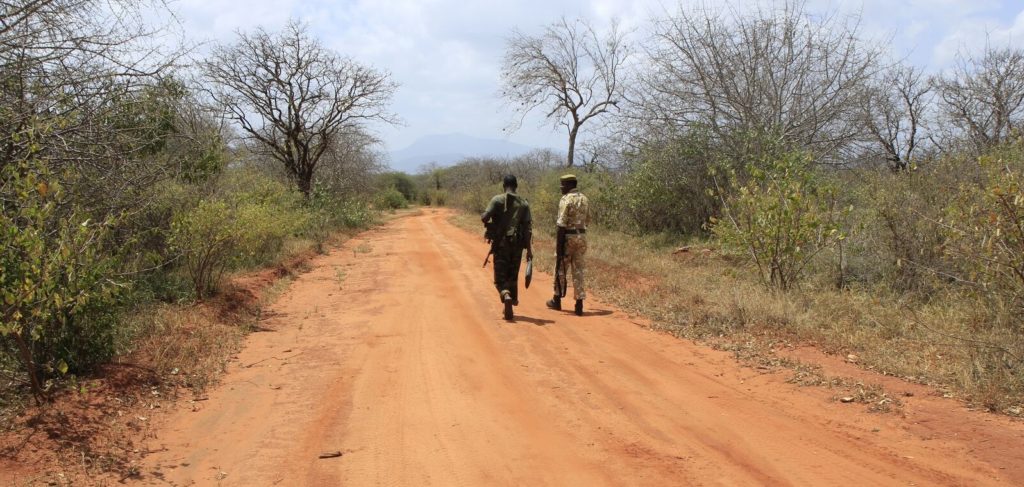
In September 2013, a Stimson Center team visited Tsavo West National Park, home to the Ngulia Rhino Sanctuary, a 100-square-kilometer reserve which, at the time, held around 60 of Kenya’s 650 black rhinos. Just a few dozen rangers with basic military training were charged with defending Ngulia’s wildlife from an increasingly sophisticated and militarized poaching threat. Despite being on the frontlines, the rangers had little access to real-time information about the goings-on around the park. They were under-equipped and in need of a more efficient and effective way to document and share information gathered during patrols.
To meet this need, Stimson helped design and implement a command, control, and communications (C3) system that digitized the intelligence gathered by rangers. The model is scalable and replicable, with wide-ranging potential applications in law enforcement, border security, and critical infrastructure protection.
This study – and the initiative it details – is the manifestation of more than three years of work across continents, involving actors in the public, private, and non-governmental sectors. The effort embodies the Stimson Center’s strategy to disrupt and redefine the role a think tank can play in addressing complex issues of global concern – in this case, the international security and development ramifications of wildlife crime.
Project Ngulia was made possible by support from the United Kingdom Department of Environment, Food & Rural Affairs’ Illegal Wildlife Trade (IWT) Challenge Fund.









Community Adaptation for a Water Festival Without Clean Water