

Sahar Khan (Moderator): Good morning, everyone. I’ll just let a few people filter into the room before we start, so please allow about 30 or 40 seconds for that to happen.
All right, people are filtering in. So good morning to everyone here and good evening to folks in the region. Thank you for joining us today. I’m Sahar Khan, the deputy director of the South Asia program. And today’s event is quite special as it showcases this year’s Visiting Fellows Research. The Visiting Fellowship was established in 1993 and now has a network of 135 fellows. It’s a year long fellowship that combines professional development in research, writing, and public presentation skills. And our visiting fellows spend about 10 months in their home countries researching and then two months in DC where our team leads them to meet analysts and regional experts in Washington DC, and they’re able to gain extensive exposure to regional and international policymaking communities. I also have some exciting news to share, our Strategic Learning Initiative released its fifth free online course today. It actually went live, about 20 minutes ago.
It’s called the Naval Competition in the Indian Ocean Region, and it’s a four-hour course that dives deep into deterrence at sea. The course evaluates technical requirements, policy drivers, emerging trends and risks related to maritime security in the Indian Ocean region. It also makes learning easy through its interactive features, text explainers, and video interviews with more than 30 scholars and practitioners, including some of our visiting fellows like Bashir Ali Abbas, who you’re going to hear from later in the hour. So please do enroll in this fantastic course. And a huge congrats to our Strategic Learning Initiative team who has been working tirelessly to get this amazing resource to the finish line. And you will also see a link in the chat for easy access for those of us who are joining us right now.
Okay, so back to the event. Today’s salon will begin with Nikita Singla. Nikita is a trade specialist and a solo backpacker and yoga instructor with over a decade of experience in the field. She examined the scope of U.S. and India trade relations by focusing on the implementation of specific regulations like cargo clearances and why they should matter for the bilateral relationship’s security dynamic.
We also have with us here Dr. Seema Khan. She’s a lecturer in the School of Humanities and Social Sciences at Deakin University in Australia, and in a past life was a Pakistani bureaucrat working at the Ministry of Commerce. She’s researching the China-Pakistan Economic Corridor, which has had its fair share of criticism. Instead of zooming on the negative, Seema is examining the positive, examining how Pakistan’s road infrastructure developed under the CPEC’s first phase can actually serve as a confidence building measure and connect Pakistan to its neighbor via trade.
We also have with us Usama Nizamani. He is the deputy lead at Oxford Policy Management, an international development consultancy, and executive director at Crest, which is a consultancy that he has started that focuses on resilience, strategy, and technology. So watch the space as he develops this consultancy further. Previously, Usama was a senior researcher with Infer, a digital platform conducting policy analysis on current events and the host of the podcast Infer-Talks, which I have the pleasure of listening to often. So it’s a really great resource. Usama’s research is on how emerging and disruptive technologies are impacting India and Pakistan’s crisis behavior and strategic stability.
And last but not least, we have Bashir Ali Abbas. Bashir is a research associate at the Council for Strategic and Defense Research in New Delhi and is involved in organizing the Chao Track, which is a Track II dialogue between India and Pakistan. There are three of its kind, and he has been doing the Chao Track for a few years now. He has explored naval competition in the Indian Ocean region and the potential for conflict escalation in the maritime domain between India and Pakistan. He also writes a column on the Middle East for the Indian Express, which is also an excellent resource and I think keeps him pretty busy. Now Nikita, I’d like to start with you, so over to you. And thank you so much, all, for your time.
Nikita Singla: Thank you so much and thanks to everyone who has tuned in to listen to us. I would’ve normally spent 10 minutes telling everyone what the experience was, but we have been given six minutes to present our memos, so I go straight into that. So actually, security of our nations is increasingly linked to security of trade, as we all know, because any kind of disruptions to global supply chains can really profoundly impact national economies and by extension, national security. And I would like to quickly give two examples here which was covered massively in media. Which was in 2018, the Port of San Diego, one of the busiest ports on the West Coast, experienced a ransomware attack that critically impaired terminal operations and led to substantial financial losses. And the impact was seen as far as in ports in India, especially Nhava Sheva, the Port of Bombay.
And before that, in October 2010, a major security threat emerged when a bomb was discovered aboard a UPS cargo plane and the device was actually found in a package addressed to a synagogue in Chicago. And that bomb actually had the capability of bringing down an entire aircraft, really highlighting what kind of a severe security vulnerability exists in air cargo operations. So any threat to trade routes, it could be through piracy, cyber attacks, terrorism, or geopolitical tensions, can rapidly escalate into broader security concern. And that’s what I was trying to look at through my research. And this is even more important for both U.S. and India because of the growing apprehension about the potential use of Chinese manufactured containers and cranes for surveillance or potentially to introduce vulnerabilities into critical infrastructure.
So the question of the research really was how do you balance cargo speed and security? Because when you have to enhance the cargo speed, you want to expedite cargo clearance, we need more facilitation, we need more green channel cargo, we need faster customs clearance. And for that, that means we need lesser physical inspections because physical inspections delay cargo movement. But how do you do all of this? How do you facilitate cargo movement without compromising national security? And that’s where there are good practices in both U.S. and India, more so in the U.S., where India could learn from and vice versa.
So there are top three recommendations I would like to focus on, which my policy memo also covers. One is to target high risk shipments. As an example, Food and Drug Association is looking at 52 million import entries, second largest after Customs and Border Protection in the United States. But despite looking at 52 million import entries, it’s physically inspecting only 1% of the cargo, 1% of the food imports. So it’s actually FDA is using a whole automated data mining software, which is something that Indian FSSAI, which is Food Safety Standards Authority of India, could learn from or adopt the best practices to see how do you actually allocate more of your resources for high risk shipments so that you could free up your resources for the lower risk so that the lower risk shipments can be expeditiously cleared. So that’s one, basically exchange of data analytical capabilities between the United States and India to target high risk shipments.
Secondly, it’s about pre-screening of air cargo shipments. As I gave an example of the bomb that was aboard the UPS cargo plane, there was a similar incident in 2010 where a bomb was discovered at Dubai International Airport aboard a FedEx plane. So there have been all these incidents. And after that, five countries in the region have actually moved from pre-arrival to pre-loading. What does that mean? Initially pre-arrival, all the cargo information needed to be transmitted electronically to customs for customs clearance. But now as per World Customs Organization, it has been moved to, the requirement has been moved to pre-loading, that before the cargo even gets loaded onto the aircraft, the information needs to be electronically shared.
And the third and the last point is around increasing transparency of the cargo movement. As they say, what gets measured gets done. And here it’s an example of India where we are monitoring continuously annually 15 ports in India that account for 70% of India’s trade to do a regular performance benchmarking and see how much time it’s been taking for clearance of imports and exports at these 15 ports, which helps in better supply chain planning. And this is what the U.S. could also start implementing at its different ports. Overall, lastly, I would like to say that both nations, the bilateral relations are at an all-time high and hopefully it will continue under the new administration as well. Both the nations share aspirations for a free and open Indo-Pacific where secure and efficient trade routes are key for regional stability. And by enhancing cooperation, the U.S. and India can build not just more resilient supply chains, but more importantly reduce their dependence on China and ensure uninterrupted flow of critical goods. And so these are some of the areas where U.S. and India could collaborate. And I think I’m on six minutes and I will stop here, Sahar. Thank you.
Sahar Khan: Thank you, Nikita. That was great. Over to you, Seema.
Seema Khan: Thank you and good morning, everyone. It’s such a pleasure to see you all at the same platform, the same environment. I’ll jump straight into the presentation given the time constraints. So today, I’ll be sharing my perspective on the China-Pakistan Economic Corridor, the CPEC, and its potential for regional connectivity. Over the next five minutes or so, I’ll be outlining the current status of the CPEC and the challenges faced during its operational phase and regional and global apprehensions. I’ll also touch on how CPEC infrastructure could serve as a confidence-building measure between India and Pakistan, paving the way for regional stability and cooperation. The CPEC is a $62 billion project spanning 2,000 kilometers all over Pakistan and is structured into three phases.
And I’ll be focusing today only on first phase’s output, which is the road infrastructure, which has laid the groundwork for enhancing regional connectivity and economic activity in Pakistan and beyond. This infrastructure facilitates trade and logistics, directly engaging communities and businesses while fostering regional integration. Despite its potential, Pakistan faces significant challenges in realizing CPEC’s full benefits. Political instability on top of it, bureaucratic delays, and corruption are long-standing hurdles. More critically, the country grapples with a severe financial crisis marked by high inflation, trade deficit, and unsustainable debt levels. And then most alarming is the resurgence of militancy which exacerbates these challenges. Groups like BLA and the TTP are not only targeting CPEC projects, but also the skilled labor, including Chinese nationals, which is further destabilizing the region and deterring foreign investment.
Beyond domestic issues, CPEC is also fraught with geopolitical tensions, and regional and global actors, particularly India and the U.S., view the project as a part of China’s broader strategy to expand its influence in South Asia and Indo-Pacific region. And why I’m including Washington’s concerns here because the China-Pakistan partnership also complicates U.S. efforts to fortify strategic alliance with India in the Indo-Pacific region where Washington sees New Delhi as a crucial counterweight to Beijing’s influence. Of particular concern in the corridor for both U.S. and India is the Gwadar port because of its strategic location, which can be used as a naval base, potentially can be used in future. It’s not yet, but maybe. Both Washington and New Delhi see Gwadar port as a surveillance point for monitoring maritime traffic in Indo-Pacific.
In addition to strategic concerns, critics also argue and criticize the Chinese loans for CPEC projects, which adds up to Pakistan’s debt, calling them predictor lending. China is Pakistan’s largest external creditor, as per some reports which says that they are, but then it is accounting for 28% of its total external public debt. India’s objections stem from the northern route, which is cross traversing through Gilgit-Baltistan, which India claims to be its own territory. These factors make a CPEC a focal point of geopolitical contestation. Despite these challenges however, I argue and firmly believe that CPEC’s infrastructure development offers untapped opportunities for regional connectivity. It provides a comprehensive transport network that could facilitate seamless movement of goods and energy. India, for example, could use CPEC infrastructure to complement its existing trade routes, enhancing access to energy reserves from Central Asia to the Middle East. Rather than viewing CPEC solely as a strategic threat, leveraging its connectivity potential could foster regional interdependence.
These neighboring countries can operate and cooperate within a framework that foster cooperation, stability, development across the broader region and a sense of shared ownership and mutual benefit. In my opinion, promoting economic interdependence through CPEC would foster closer ties between China and India also, encouraging mutually beneficial relationship. And I have a reason to say, given the trade volume between the two countries. Multilateral trade agreements among India, Pakistan and China may reduce conflict risks and established cooperative regional frameworks, aligning strategic and trust and balancing regional geopolitics. Achieving these objectives require a prioritizing dialogue mechanism between India and Pakistan to capitalize on the economic benefits that cooperation can bring. Both governments could consider establishing joint forums to discuss trade and economic integration with support from international mediators if needed to help overcome political barriers. This collaborative approach would serve as an integrative strategy for the collective upliftment of the region’s population, which makes up nearly one-third of the world’s total.
While the road ahead is bumpy, the potential benefits of CPEC for regional prosperity are immense. It can serve as a conduit for energy and trade, enhance regional economic stability, and provide a platform for dialogue and conflict resolution. Economic interdependence through CPEC can reduce the likelihood of conflict and offer a pathway for diplomatic engagement on more contentious issues. We need to focus on fostering prosperity and peace through enhanced economic connectivity. This aligns with established theories of economic interdependence and could serve as a model for resolving conflicts through economic cooperation in other regions as well. Let’s draw on these insights and continue to work towards a more connected, prosperous, and peaceful South Asia. With this, I conclude my part of presentation. And thank you for your attention.
Sahar Khan: Thank you so much, Seema, and Nikita as well. So I wanted to sort of start off this event by asking both of you a few questions since your topics are somewhat similar and focused on trade. And Nikita, I wanted to start with you. You mentioned in your presentation how the bilateral relationship is going really well between India and Pakistan, how it’s strong, and you sort of expect that relationship to keep going stronger. But I wanted to ask you, if I can, about what are India’s expectations for trade facilitation under the incoming Trump administration? And do you believe that cargo clearance especially will be a priority? And if not, then what would be the priority for the Trump administration?
Nikita Singla: Thanks, Sahar. It’s a tough one to predict, but I would still like to say that trade policy is something that’s impacted more by change of administrations and trade facilitation is relatively less impacted because trade policy is more geopolitical and geo-economic in nature. And once those policies are established, based on those policies, you need to make sure that the situation on the ground is conducive enough for the export and import to actually move. So the entire discussion of increase of tariffs under Trump administration or America first under Trump administration, I think that actually makes the case for trade facilitation stronger because there’s a higher focus on improving national security, there’s a higher focus on reducing dependence on China, which actually makes the case for looking at balancing speed and security even stronger, and that’s where both the countries need to collaborate.
And I’ll give you one example as you ask about expectations of India. U.S. has a program called CTPAT program, which is Customs Trade Partnership Against Terrorism. That’s a program under Customs and Border Protection, under CPP, where basically what happens is customs and trade, they partner. Customs actually offer trade benefits of expedited movement, access to faster lane movement, et cetera. And in return, trade offers intelligence to customs to improve security, to improve port security as well as supply chain security. And in the U.S., it’s called CTPAT, while in all other parts of the world it’s called AEO, which is Authorized Economic Operator program. It’s basically a trusted trader program to improve national security. And India is working very actively to sign mutual recognition agreements for its trusted trader program with other countries so that it’s an end-to-end supply chain security across the whole movement of goods. And India and the U.S. they already have signed an MRA, a Mutual Recognition Agreement between U.S. CTPAT and India AEO. But I think India is looking at full implementation of that MRA so that the trade between U.S. and India could be strengthened.
Sahar Khan: That’s really helpful. Thank you so much, Nikita. Seema, I have a question for you as well. I think you’ve done a really good job sort of advocating for the transport infrastructure that has been completed under the first phase of the China-Pakistan Economic Corridor. And for our listeners here who may not be familiar, who may not be that familiar with CPEC, it has had three phases, and currently the first phase began in 2015 and it ended in 2022. And CPEC, for what it’s worth, has its challenges. But I wanted to ask you about the political will of this integrative strategy that you’ve laid out. And especially, and I think for Washington DC, anything that’s front of mind is the Trump administration, the incoming Trump administration and the impact that it will have on the region. So I wanted to ask you, Seema, as a really close observer of CPEC and as somebody who’s done extensive research on it, what is the political will in the region and how do you think the Trump administration will approach CPEC or not approach it at all?
Seema Khan: I actually think… I thank you for this question. And yeah, because the whole concept of CPEC is based on geoeconomics. Unfortunately, it was being, you can say, dragged into geopolitics. And then what we see here, given the violence or the militancy in the region, which has some external tracks, is also again, you can say it is somewhat linked with geopolitical tensions. The coming Trump administration with this narrative of America first, I believe the stress on Pakistan to divert its geopolitical alliance would be lessened. And then that less pressure on Pakistan government, I think it will be much easier for them to decide what to do and what not to do. I’m expecting as… I echo Nikita that the trade itself, it’s different than the policymaking. How it will, if for example, this road connectivity is being operationalized and there is less pressure on Pakistan to align with certain country or certain country not because Pakistan inarguably is under pressure not only because of its financial crisis, but also it’s because of the history and the geopolitics and then the strategic relationship what Pakistan has with America since ages.
I see America first narrative or slogan good omen for Pakistan because Pakistan would be much relaxed, much freer than before under Democrats where the pressure was completely visible for us, for Pakistanis. We could see that. There were certain issues, there were certain pressures. I believe Trump would have maybe a better option for us not to interfere… I don’t say that America was interfering, but there were pressures. And then coming back to Pakistan itself, because of the political instability in Pakistan, again, it has some links with external world also. That political instability where the law enforcement agencies are more involved in political engineering because the governments they want in Pakistan, the external actors, naming no one, they wanted somebody who could steer their gear. But then I think that with America the superpower, with non-interference policy with this America first, on only just focusing on America, America, America and nothing else, and no war narrative, I think it’s a good omen for Pakistan and for CPEC also.
Sahar Khan: Thank you so much, Seema. Now, I want to switch it over a bit and talk more about strategic stability. So Usama, the floor is yours.
Usama Nizamani: All right, thank you very much, Sahar. So my topic has actually dabbled into taking a focus at three technologies which I actually call Trinity. So I’m focusing on the role of drones, precision guided munitions, and artificial intelligence and how that is likely to reshape the edifice of strategic stability in South Asia. My interest sort of did get ignited after we’ve seen how some of these capabilities have actually played out in crises or wars such as the Libyan Civil War, the war that took place between Azerbaijan and Armenia, and recently what we’ve actually take place between Russia and Ukraine, as well as the involvement of non-state actors and state actors in the Middle East. So going forward with this research, I was very much interested in exploring how India and Pakistan are sort of acquiring or investing in these capabilities. What does the application and use of these capabilities would actually mean for deterrence as we know it? And are there enough signs of concerns for the policymakers? And if there is something that can really be done about it.
So dabbling into the findings that I actually came across after my research was that both India and Pakistan seem to be really making investments both for acquisition of precision-guided munitions and drones as well as they’re also making investments to actually embed artificial intelligence. While in Pakistan’s case, it certainly seems like efforts are primarily being led by the Pakistan air force and as well as the Pakistan army, there’s not much known in terms of which institutions are actually making investments in India, but there are certainly interests in terms of exploring its role for logistics, information operations, intelligence collection, and analysis. Whereas in Pakistan, it certainly seems like the rule seems to be how could you actually use it for electronic jamming or electronic warfare as well as seeing the role of in areas such as manned-unmanned tag-teaming situations. And going forward, I think there will be enough interest in terms of seeing how situational awareness or how it could be incorporated into improving platform capabilities as well as in particular platforms such as drones, unmanned ground vehicles, et cetera.
Now, speaking of some other findings that I came across, is that Pakistan, which has often struggled when it comes to its conventional disparity against India, Pakistan will in fact be on the upper side. It will end up sort of regaining that momentum against India in terms of sort of compensating for that disparity. For Pakistan, what we might also see is that some lessons that it might learn from recent conflicts such as how Ukraine has sort of made an effective use of these capabilities against Russia, Pakistan is likely to use some of these capabilities for improving its ISR, primarily for precision strikes and also for artillery firepower, particularly by making use of drones. And unlike what we actually saw in 1971, we must admit the fact that now both India and Pakistan are nuclear armed and certainly this must come across as a very serious red line for Pakistan, but with these capabilities coming into picture, India is unlikely to be in a position to perhaps contemplate or perhaps apply any kind of a naval blockade within the Arabian Sea, particularly how we’ve even seen non-state actors making it difficult for far greater powers to navigate in the seas itself, and especially what we’ve also seen Ukraine do against Russia as well.
For India, what I’ve also found out, when we actually take stock of these capabilities, is that it can actually have a forced multiplier effect to reinforce kinetic action under its Cold Start doctrine or if it probably embedded it under the structures of integrated battle groups. And then at the same time, I think it sort of reduces those kinds of possibilities that we saw in 2019 where a crewed aircraft would actually have a pilot falling into an enemy territory. And then India, in some kind of a future situation when there is some kind of cross-border militancy, I think India would be going back to a similar kind of action to what we actually saw in 2019 where it could either make use of BGMs or perhaps in future it could be using loitering munitions to sort of avoid that kind of situation.
On the other hand, while I see these capabilities actually setting in restraint for both Pakistan and India, similar to what we saw in 2019, there are always fears for escalation, particularly when you’re actually involving situations with targeting of inanimate infrastructure, for example, such as energy infrastructure, power grids, boats, et cetera. And the other thing where I see that this would be very alarming or concerning for strategic stability or crisis stability in subcontinent is whether if any of these capabilities such as drones or precision guided munitions are actually used to target nuclear weapon capabilities. For example, India making such a use against Pakistan’s nuclear weapons, that would, from Pakistan’s perspective, it’d actually be interpreted as a first use, and this will eventually have very serious concerns for strategic stability. Now on the other hand, which I actually saw, is that on one hand you actually see some kind of arms race stability settling at the strategic level, but on the other hand you see both India and Pakistan actually make continuous investments in the domain of emerging disruptive technologies.
So what can really do in order to make sure that things do not go on a very alarming level? So I actually propose a three set of policy recommendations. The first one of them is actually to resuscitate the hotlines, the one that certainly exists between the DGMOs, and perhaps taking that forward, whether there’s a possibility of expanding the scope of those hotlines. Perhaps can we have them between say the heads of the two air forces or the navies, et cetera? And also can that be settled into some kind of exchanges between the political leadership as well? And then on the other hand, what I’m also proposing is to have some kind of a working group between India and Pakistan on emerging and disruptive technologies that might have to do something either at the Track 1.5 or the Track II, where you can have each side go back to their respective drawing boards, come up with some kind of war-gamed understanding of how some of the application of these capabilities can be threatening for either side, in order to help each other take some serious lessons in terms of how that could be concerning for the strategic stability or its edifice itself.
And more importantly, I think with how we are actually seeing both the role of the artificial intelligence and cyber capabilities getting incorporated by state and non-state actors, it’s all the more important that the two sides should actually evolve its non-attack agreement by somehow incorporating these two components so as to make sure that a good confidence building measure that has already been in place is sort of like accounting for the threats that we are already seeing on the horizon.
Sahar Khan: Thank you so much, Usama. And Bashir, over to you.
Bashir Ali Abbas: Thanks, Sahar. Always difficult going last, especially since a diverse set of topics have already been covered, but I’ll jump straight into mine. As Sahar sort of introduced at the beginning, I’ve looked at India-Pakistan naval competition, but with a particular focus on naval nuclear risks. So essentially I think it’s readily evident to anybody in the region and folks based outside observing the region that both the Indian and Pakistani navies have been modernizing at a very fast pace. However, it’s not just this broader overall modernization but also the gradual development of both navies’ sea-based deterrent. Again, it’s not just about having the capability to field sea-based nuclear weapons, but also the ability to deliver them. Pakistan has long been testing its Babur SLCM, which is a submarine launched cruise missile, while India and very recently has launched its latest K-4 missile, which I believe thus far is the longest range to be tested of its second SSBN. Because the INS Arihant was our first, but the INS Arighaat is so far our second.
But where is the risk created? I think at first instance, if you look at India and Pakistan as nuclear armed neighbors, it’s evident that they tested the nuclear weapons a long time ago. However, the naval component of the nuclear weaponry, which is the sea leg of the trial, is relatively new and novel. So just to outline the risk a little. First, there are growing commonalities in the doctrinal outlooks of both states in the sense that both of them are now looking at common areas of operations, and this obviously happens while the larger dispute between both countries is underway. Second is that the fleet characters and the external engagements of both of these navies, and by fleet character, I mean the acquisitions that each of these navies get from other states, is in almost reverse directions because India, which has largely been Russia dependent, has been slowly opening up to western platforms, and Pakistan, which I think until the late ’90s, early 2000s was dominated by Western platforms, is now moving more and more towards China, and is I think now set to be almost wholly Chinese-Turkish with a few other Western components thrown in the mix.
Third is the threat matrix of both states. Per Pakistan, the threat is the Indian navy. It has made it readily clear in several expressions. For India however, the Pakistan navy is not just a threat by itself, but a subcomponent of the larger threat presented by China in the maritime domain. So the threat from the Pakistan navy in the Indian decision-maker’s mind is a subcomponent of the threat presented by the PLA navy. And our CDS’s presentations in parliament have made it readily clear. The fourth one obviously is, as I said, the nuclear component which is now being introduced by both of these navies, especially the Indian navy. The Pakistan navy still is conducting trials. But the novelty of it alone presents a risk, sure, especially that of inadvertent escalations. But both India and Pakistan have shown an ability to be largely mature when dealing with a crisis. And this is not to play down the nuclear risk that is evident in this domain.
However, the idea that the Pakistan Navy at least might potentially in the future use its conventional submarines for nuclear missions adds an entirely unprecedented dimension, even globally. There have been these instances, hypothetically at least, in the North Korean case, perhaps in the Israeli case, I’m not sure, but in the subcontinent’s dynamics it’s going to be something that you cannot dismiss easily. However, there’s also a positive connotation to this. Unlike the armies and the air forces, the navies interact with each other much more simply by virtue of the domain that they function in. And it’s not just common operations and greater interactions and more and more rescues that both of these navies do of each other’s citizens, but also the fact that both of these countries could negotiate a ceasefire at the line of control in February 2021, while dispute resolution still hadn’t really occurred, shows that both New Delhi and Islamabad have an ability to reduce use the variables that can trigger crisis while dispute resolution happens later. So it’s crisis management and then dispute resolution. And well, all of us know that the ceasefire has largely held thus far.
Now, sort of transplanting that into the naval domain, you cannot have an agreement to restrict operations below the surface because the very nature of submarine operations is that it relies on stealth and surprise. So the very idea of having an agreement to reduce nuclear risks presented by submarines is almost absurd. But what you can do is have agreements at the broader level that can have a downstream impact on better behavior, especially by local commanders. The first one is an old argument, and that is the requirement for an incidents at sea agreement. And both of these countries are aware the U.S. and U.S.SR had an incidents at sea agreement, which did not restrict their operational prowess. India and Pakistan have a standing agreement from 1991 on advanced notice of troop maneuvers and exercises. Both countries recognize the need for an incidents at sea agreement in 1991 in the Lahore MoU. It’s been 25 years. Surely the need for that has only increased and not decreased.
The second one is crisis communication. Usama just spoke about the hotline, especially between the two DGsMO. You need a similar hotline at the level of the director general of naval operations as well, not just at the level of the Western commands of both states, but at the DGNO level because that’s where operations are largely regulated. Third, and this is where I’ll stop, is the need for greater bilateral naval interactions. India and Pakistan, just recently with our foreign minister visiting Pakistan, showed that despite their bilateral freeze, they can work with each other in a multilateral setting. Now just with that alone in mind, if you have a situation in the Pacific like the Western Pacific Naval Symposium where U.S. and China sort of interact with each other, in 2014, the WPNS came up with a non-binding code to avoid incidents at sea in 2014 when that geopolitical contestation was just increasing. So Indian Pakistan can very well do that in the Indian Ocean Naval Symposium.
And I’ll just end with one thought. When it comes to risk reduction measures, especially in the subcontinent today with the kind of non relations that both of these states share, we can’t look at CBMs as means to an end only. Sometimes these risk reduction measures are ends in themselves that are not necessarily tied with political engagement. This is just a larger endeavor to ensure that the net amount of risk, especially in the nuclear domain, in the subcontinent is reduced. Happy to delve into several other aspects in the Q&A session. But thanks, Sahar, and thanks, everyone, for listening.
Sahar Khan: Thank you so much, Bashir. And also I wanted to highlight that Bashir’s memo was actually published this morning as well, so please do take a look at it. It’s an absolutely excellently written memo about the very topics that he just described. And so Usama, Bashir, I wanted to, I’m taking moderator’s prerogative. And for all of you who are watching in this link, we have a Q&A section, so please do type out your questions in there and I’ll make sure to ask them live. And also if you have other questions, feel free to keep typing those in. So Usama, Bashir, both of you have focused on essentially the stability instability paradox that exists in India and Pakistan, but also from different angles. Essentially how emerging and disruptive technologies might be changing the red lines. And for Bashir, for you, what it means in the naval leg and how those red lines might be changing.
So Usama, I wanted to ask you specifically first about you talk in your research, you and I have had many conversations about Track II engagements and Track 1.5 engagements. So break that down a little bit for me. Especially for this event, describe essentially what kind of engagements you’re discussing and if there is political will, especially when it comes to emerging and disruptive technologies. And this is also we’re thinking of an environment where drones have become really common in warfare. Certain drones have become very popular for certain militaries. I think the one that comes to mind is the Turkish drone, the TB2. And so it would be great if you can just sort of highlight some of those technologies and potentially what kind of engagement do you mean. Is there political will for discussions that you have advocated for?
Usama Nizamani: Yeah. You see the kind of drones, speaking of the drones itself, see the kind of drones that we’ve usually seen over the years is for example, we’ve seen the predator kind of drones that were used by United States at one point in time and by other countries in more counter-terrorism related roles where you did not have the other side sort of coming back with their own countermeasures. But now what we see across different theaters of warfare is that you have the other sides kind of adapting with their own countermeasures and coming up with their own kind of counter solutions. So the thing is this, now that you have these smaller drones in form of first-person view drones, which have completely sort of changed the landscape of the battlefield itself. And that is where I think the greater challenge does lie. On one hand, I think that there’s certainly an increased opportunity and incentive for the first-mover’s advantage in any crisis or for any conflict where exercising kinetic option becomes far more easier, far more, it becomes sort of very easier for any protagonist to go down that road.
But I think similarly, on the other hand, it sort of raises that incentive for people who might be interested in understanding and exploring that. How do some other measures such as confidence-building measures do really come into picture in making sure that we’re not staring at another crisis at our hand. And that is where I think what can really be done is to have really experts on both sides. And I’m not suggesting right away that both sides need to go ahead and sit down in a similar room and share their apprehensions right away. No, what they need to do is do their own war-gaming, do their own simulations where they do really understand that if the other side is likely to use these capabilities in a certain manner, that is certainly going to be crossing certain red lines.
Now, I do understand no side is likely to come out and speak out quite very openly to the other side about what their red lines are likely to be. But I suppose it’s important that since subcontinent happens to be a nuclearized environment, it’s important as a measure towards that responsible nuclear states, both sides really need to do that kind of talking to each other in understanding some of their apprehensions. And I think I’ve really pointed out through this research what kind of targeting patterns can really be escalatory. So in order to avoid that, I think what can be done is for each side to draw their lessons, come to some kind of a platform where they can have conversation probably in a Track 1.5 or a Track II setting to help sensitize the other side, that we’re probably staring at something that can really have serious implications and there’s something that really needs to be done in form of coming forward with a far greater understanding or perhaps taking that learning forward towards building more CBMs.
Sahar Khan: Thank you so much, Usama. And Bashir, I have a similar question for you. We have certainly have had many, many discussions about how things are different at sea. So talk to me a little bit about the things that you’ve recommended in your research. And can you go a little bit deeper on the impacts of the hotlines? What’s your expectations or your hope that these hotlines will be able to accomplish?
Bashir Ali Abbas: Thanks, Sahar. I believe before this you ask something pertaining to stability instability, but I’ll take your most recent question first, and that is with regard to the hotlines. I think the most famous hotline is the one between the two directors general of military operations, but hotlines between India and Pakistan are also infamous for not being used. In 2022 when an Indian BrahMos cruise missile unfortunately misfired into Pakistan, I think one of the first pieces of news to come out was that the hotline wasn’t initially used. But although it is testament to both the maturity of the Indian and Pakistani establishments, the latter especially in this case, to have handled that well without letting it develop into a crisis shows you that there’s this inherent risk averseness in both capitals when it comes to these situations. What a hotline does is help manage incidents. Now the DGMO hotline was especially necessary because at the line of control, you used to have several issues of inadvertent crosses, of violations that used to happen day after day, which thankfully doesn’t happen now.
In the naval case, across the last decade, we have definitely had at least two to three incidents where Indian and Pakistani ships have either come too close to each other or have collided with each other or have sort of pursued the other in, well, manners that aren’t the friendliest. Now, thus far it’s benign, which is why my memo sort of projects into the day after, which is with an assumption that the nuclear component in both of these navies is going to be well-developed, the Pakistani component as well. In this case, a hotline is not just necessary, it’s essential. And the reason why I asserted that it needs to be at the level of the DGNO is because that’s where operational decision-making, at least in so far as a topic that I’m talking about, goals. And let’s be clear, this is not something that’s novel or ingenious. The Indian Coast Guards and the Pakistani Maritime Security Agency have long had a series of dialogues and engagements, just like how the land counterparts used to always talk.
Now, they don’t talk because this is supposed to be, well, what a CBM is supposed to be, that it incrementally will help with dispute resolution. Sure, that can happen. But CBMs are only really gotten into when both states are convinced of the political incentive. Which is why when India and Pakistan were sort of engaging in the composite dialogue so comprehensively, they came out with a set of CBMs which continue to work. India and Pakistan exchanged their list of nuclear facilities, they provide pre-notifications for ballistic missile tests, and a whole host of other things. But in this case, because we have precedent and trust, at least in the operational domain, and strictly viewing it as an end in itself so that you avoid unnecessary triggers of conflict at sea, I think it is imperative, as I said, to have a hotline between the DGsNO.
Sahar Khan: Thank you, Bashir. And thank you all for who are listening. Your questions are coming in. And Nikita, Seema, I have some questions for you as well. But since we’re still sort of on the topic of Usama and Bashir’s research of security and deterrence at sea, I want to ask them a couple more questions and then I’ll move over to both of you to ask some trade-related questions. So Bashir and Usama, you guys remain on the hot spot. And this is a question I think mainly for Bashir, but I’ll put it out for both of you. And the question is, the statements by senior Indian Naval and SFC personnel suggest that India is pursuing a continuous at sea deterrence, or CASD strategy in the Indian Ocean, and they’re maintaining at least one SSNBN deployed to ensure assured second strike capability. Now in the absence of strategic arms control agreements such as the U.S.-Soviet incidents at sea agreement, among the South Asian nuclear neighbors, will India’s continuous at sea deterrent strategy enhance regional stability or exasperate instability? And Usama, because you’re focused on emerging and disruptive technologies, of course I have to ask you in your answer to focus on the role that EDTs would have on India’s continuous at sea deterrent strategy. So Bashir, over to you, and then Usama.
Bashir Ali Abbas: Thank you, Sahar. I think that’s a great question. But just something that I’d like to pluck on, especially in the question which is India’s continuous at sea deterrence model, nothing like that exists. When we talk about CASD, it’s global. It’s for any naval nuclear power. In fact, if anybody, it’s not just me, if you speak to former naval officials or anybody who follows maritime affairs, the default assumption if a country is serious about investing in something as advanced as a naval nuclear deterrent, then the default assumption is that you’re looking for constant deterrence at sea. There is no half measure. And one SSBN or even two SSBNs do not guarantee continuous at sea deterrence, and Indian officials themselves know it. In fact, you have had former naval chiefs who have written in the public domain that for India to achieve the capability of continuous a sea deterrence, which would require at the minimum four SSBNs, and that’s also an optimistic number, that’s probably going to take us about four to five decades. And these are numbers given by a former naval chief.
Now, you and I could argue till the cows come home about how long India will take, but if you sort of shift focus to Pakistan, for instance, both the Pakistani naval doctrine as well as many, many assertions by General Kidwai and a lot of other officials have made it clear that Pakistan is looking to develop a robust sea-based deterrent. Now in Pakistan’s case too, unless somebody tells me that Pakistan is looking to stop halfway and not maintain its own continuous a sea deterrence capability, then you can talk of instability. If both states are convinced of each other’s deterring power, especially from the sea, then that actually injects some amount of balance because that is something that we have in South Asia lived with for the last 25 years, since both states have armed themselves with nuclear weapons. It is the mutually deterring power of both states that have prevented crisis, especially that in 2016 and 2019, from developing into wars.
In the naval case in particular, the risk does not lie in terms of doctrinal conceptions of continuous a sea deterrence. It lies in terms of an increase of some kinds of risks. And just to illustrate with an example, again, I promise I’ll stop. I know, Sahar, you’re conscious of time. But if Pakistan mounts and as it has sort of implied in the past that suppose it’s new Yuan class submarines that it’s getting from China is mounted with a torpedo launched cruise missile that just happens to be tipped with a miniaturized nuclear weapon. There is no way that any submarine that is sort of trailing this Pakistani submarine can tell if that armament is nuclear. And the behaviors of commanders differ, not just across navies, but even within navies. And this is infamous at the line of control in both the Indian and Pakistani armies.
So unless you have those guardrails that are built in terms of identifying the right kind of platform with the right kind of armament, with the view to limiting that risk, without taking anything away from the agency of both states to operate at will, that’s where the risk lies. Conceptions of deterrence are to be taken as a granted. If two states today tell you that they’re looking to develop naval nuclear deterrence, the assumption has to be that both of them are aiming for continuous at sea deterrence. I’ll stop there.
Sahar Khan: Thank you for sharing. Usama.
Usama Nizamani: Yeah, Sahar. See, I might not dabble really too much into on the question of the continuous sea-based deterrence, but what I would really like to point my attention towards is the fact that where I think that the role of the emerging disruptive technologies do really come into is the fact that Pakistan’s navy, if it’s likely to be very much interested in ensuring that the kind of situation that Pakistan probably saw decades ago, probably in the ’70s, particularly in the 1970 war, that is something where I think a lot of investment and interest might really lie in terms of making sure that similar kind of situations do not really come about. And I think that is where the emerging disruptive technologies really make it a lot easier, both in terms of investment, both in terms of the fact that a lot of these capabilities are redundant, you don’t really end up losing a lot of money when you actually invest and deploy these capabilities.
And partly the reason is by way of ensuring that balance, you want to actually increase the cost of the other side. I think Pakistani navy might be really much interested in making sure that how do you really raise those costs for Indian navy in terms of going about replicating similar postures as it did decades ago. And given the fact that a lot of this focus now in Pakistan is in terms of going forward is to pivot itself as a country focused on geoeconomics, you would certainly want to make sure that your sea lines of communication remain secure. You really make it difficult for your adversary to not sort of have them compromised under even times of serious crisis. So I think that is something that Pakistan navy might want to do given Pakistan’s economic circumstances. And that is where I suppose the EDTs actually make it far more easier in terms of raising that question of cost by relying on low cost solutions. So that is where my focus might really, or interest might really lie upon.
Sahar Khan: Thank you so much, Usama. And Nikita, Seema, I have not forgotten you. So I do actually have a couple of questions for you. So Nikita, I wanted to start with you. We have a question about cargo. With the cargo, the question is with the cargo, where does the risk come from? Firms from states like China, the U.S., and India, they trade a lot with each other. So presumably those states don’t have a large motivation to destroy cargo planes and cargo ships unless there are weapon shipments. So can you talk a little bit about the risks associated with cargo and why would they be targeted? Especially because that’s how you started your presentation as well, so some security risks. So it’d be great if you could outline some of those risks.
Nikita Singla: Yeah, sure. Interesting question. Thanks for this. So I want to explain a little bit before I answer this question that the nature and extent of cargo risk, it actually varies among countries. Because as we all know, global trade operates within different kinds of trust environment. So as an example, India experiences a broad range of trust levels. We have high trust with Nepal and Bhutan, for example, moderate levels of trust with Bangladesh, and low of course with Pakistan, so leading to varying levels of cargo risk. So in a low no trust environment, for example, India-Pakistan, political tensions and mutual suspicions, they really limit the trade. So there are minimal trade exchanges, and these we often view as confidence building measures. It’s not really so much focus on trade facilitation per se.
In a trade relationship like that of the United States and Mexico, for example, though it’s relatively more robust as compared to India-Pakistan, but it’s still plagued by security concerns, regulatory differences, et cetera, again, asking for the need, demanding for more effective cargo security measures. And finally, coming to the question in high stake environment, high volume, high stake environments such as U.S.-China or India and China trade relationship, the scale of the trade is so immense that economic needs often take precedence over political differences. But nonetheless, because of all these strategic rivalries, the importance of cargo security control comes. And to answer the question specifically, there are different types of risk. One is of course the security threat after the 9/11 attacks, which had actually nothing to do with cargo security, it’s after the 9/11 attacks that the U.S. authorities implemented a whole range of cargo security initiatives to enhance both the speed and safety of international trade. So the National Targeting center, the CTPAT program that I initially spoke about, the Customs Trade Partnership Against Terrorism, the container security initiative, these are all initiatives that came after the 9/11. So these are direct security threats.
But other than that, there are other kinds of risks such as it could be undervaluation, it could be misclassification of goods, it could be smuggling. And each of these risks demands unique profiling and mitigation strategies. And a very recent example is that of Ford Motor Company. And I have mentioned this in my memo as well, it was actually one of the largest customs penalty settlements in the recent history, where actually Ford was importing cargo vans from Turkey into the United States and the cargo vans were made to appear as passenger vehicles with sham rear seats. And this was because the duty applicable on cargo vehicles was 25%, whereas the duty on passenger vehicles is 2.5%. And Ford did this from 2009 to 2013. And in March 2024, this year itself, they had to come to a significant settlement with U.S. government agreeing to pay $365 million in penalties. So all these different kinds of risks, it could be piracy, it could be terrorism, it could be security related, but it also could be just violation of customs laws and regulations based on misclassification or under invoicing or over invoicing. And all these combination of risks needs effective risk profiling strategies and sharing of best practices. Probably I’ll stop here.
Sahar Khan: Thank you so much, Nikita. And Seema, I have a question for you as well. So one thing that you’ve sort of talked about of course is using the China-Pakistan Economic Corridor’s infrastructure and utilizing the infrastructure that’s built for trade benefits. So I wanted to pick your brain a little bit about if we got to that point where it could develop into an agreement, say between India and Pakistan, in your view, what would that agreement look like and how would that infrastructure be used?
Seema Khan: I can’t tell. Okay. Thank you so much for this question. The modalities of the agreement should not be intricate. I mean, if I’m the one to propose, it should go with a slow-mo thing and to start with let Indian trade be routed through Pakistani network. So that’s my initial proposal. To have a bilateral trade between the two, I think it will take some time. It will take some time because of the political tension, and as Nikita said, I echo Nikita completely that there is a low trust and the suspicions there. But my proposal when as you asked, what should it and how it’ll be used, I couldn’t display the map here, but if all of you have any idea how this road connectivity is being spread all over Pakistan through this CPEC infrastructure project, it’s from north to south and from east to west. So my proposal is that because Wagah border or Wagah-Attari border is very close to Lahore, so India can actually transport its goods from that border and it can go vertically and also horizontally, going towards Afghanistan or going through Gwadar port into Indian Ocean.
And then because it’s going to save not only so much transport cost but fuel also, and it will be actually it is going to be more beneficial for India. Why I’m saying this, like India and China, both the countries, they are energy hungry countries and they need continued supply of hydrocarbon reserve. So this hydrocarbons is actually Central Asian Republic, Middle East, and the direct trade from Africa. And then while somebody asked a question, who do you think more influential in South Asia, China or… Number one, China is not in South Asia, but then in this region, obviously China. I mean there is no question about it. So I mean China ingressing towards Africa getting this rare earth materials and minerals and then cobalt and everything and producing all these products means what I’m thinking that if India can also go there. Because India has the skill, India is getting advanced, more advanced in not only in IT, but other technical issues also. And then having this support from U.S., the alliance of Indo-U.S. alliance and then the being part of Quad, India is getting more and more stronger.
So India has to spread it’s, like when it’s going to spread its export or its trade, it should not rely only on one route. What China is doing, China is actually spreading its trade, you can say trade route through this BRI. So what BRI is, so if India is going to only fixate it with one or two routes through this South China Sea. Or if I’m an Indian policymaker, I would of course go for the diversified road connectivity or sea connectivity or some kind of. And then when I was writing this and there was so much discussion when we were in Stimson and everybody criticized and everybody was like, how could it be possible? My belief is that in international relations, because I’m a teacher of international relations, there is no permanent foreign friend. It is going to change. We have never thought 20 years ago that U.S. and India would be so close to each other. They are now. And EU, maybe 70 or 80 years ago or a hundred years ago, it was not that close union. It is now. So why can’t we?
We have the same culture, we have the same background, we have the same grievances, the historical grievances when you study post-colonial stuff. So I mean we do have so much to attract, so much to attach. The only thing is just to bridge that gap. And when we ask for the agreement, I think we should go with slow pace and it should start with using that road and while using that road, getting interacting with people. And when you interact with people, you actually, somebody asked some questions here in the question and answer session, when you interact with people, I think you can start building trust and you get to know more about the people. When I met Nikita and Bashir, maybe I had a different version of Indian people, but when I met them it was totally different. So now we are very close. We are just message away. So yeah, that’s it. I’ll just stop here. Thank you.
Sahar Khan: Thanks, Seema. I was going to end our discussion with a feel good moment of asking you how your experience in DC was, but you sort of started us there. But I will come back to that because I do want to ask all of you about your time in DC and how that impacted your research. But before I do that, we do have some more time. And Bashir, you are a very popular person because I have two questions for you. And so the first question comes from our team, a member of our team who’s asked that India’s trying to modernize and expand its submarine fleet in other ways, including new Scorpene class submarines, as well as SSNs. In Pakistan, but Pakistan has a very limited submarine fleet. And both have conventional naval objectives that they’re trying to achieve. Now, given the comparatively limited priority, traditionally assigned to navies within the respective militaries, what are the opportunity costs of investments in sea-based deterrents and how is or should that factor into modernization efforts? And the second question is about the UN, but I’ll hold off so that you can answer this one first.
Bashir Ali Abbas: All right, perfect. The first one, I think it’s already we’re past the stage of inevitability. Both of these states have made a conscious decision to invest in sea-based deterrence because, well, as two nuclear armed neighbors, they have to have a nuclear triad. Some things are a default. Your debate can be on what construes credible minimum deterrence. But thus far, we know both states are moving towards developing the sea-based deterrent. But just one point here. The reason why I kept stressing on the fact that both India and Pakistan are new naval nuclear powers is also the fact that perhaps South Asia is the first place where you’ve had India developing an SSBN first without an SSN. And the difference between the two is that an SSBN is a nuclear-powered nuclear-armed submarine, but an SSN is a nuclear-powered attack submarine. Usually the trajectory is at least in the U.S. and the Soviet case is that you develop nuclear propulsion first, you miniaturize your reactor, you develop an attack submarine, and then you move on to an SSBN. In South Asia, it’s the reverse.
India is now investing in nuclear-powered attack submarines. But in the South Asian case numbers are always deceptive because while the Pakistan navy obviously, and Usama also brought about this point about asymmetry, the Pakistan navy also has for a long time been the only navy in South Asia to operate AIP-equipped submarines, which is air-independent propulsion. The Indian navy has long also sought the technology, but there have been several issues, especially in terms of the original equipment manufacturer and who’s to supply it and who’s to build it, should the DRDO run its own AIP program, which it has, but that’s a separate conversation. But the point is that the debate in the Indian strategic community has always been very vital that while you maintain the quantitative edge over the Pakistani navy, there is this anxiety over whether you are losing the qualitative edge or not.
Now, and I’m glad we sort of dabbled with this Indo-Pacific conversation earlier very briefly, but a subcomponent of this focus on the Indo-Pacific, it’s you cannot have the conversation without also focusing on the maritime domain. And the Indian navy’s budget in India’s defense budget has been very gradually growing. Now of course, the procurement profile has grown across the three services, but this is a function of not just India’s military thinking, which has not been summarized in a national security document, so it’s always ad hoc and inferential. But second, it’s a function of the geopolitical choices that India at least is making. So if you want to service those choices with evidence through investments and technologies that can equip you to be that net security provider in the region, then in the Indian decision-maker’s mind, this is again, inevitable.
And again, thoughts and debates about India’s sea-based deterrent started way before the nuclear test of 1998. In fact, the original SSBN program was supposed to be an SSN program, but then through the course of time it became India’s first SSBN before the SSN could ever see the light of day. And then we relied on Russia to lease us the INS Chakra to have an SSN in our fleet as well. But the point is that this question was almost settled about 30 years ago before people ever thought that we would focus so much on the Indo-Pacific. Today with this giant geopolitical churn in the Indo-Pacific, all of these have only rushed forward together. So the naval component is just one strand in the crowd of strands really. But I hope that makes sense.
Sahar Khan: Yes, thank you so much. And we have another question here actually in the chat, and, Usama, I believe this is for you. How would the integration of disruptive technologies in conventional and nuclear arsenal impact nuclear deterrence? And I would say of course, you sort of spoke about this in a broader way, but if you can elaborate some more on how would you explain, like in a minute, how this would impact nuclear deterrence? Because we’ve talked a lot more about your policy recommendations and hotlines and we actually spoke about the sort of theoretical implications.
Usama Nizamani: So see, I think as far as the scope of my paper was concerned, I’d only looked at about one scenario where I think it would really have some serious consequences for the nuclear deterrence itself. And that was one scenario where there’s a possibility of these platforms can actually be used. And I’m not the only one to have actually come to this conclusion. It’s been documented and others have sort of contemplated on the same idea. Is where conventional weapons or EDTs, in my case, are sort of actually used for targeting nuclear weapons. For example, if it comes in Pakistan’s case, if India were to actually use such kind of capabilities or platforms to actually physically carry out some kind of disarming kind of a strike, at least even in one particular location itself, then that itself would have serious consequences for crisis stability itself between the two sides. That is where I’ve sort of actually unpacked this whole idea. My policy memo really does not actually explore this very particular question, so I’m not taking that liberty to actually go down that path. I think it’s more rather focused on how postures are likely to get affected with the use and integration of these capabilities.
Sahar Khan: Thank you, Usama. And Bashir, I have one question for you here asked actually by a former visiting fellow. And the question is that you mentioned Indian and Pakistani navies can interact as part of the Indian Ocean Naval Symposium, or IONS, at a time when India will be the chair of the symposium. So do we see genuine engagement between the navies becoming a possibility? And is this a way for the U.S. to continuously de-hyphenate India and Pakistan in South Asia, especially in the context of the Indo-Pacific? So any thoughts you want to share on IONS?
Bashir Ali Abbas: Yeah, yeah, I think this is another one that it’s a great question because this always lingers in our heads when we talk about the IONS. And in 2018, we know that India kept Pakistan out, which is unfortunate. But that is precisely why it’s a recommendation. You make a recommendation once you’re convinced of its efficacy and its potential. After the point, inevitably, anything that all of us talk about is subject to political will. The point is to show evidence that there is a low amount of public risk for any political decision-making institution to invest in X or Y measure. Now when it comes to IONS, we can definitely have past precedent in mind, but I had also brought out the SEO example earlier because if you think about the post-2019 period, I don’t think anybody would’ve believed that Jaishankar would travel to Islamabad while India and Pakistan even then hadn’t even restored diplomatic relations, forget dispute resolution. But our external affairs minister did travel to Islamabad and that summit went very well. Both India and Pakistan refrained from any bilateral hostility, a good behavior as our government called it for both sides.
But when it comes to the IONS, this is why we are among the advocates who show that there is a low amount of risk because this is not in any way married to dispute resolution. And the reason… There are many reasons why this needs to be pushed, but I’d just like to outline two, but even one if you’re short on time. Is that I had mentioned that the 1991 agreement is continuing to be upheld by both states, but it’s also becoming increasingly outdated, not just because of the zones that are mentioned in that agreement, which both navies agree to, but also the fact that both navies are investing in technologies that are still new for the world like underwater uncrewed drones or vehicles, or UUVs. Now, if you need a DGMO-level hotline for inadvertent crosses across the LOC, your current 1991 agreement doesn’t talk about what happens if two UUVs collide on international waters or any part of the high seas. So these are novel incidents. The first thing you need to do is start talking about them.
One last point, and I promise to stop here, is that both the Indian and Pakistani militaries have a culture of also having non-written agreements that are just based on custom and some mutual trust. Now if that can happen with a land-based counterpart, it arguably is even higher in the naval domain. So all you need to do is institutionalize it. Because it’s a bit of out at sea, out of mind kind of logic. Now, obviously this is a closed gathering and most of us here are observers of the region, so we can definitely deliberate this. But for a political decision-maker, in her or his head, it’s always about political risk. So in this case, at this stage it is advocacy, and as I said at the start of my presentation and projecting into the future, hopefully something will happen.
Sahar Khan: Thank you, Bashir. And this is a question actually for all of you. And when I started describing the fellowship, one thing that I’d mentioned that’s part of the Visiting Fellowship and that makes it so unique for the opportunities here is that the fellows tend to spend the summer in Washington DC. And all four of you, I had the pleasure of spending the summer with you in DC. And so I wanted to ask each of you, and Nikita, I’ll start with you, about what you learned from your meetings in DC. Did it impact your research in a way? And also how did it impact? So I would love to hear your thoughts about the DC leg of the fellowship and how that impacted your decision-making and your research.
Nikita Singla: Sure. I mean, Sahar, I think it’s an understatement to say that we had such a wonderful residency period in DC. And for the last 12 years, I’ve been a very technical trade person. I’ve been focusing on trade facilitation, digitization of customs, upgradation of port infrastructure. But my time at Stimson actually helped me look at trade with the lens of national security, because I hadn’t done that before. I was never a security person. But coming to Stimson actually exposed me to the whole area of national security. And I started understanding and realizing even more that how trade and national security are so interlinked to each other, especially when I did the whole research on what U.S. did post 9/11 and how that impacted cargo operations. And then looking at India-China trade, looking at the geo-economics between U.S. and China, I think that really sort of changed the direction of my trade work, if I could say that, in a good way because I’m actually looking at more of the geopolitics of trade now and not just focusing on the technical trade facilitation, which is how it should be.
And secondly, even from a regional specialization, I had spent more than a decade working on South Asia and in South Asia and looking at South Asia from inside South Asia. And I think this was a great platform to meet academicians, meet policymakers, meet U.S. government folks. And thanks to Stimson for giving us that exposure, giving us this platform to meet the who’s who of DC, looking at South Asia to really understand what DC thinks of South Asia, how South Asia watchers sitting in DC watch South Asia. Because that was a very different angle to look at for us because sometimes from inside South Asia, you’re not able to understand how the world sees the region. And my last point is just given that two Indians and two Pakistanis, they spend time together, I see this fellowship in itself as a confidence building measure because of all the friendships and relationships we forge for our life. So thank you so much for this opportunity.
Sahar Khan: Thank you so much, Nikita. Seema, over to you for your thoughts on how DC impacted your research.
Seema Khan: Okay, thank you, Sahar. First of all, I would like to comment on DC itself. I live in Australia. And everybody asked me, “How did you find DC?” And I said, “Oh, my God, the architecture is huge.” The big buildings, it shows that this is a superpower. So that was my first impression. I echo each word what Nikita says about the confidence building measure and how we get to know. For me, having a background of policymaking, a bureaucratic background, as you say, when we were, me, I personally felt that bureaucracy in America is very efficient, in a way, but very bureaucratic also. There were a few similarities, there were a few differences also. One thing which I noticed when we went to White House and the way the advisor welcomed us, there was not so many, in South Asia, we have these protocol kind of thing. I didn’t feel or I didn’t experience that. It was like very warm welcome and it was one-on-one.
So the interaction was quite candid. And he asked the questions straight away and then he responded. And one thing which surprised all of us that we sent invitation on LinkedIn, the moment we sent it, he accepted it. So somebody who accepted that invitation not only shows that they are going to connect with you guys, but also shows their professionalism. So it’s not just within sitting in that portfolio, he is also, it’s something shows or something reflects that in Washington DC whoever is sitting at or having any portfolio is going to build a relationship with the person they are contacting with for the long term. It’s not a short term, just you just met somebody, and that’s… Because afterwards, after this fellowship, after the residency, I emailed so many people we met during our residency there and they all responded. They all responded very well in detail whenever, even on WhatsApp, the email.
So my experience personally, my experience was very, very good. I enjoyed it thoroughly. In think tanks and academics, it’s similar what I’m having here, but to meet bureaucrats, to meet public officials, that was something I was looking forward and they didn’t disappoint me, they didn’t. So yeah, and actually, I’m not going to repeat what Nikita has said, but it was a great experience meeting Indians, meeting Indian policymakers. Because the people, what I found different with Pakistanis, people from Pakistani origin are not good in policymaking, not the null size, maybe it’s one to 10. And having the majority of Indian there and interacting with them, having their mind, and then it explains so many things, how the impact in overall in politics, overall in policymaking, it explains so much. But I learned a lot. Thank you. I’ll just stop here.
Sahar Khan: That’s great. That’s great. Usama, over to you.
Usama Nizamani: Yeah, see, the first thing, when I did end up getting selected for this fellowship, a former U.S. diplomat reached out, wishing me the best of luck and saying that you’re probably in safe hands and you’re going to get some unprecedented exposure as part of this fellowship. I only ended up really realizing that when I ended up being in DC. Kudos to you guys. You guys pulled off somewhere around three to four dozens of meetings having us interact with various kinds of experts from different kinds of fields, bureaucrats, et cetera. I mean, you name it. The other thing that I think is probably a feather in the cap of Stimson is like at a time like this, when the two countries do not get to talk to each other, when experts from both sides really do not get ample opportunities to have exchanges with each other, I think Stimson ended up becoming that conduit where you can have experts from both countries come together and not just do your own research but also wrap your heads around similar problems and produce joint products.
I mean, I had the privilege of doing something similar with Bashir. I’ve had the pleasure of doing something similar with another Stimson alumni at a previous occasion. So I think that’s the best part that this fellowship really offers. And I really think that perhaps one success that Stimson could really offer to people sitting out here in the region, both in New Delhi and in Islamabad, is to perhaps replicate something similar out there, get experts from each other’s side to come over to your respective capitals and do some kind of joint research on common problems. I think that is where the experience really was something for me. I think it was not just limited to those experiences itself. It also sort of did show the kind of warmth and hospitality you guys did extend on occasions like Eid, you guys did make us feel at home. Colleagues at Stimson who are still part of the family and those who have sort of graduated out of the institute itself sort of did make us feel at home. So I think I’ll go ahead in good stride. Thank you guys for having hosted us both virtually and also physically for about two months and having done all that you guys have done to help us have that bit of exposure of DC itself.
Sahar Khan: Thank you so much, Usama. And Bashir, over to you.
Bashir Ali Abbas: I mean here just like the presentations, here going last is pointless because I really couldn’t agree more with what Dr. Seema, Nikita, and Usama have said because I agree on all fronts. I think Stimson has done a stellar job, not just of hosting us, but ensuring that a time there is valuable. And as Usama said, almost 60 meetings. But I just like to make one point about the diversity of these meetings. Now, all of us here chose a specific niche to focus research for our policy memos on. However, in all of our meetings, we were largely free to tackle any question of our interest pertaining to either South Asia or the world, as long as we respected obviously the expertise with the person that we were meeting. But solely with that restriction applied, I think we were free to talk about anything. So in that sense, this really is a fellowship.
While it is termed the South Asia Visiting Fellowship, because it’s two Indians and two Pakistanis spending such a good amount of time together, you really get to interact with each other on questions that have very little to do with South Asia. Although that’s difficult in today’s globalized world, but you know what I mean. The point is that you get this very varied experience that ends up being a holistic learning process at the end of those two months. And thanks to the ease of this virtual format, it continues along throughout the year and hopefully continues even later. But I think the best part about the fellowship is something that I noticed even before I started it or was selected as a fellow, is the fellows all the way from 1993 continue to join in all of the alumni round tables, which creates one of a kind of network of South Asians that I don’t think anybody else has managed to institutionalize.
So at this point, this large bank of human goodwill that Stimson has been creating is unlike anything else. And I think so far it’s unfortunate that Stimson is the only conduit. There should be other conduits, at least helped by the government or not. But this is the only conduit currently. And if it does have any effect, it’s a positive one because we are discussing issues of not just bilateral and regional relevance, but also global relevance, while also understanding our government’s positions on these issues. Because while everybody is in the personal is always political, but we understand how to navigate those differences and still have useful conversations. So kudos to Stimson for all of that and more. Thanks, Sahar.
Sahar Khan: Thank you, all. And thank you all for those who have listened to our presentation, to our visiting fellows and their research. And also thank you all for your attention and for joining us today. Nikita, Seema, Usama, Bashir, it has been an absolute pleasure working with you this year. I have learned so much from this diversity of topics. Nikita, I now know the difference between trade facilitation and trade strategy. Seema, I think your optimism about CPEC is really great and just infrastructure in general. But on a more serious note, just how to critically think about infrastructure and potentially use it as a CBM. Usama, I’m slightly terrified by your research on emerging and disruptive technologies, but I’ve learned a lot, and I think your memo when it comes out will be a great resource in thinking about the trinity of the emerging and disruptive technologies that you’ve so creatively come up with in terms of how India and Pakistan are using certain technologies and how that will essentially impact their force posture.
And Bashir, of course, I’ve learned so much from you about navies, modernization, fleet character. And just to point out, that’s a term that Bashir came up with in his memo. So please do take a read, and it came out this morning. And also I’m delighted to remind folks about our strategic learning initiative in which Bashir interviewed and told us about air propulsion technology, and is featured in the course along with 30 other experts and practitioners. That course is now out and it is available. So I would urge all of you to please take a look at that course and sign up. It’s an absolutely wonderful resource. And of course, all of you know this, this is not really a goodbye. This is more like a see you later. Thank you so much for your time and your attention. A lot of the fellowship is not simply the work that the Stimson team puts into it, but it also really is about the fellows and the conversations that we had, the things that we learned from all of you.
All of you have provided deep insights for all of us on what’s happening in the region and that not just your issue areas that you’re interested in, but just in general. I think the conversations we all have had over the summer and have continued to have have played a really big role in deepening our understanding about the issues that matter for South Asia and for India and Pakistan in particular. So thank you, all. Have a wonderful holiday season. Happy New Year. And of course, we’re all on WhatsApp, as one always is. So I’m hoping to remain in touch. But thank you so much for your time. And everybody, on that note, thank you again for your attention and for tuning in. And on that, I wish all of you a healthy holiday season. And look forward to Stimson’s website and some program updates from us that will showcase the Visiting Fellows’ research and memos. And also please take a look out for our new cohort for 2025. So thank you all for your attention and goodbye.
Seema Khan: Thank you. Until we meet again.



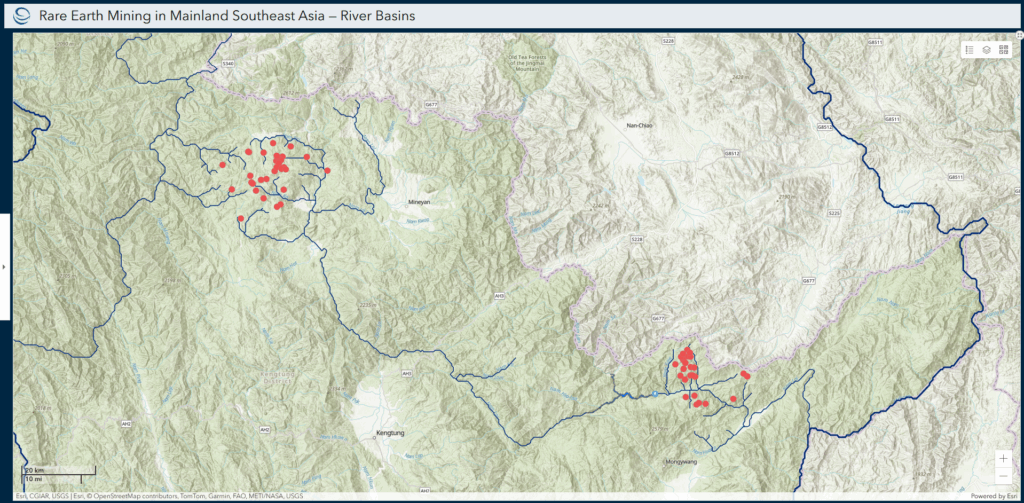


Community Adaptation for a Water Festival Without Clean Water