
Xi Jinping’s stern warning to President Trump that, “The Taiwan question is the most important issue in China-US relations. If mishandled, the two countries could face confrontation or even conflict,” at last week’s US-China summit underscored a moment of tensions and unease from competing US-Taiwan interests and a growing trust deficit between Taiwan and the United States. But can US-Taiwan relations find a way past the current tensions and uncertainties that pose risks to deterrence and Taiwan’s economy?
U.S. and Taiwanese economic, security, and political interests are poised to align through the pursuit of a tech revolution, and Taiwan’s dominance in high-end chips make smooth ties critical to its future. But the Trump administration’s characteristically transactional approach to Taiwan has touched the key pillars of the unofficial relationship: the semiconductor and AI supply chains and the question of Taiwan’s defense. Through the trade agreement signed in February 2026, the Trump administration tied tariffs on semiconductor industry-related imports to the level of Taiwanese investment in the United States, continuing the push to reshore manufacturing for as much as 40% of U.S. demand for advanced semiconductors. The U.S. effort to shift production from Taiwan to the United States is seen in Taiwan as a potential threat to the “silicon shield,” as this move might reduce U.S. interest in Taiwan’s security. The Trump administration is simultaneously calling on Taiwan’s government to increase its defense budget to 10% of GDP (that would quadruple current spending to $100 billion — the current total budget), raising doubts in Taiwan about U.S. credibility as a partner, even as the Lai administration has finally passed its defense budget increased to 3.2% of GDP. Under this pressure, Taiwanese trust in the United States has declined sharply during the Trump administration. And with President Trump more focused on improving US-China relations, the drift between the United States and Taiwan’s interests requires urgent attention to realign the partnership.
Can the Silicon Shield Survive Semiconductor Reshoring?
At first glance, the advanced semiconductor supply chain not only binds Taiwan and the United States in a vital technological partnership but is likely to become even more consequential as the AI race accelerates. Taiwanese companies, as the main producer of the most advanced semiconductors, and U.S. companies, as the main designer and purchaser of these chips, depend on each other for this high-tech supply chain to function. This is the dynamic of the silicon shield, which proposes the United States has a strong interest in Taiwan’s security to secure the supply chain — and in deterring China from attacking Taiwan or otherwise disrupting the supply chain. The silicon shield has become even more vital to Taiwan as the chip industry has grown to 21% of Taiwan’s GDP, driving the record economic growth in Taiwan over the past few years. Whether the silicon shield would hold in a moment of crisis remains to be seen. But the silicon shield concept does have a reassuring effect on Taiwanese people. Surveys in Taiwan show that majorities believe the silicon shield does have a protective strength by binding U.S. and Taiwanese interests together. Unsurprisingly, when the Trump administration announced that it sought to onshore a significant portion of advanced semiconductor manufacturing capacity, Taiwanese trust that the United States would assist in a cross-Strait contingency dropped.
Given the potential for a catastrophic war between great powers if the United States were to intervene in a Chinese attack on Taiwan, with no guarantee of victory but almost certainly widespread destruction, the Trump administration’s reshoring industrial policy is a logical U.S. hedging strategy. Rather than rely solely on a supply of chips “80 miles from China,” as Commerce Secretary Howard Lutnick puts it, why not produce the chips in the United States and circumvent the problem altogether? The problem with this, of course, is that the replacement of chips made in Taiwan with chips made in the USA could make Taiwan less important to the United States and reduce the likelihood of a U.S. military response. This is why reshoring weakens the silicon shield, and may be why there is increasing doubt about the United States’ commitment: A new poll by the Democracy Foundation found that majorities in Taiwan doubted the United States would help defend the island. Lutnick’s view, anticipating such skepticism, is that the United States needs the capability to produce a domestic supply of chips large enough to enable the U.S. to assist in a contingency. But to believe this reassurance requires faith in a partnership that the Trump administration is straining.
How High Can Taiwan’s Defense Budget Go?
The silicon shield has not been put to the test, but both the United States and Taiwan are concerned about a potential Chinese attack on the island. The U.S. government has repeatedly called for the Taiwanese government to increase its defense budget, and Taiwan has complied, with average increases of 5% annually between 2019 and 2023; the 2026 defense budget sits at 3.2% of GDP.$25 billion, short of the $40 billion that Lai sought. Trump and top Pentagon officialshave called for an increase to as much as 10% of GDP — (that would quadruple current spending to nearly $100 billion –the roughly current total Taiwan budget budget in 2026.
In a Taiwanese economy that is sluggish apart from the stellar performance of AI and chip-related industries, voters are pressuring the government for solutions to high housing costs and stagnating wages. Taiwan’s divided government, with the Democratic Progressive Party holding the executive and the opposition Kuomintang and Taiwan People’s Party controlling the Legislative Yuan, expresses the tension at the core of Taiwan’s political polarization: The government must work to protect Taiwan from China. But it must also deal with, and spend on, other priorities from healthcare to education. Defending the island from a much larger aggressor with comparatively greater resources is not a problem that can be solved simply by increasing Taiwan’s defense spending. The White House, the Department of Defense, and Congress have all ratcheted up pressure to pass the budget. A bipartisan group of U.S. lawmakers sent an open letter to the LY about the then stalled budget; in the KMT’s response, the party urged the United States to deliver arms that Taiwan had purchased but not yet received. The apparent disregard for the constraints of Taiwan’s economy and budget, as well as the difficulty of governing in a highly polarized society, indicates a lack of understanding about what is realistic for Taiwan.
Can Taiwan Trust the United States?
The traditional U.S. approach to Taiwan has been to maintain strategic ambiguity about how the United States would respond to a crisis in the Taiwan Strait, while reiterating that the United States is opposed to any unilateral change in the status quo. This approach, intended to instill caution in Beijing and Taipei, underscores how the U.S. views “any effort to determine the future of Taiwan by other than peaceful means, including by boycotts or embargoes, a threat to the peace and security of the Western Pacific area and of grave concern to the United States.” Under the assumption of strategic ambiguity, China must plan for the possibility that the United States would intervene, which helps to deter an attack. But what if the people of Taiwan doubt that the United States would provide assistance, as recent surveys suggest? If the people of Taiwan lose trust in the United States — trust that the U.S. has a real stake in Taiwan’s security and the status quo — their risk assessment of the cross-Strait relationship could shift, potentially against U.S. interests. After all, U.S. geostrategic interest in Taiwan is broader than the semiconductors, as the NSS notes: The island’s location in the First Island Chain makes it an essential element of U.S. deterrence of Chinese military power in the Indo-Pacific region.
In Taiwan, the threat from China is palpable even if an attack is not imminent. Xi Jinping, who has led China since 2012 and may secure his fourth term in 2027, has said that the Taiwan issue should not be passed on “from one generation to the next,” making its resolution a major part of his legacy. The PLA has expanded its activity around Taiwan, from regular drills and missile tests to increasingly frequent incursions across the midline of the Taiwan Strait. The government of China uses an array of levers to inflict economic pain on Taiwan, from targeted bans on imports of Taiwanese goods to export controls of key inputs for Taiwan’s manufacturing industry. And Taiwanese government, companies, infrastructure, and people are already under a relentless cyber assault from actors on the mainland. These are snapshots of the overall pressure that China exerts on Taiwan in an attempt to create an untenable situation in which Taiwan’s people and government would be willing to negotiate on China’s terms.
In a scenario in which Taiwanese trust in the U.S. continues to decline, Taiwan will need to contend with increasing pressure from China, which, as the Summit reflected, is testing how far the Trump administration might bend on U.S. policy, such as the administration’s refusal of Lai’s transit through New York in July 2025 or the delay of an arms sale package until after Trump’s summit with Xi. Should the opposition party KMT win the next presidential election in 2028, Taiwan’s approach to China may shift to increased engagement, in the hopes of stabilizing cross-Strait relations. The KMT’s new chair, Cheng Li-wun, recently visited China and met with Xi Jinping to discuss economic cooperation and reduction of tensions, in pursuit of proof of concept that engagement works. The delegation played poorly in Taiwan, with perceptions (boosted by the ruling party) that such meetings only weaken Taiwan’s position without addressing China’s campaign of coercion. Considering the Trump administration’s emphasis on supply chain security and the First Island Chain for national security, if Taiwan attempted to move closer to China, this would create more friction between Taipei and Washington.
How Can the U.S. and Taiwan Repair Trust?
Look outside the Trump administration’s preoccupation with semiconductors, however, and there are stalwart friends of Taiwan in the U.S. government, especially among members of Congress. There is a chance that the pendulum could swing back to a traditional U.S. approach to Taiwan, with more frequent statements from a future president reiterating U.S. support for peace and stability in the Taiwan Strait, and the importance of Taiwan in the First Island Chain as part of the U.S. security network in the Indo-Pacific region.
The United States does not need to wait for a contingency to demonstrate its interest in Taiwan’s security. Under the TRA, deeper cooperation is both possible and necessary, since the security commitment is not only for providing the means of defense against an attack, but for any form of Chinese coercion against Taiwan, which encompasses China’s economic coercion, cyberattacks, and relentless disinformation campaigns. The United States can and should work more closely with Taiwan to develop defenses against these — not only because it strengthens Taiwan’s security and helps to secure the chip supply, but because they are forms of coercion that the United States also faces.
The question is whether the damagedone to the trust between the partners can be repaired during or after the Trump administration, with Taiwanese understanding keenly that the U.S. response to a Taiwan contingency could vary significantly depending on who sits in the Oval Office. But if the United States hopes to protect its many interests in Taiwan, from semiconductors to the First Island Chain, the U.S. government will need to adjust its approach to Taiwan to better balance their respective interests, accepting the economic dynamism Taipei seeks to preserve and the political realities it must operate in. Ultimately, restoring trust will require the United States to demonstrate that its commitment to Taiwan extends beyond transactions to a sustained partnership grounded in shared security and economic interests.
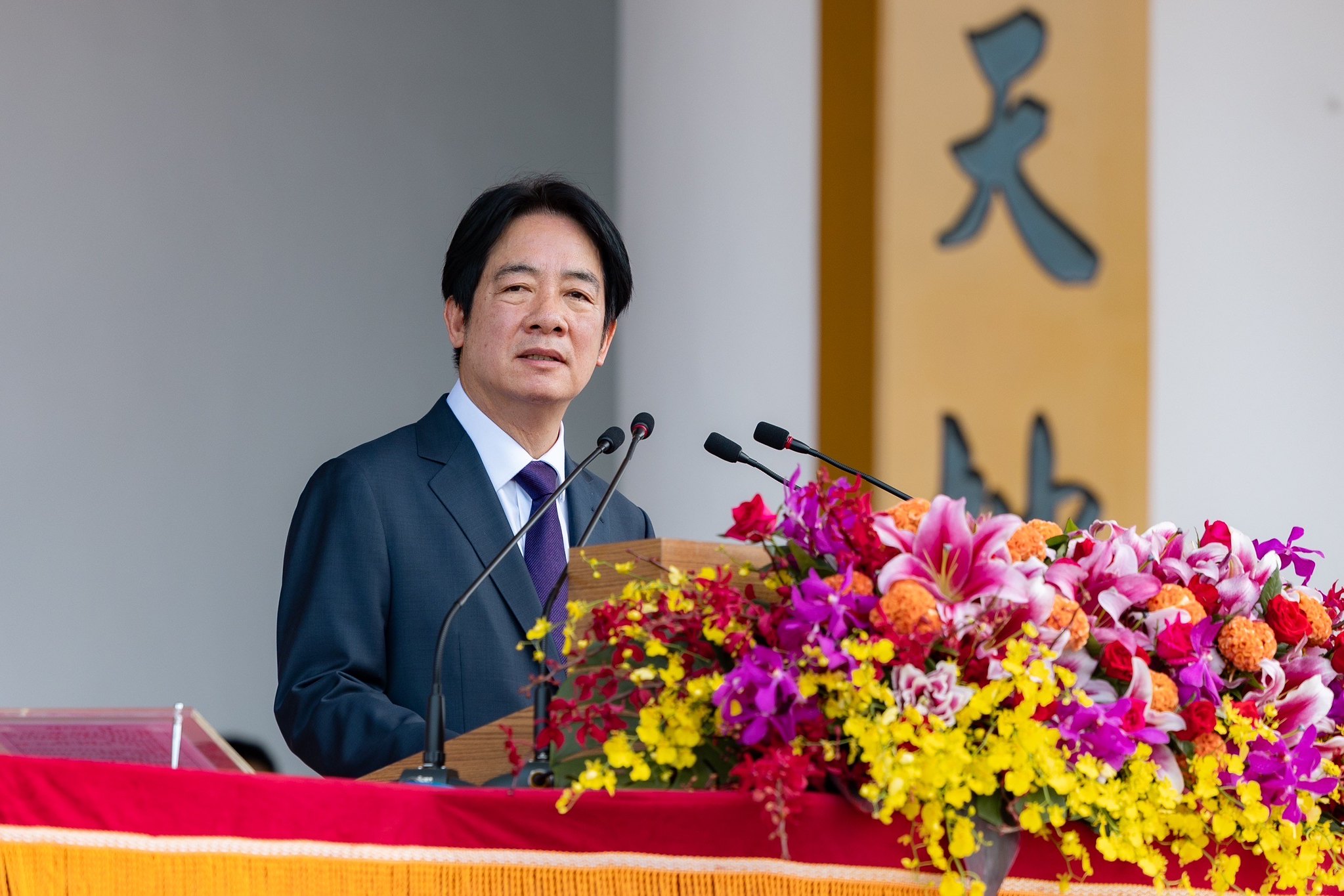
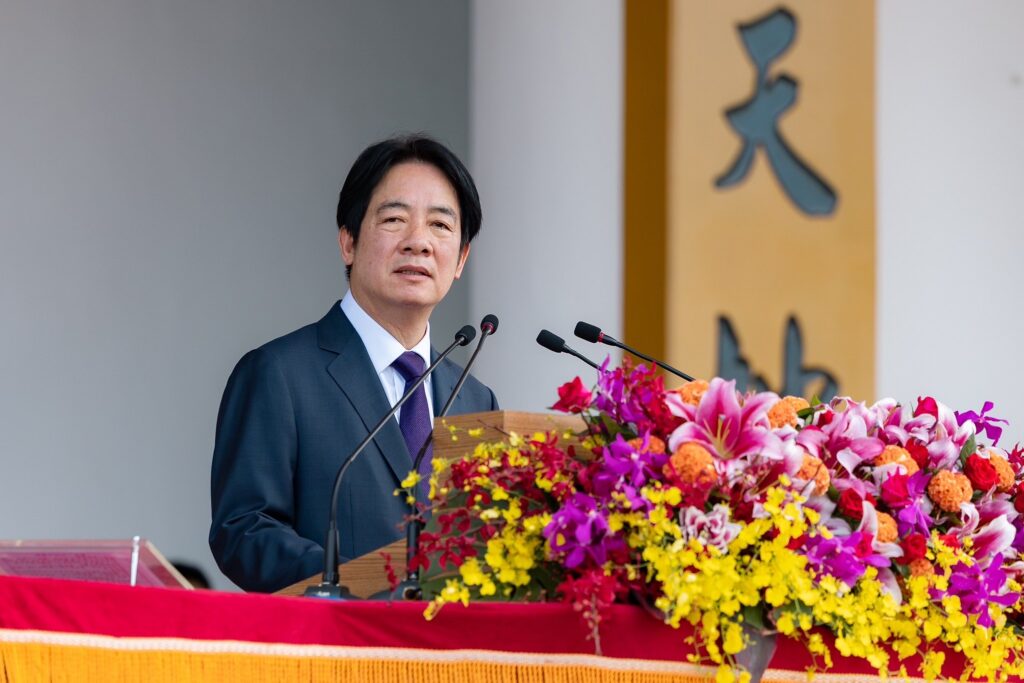
Header image: Taiwanese President Lai Ching-te presides over the “100th Anniversary Celebration of Whampoa Military Academy”. By Shufu Liu / Office of the President




Current Geopolitics Shift Deep-Sea Mining Debates