
From the limits of airpower to the risks of oil shocks and constitutional crisis at home, our experts break down the far-reaching geopolitical consequences of the U.S.–Israel strikes on Iran
GRAND STRATEGY
By Kelly A. Grieco, Christopher Preble, Emma Ashford, Evan Cooper, and J. James Kim
RSVP for the Event
- February 28, 2026
- 1:00 PM - 3:00 PM (US Est)
Share

The Limits of Airpower Against Iran
By Kelly Grieco, Distinguished Fellow
“When we are finished, take over your government. It will be yours to take.”
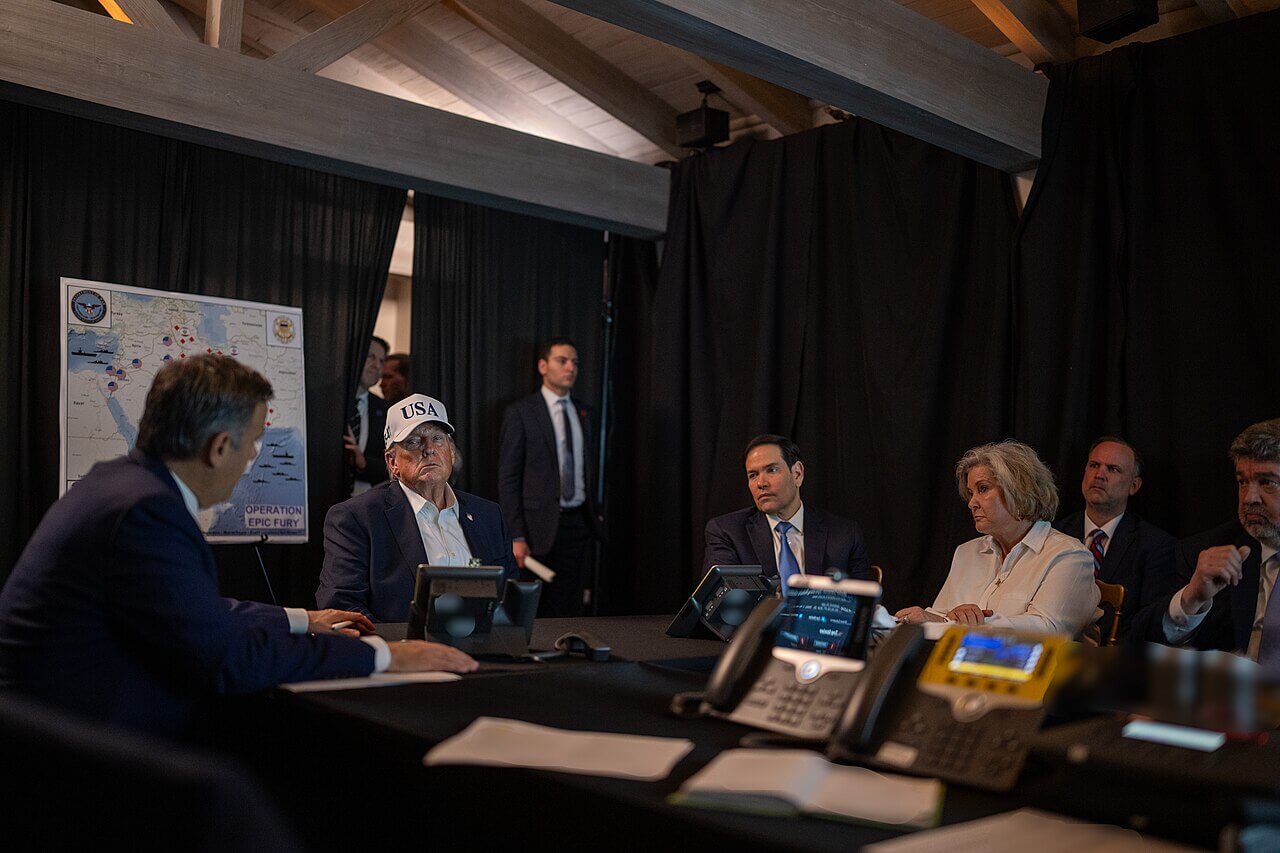
So said President Trump addressing the Iranian people in the early hours of Saturday morning, after the United States began what he described as “major combat operations” in Iran. The joint U.S.-Israeli operation—dubbed “Epic Fury” by the Pentagon—struck hundreds of targets across Iran, including the compound of Supreme Leader Ali Khamenei’s office, government ministries, and military facilities stretching from Tehran to the southern coast.
It was, by any measure, an impressive display of military capability. It was also, if history is any guide, unlikely to produce the result Trump is promising. He vowed to destroy Iran’s military power and demanded that its security forces lay down their arms or “face certain death”—an effort to weaken not only the regime’s capabilities but its hold on power. The goal, in effect, is regime change. Yet the history of airpower gives little reason to believe that even the most sophisticated bombing campaign can deliver it.
Airpower can destroy hardened facilities, degrade military capabilities, and kill commanders. What it cannot do is reorder domestic politics. Despite a century of promises to the contrary, it has never by itself toppled a government. The closest recent example that regime-change advocates might cite is Libya in 2011, but Libya proves the opposite point. What began as a UN-mandated “responsibility to protect” mission quietly evolved into the destruction of Muammar Gaddafi’s regime. Yet NATO airpower did not accomplish that alone. Indigenous rebel forces on the ground—organized, motivated, and militarily capable—exploited the pressure airpower created. Today, in Iran, there is no comparable force.
History reinforces this lesson. When a government believes it is fighting for its survival, it does not capitulate. A study of thirty asymmetric interstate conflicts involving the United States from 1918 to 2003 shows that coercion most often failed when U.S. demands threated a weaker state’s survival, prompting resistance rather than capitulation. Regime change is the maximalist demand par excellence, and the Iranian government has every reason to believe its survival is at stake because Trump has said so explicitly. With everything to lose, they have no incentive to hold anything back.
Tactical brilliance and strategic wisdom are different things. Suppressing Iran’s air defenses and killing senior officers, however skillfully executed, does not answer the central question: what political mechanism converts military punishment into regime change? The mechanism that regime-change advocates implicitly rely on is decapitation—the idea that striking leaders and the instruments of state power will weaken the regime enough that the population, seizing its moment, will revolt. The theory has a certain logic, but it has almost no historical support. What strategic bombing campaigns have reliably produced, across a century of evidence, is not rebellion but solidarity. Even when populations despise and fear their leaders, they have a powerful tendency, when bombs fall, to close ranks against the external aggressor.
No matter how precise or devastating, air strikes alone cannot topple a government, and Iran in 2026 is likely to emerge battered but not broken—a costly example of American hubris and the limits of airpower.

Who Decides When America Goes to War?
By Christopher Preble, Senior Fellow and Reimagining US Grand Strategy Program Director
“When we are finished, take over your government. It will be yours to take.”
President Trump has initiated a war against Iran without congressional approval, without a serious public debate, and in the face of overwhelming public opposition. In short, this war is unconstitutional, unwise, and a betrayal of his promise to put the interests of the American people first.
Terminology matters. This is a premeditated, preventive war, not a defensive action to address an imminent threat to the United States. The Constitution’s Article II authority, pertaining to the executive branch, has long been understood to allow the president to repel sudden attacks – it was never intended to allow a single person to launch the entire country into a war. That power was reserved for the Congress.
To be sure, in practice, past Congresses have shirked this duty, often allowing presidents to wage war at will. But the brazenness of President Trump’s decision to ignore that body, and the cowardice of those sitting members of Congress who refuse to uphold their obligations, is nothing short of breathtaking.
These obligations are not to a mere document. Members of Congress have a responsibility to represent the best interests of their constituents. And the American people have clearly communicated that they do not want a war with Iran. They especially do not want a regime-change war (just 5 percent of Democrats, and only 17 percent of Republicans). They understand the risks. They have learned from the past failures in Iraq, Afghanistan, and Libya. It is shocking that so many in Washington, DC have not.
With just over a year into his second term, President Trump has demonstrated that America First means whatever he wants it to mean. The claims of senior Trump advisors in the waning days of the campaign, that “Trump = Peace”, and that he would keep Americans out of foreign wars, have aged badly. It turns out that President Trump is just as fond of war as his predecessors, and arguably more so.
But every member of Congress still has a chance, and indeed a duty, to stand up for the people that they serve. They must behave as the co-equal branch of government that they are, and the check on presidential power that they were always meant to be. They must debate the costs and risks of this war. They must use their platform to elevate the best arguments, not merely those who desire war with Iran, and who will say anything to get it. And every Senator, and every House member, must stand and be counted, by voting yes or no on taking this country to war.
Recent Publications

Find an Expert
Home to more than 100 scholars and global affiliates, the Stimson Center is proud to be a magnet for the world’s leading experts on the most pressing foreign policy and national security issues of our time. Explore our experts and their work.

Yun Sun

Hafed AI Ghwell

Brian Eyler
To Move Forward on Gaza Force, Engage the UN