Each shaded box corresponds to a year the country appeared on the CSPA list and what types of waivers it received, if any.
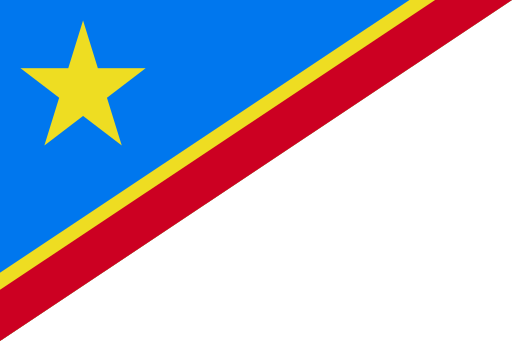
The Democratic Republic of the Congo (DRC) has appeared on the CSPA list for sixteen consecutive years beginning in 2010. The U.S. president waived, either in part or in full, CSPA prohibitions against the provision of U.S. arms sales and military assistance to the DRC for all but one of these years, resulting in the provision of more than $50.5 million in arms sales and military assistance. Specifically, the president has waived $184,841 in Direct Commercial Sales, more than $267,000 in Excess Defense Articles, $300,000 in Foreign Military Financing, over $3.7 million in International Military Education and Training, and $46 million in National Security Engagement Assistance (NSEA). Due to CSPA prohibitions, the president has denied $15 million in NSEA to the DRC.1These calculations are based upon publicly available data. See the ‘Methodology’ page for an in-depth review of the Tracker’s methodology and sources.
Since the CSPA took effect.
According to the U.S. State Department, the Congolese National Army (FARDC) has recruited children, at times through force, for use as combatants, escorts, and porters. Children were also recruited and used by the National Congress for the Defense of the People (CNDP) — a former Congolese rebel group — and many were not demobilized following the group’s integration into the FARDC.2Government of the United States, U.S. Department of State. “Democratic Republic of the Congo,” in Trafficking in Persons Report 2010 (Country Narratives: Countries A Through F), https://2009-2017.state.gov/j/tip/rls/tiprpt/2010/142759.htm. There were two confirmed cases of the FARDC using children in support roles between April 2018 and March 2019, including for sexual slavery and forced labor.3Government of the United States, U.S. Department of State. “Democratic Republic of the Congo,” in Trafficking in Persons Report 2019, pp. 149-153, https://www.state.gov/wp-content/uploads/2019/06/2019-Trafficking-in-Persons-Report.pdf (https://www.state.gov/reports/2019-trafficking-in-persons-report-2/democratic-republic-of-the-congo/). The following year, there were two reported cases of FARDC members using children in support roles and one case of a child engaged in espionage for the FARDC.4Government of the United States, U.S. Department of State. “Democratic Republic of the Congo – Prosecution,” in Trafficking in Persons Report 2021, pp. 186, https://www.state.gov/wp-content/uploads/2021/09/TIPR-GPA-upload-07222021.pdf (https://www.state.gov/reports/2021-trafficking-in-persons-report/democratic-republic-of-the-congo/). Between April 2021 and March 2022, the FARDC recruited at least six children and used them as combatants and informants.5Government of the United States, U.S. Department of State. “Democratic Republic of the Congo,” in Trafficking in Persons Report 2022, pp. 182, https://www.state.gov/wp-content/uploads/2022/10/20221020-2022-TIP-Report.pdf (https://www.state.gov/reports/2022-trafficking-in-persons-report/democratic-republic-of-the-congo/).
In addition, the Congolese armed forces have collaborated with proxy militias — including through the provision of ammunition and uniforms and the coordination of strategy and battlefield tactics — that recruit and use child soldiers.6Government of the United States, U.S. Department of State. “Democratic Republic of the Congo – Prosecution,” Trafficking in Persons Report 2020, pp. 163, https://www.state.gov/wp-content/uploads/2020/06/2020-TIP-Report-Complete-062420-FINAL.pdf (https://www.state.gov/reports/2020-trafficking-in-persons-report/democratic-republic-of-the-congo/). While the U.S. Department of State did not identify cases of FARDC forces themselves recruiting or using child soldiers between April 2022 and March 2025, the FARDC continued to collaborate with and provide material support to armed groups that forcibly recruit and use child soldiers, including Nduma Defense of Congo-Renouve (NDC-R), Democratic Forces for the Liberation of Rwanda (FDLR), Alliance of Patriots for a Free and Sovereign Congo (APCLS), and Nyatura.7Government of the United States, U.S. Department of State. “Democratic Republic of the Congo,” in Trafficking in Persons Report 2023, https://www.state.gov/reports/2023-trafficking-in-persons-report/the-democratic-republic-of-the-congo.; Government of the United States, U.S. Department of State. “Democratic Republic of the Congo,” in Trafficking in Persons Report 2024, https://www.state.gov/reports/2024-trafficking-in-persons-report/democratic-republic-of-the-congo/.; Government of the United States, U.S. Department of State. “Democratic Republic of the Congo,” in Trafficking in Persons Report 2025, https://www.state.gov/reports/2025-trafficking-in-persons-report/democratic-republic-of-the-congo/.
The DRC has taken steps to address the issue of child soldier use and recruitment, including by signing a UN Action Plan in 2012 and establishing a Joint Technical Working Group (JTWG) — composed of government ministries, non-governmental organizations, and international organizations — to oversee its implementation.8Office of the Special Representative of the Secretary-General for Children and Armed Conflict. “Action Plans,” https://childrenandarmedconflict.un.org/tools-for-action/action-plans/.; Government of the United States, U.S. Department of State. “Democratic Republic of the Congo,” in Trafficking in Persons Report 2014, pp. 141, https://2009-2017.state.gov/documents/organization/226845.pdf (https://2009-2017.state.gov/j/tip/rls/tiprpt/2014/). The JTWG has continued to implement the action plan in the years since.9Government of the United States, U.S. Department of State. “Democratic Republic of the Congo – Prevention,” in Trafficking in Persons Report 2024, https://www.state.gov/reports/2024-trafficking-in-persons-report/democratic-republic-of-the-congo/. Additionally, an August 2020 government decree reiterating zero tolerance for FARDC support for arms groups that recruit child soldiers led to the demobilization of some child soldiers, but as of 2024 had not allocated sufficient resources to fully implement the plan.10Government of the United States, U.S. Department of State. “Democratic Republic of the Congo – Prevention,” in Trafficking in Persons Report 2024, https://www.state.gov/reports/2024-trafficking-in-persons-report/democratic-republic-of-the-congo/. Although complicity by the government’s armed forces in trafficking crimes remained a significant concern, the military initiated prosecutions for two FARDC soldiers accused of kidnapping children for sexual enslavement in 2020 and sentenced an NDC commander to life imprisonment for child soldier recruitment and use, among other crimes.11Government of the United States, U.S. Department of State. “Prosecution – Democratic Republic of the Congo,” in Trafficking in Persons Report 2021, pp. 186-187, https://www.state.gov/wp-content/uploads/2021/09/TIPR-GPA-upload-07222021.pdf (https://www.state.gov/reports/2021-trafficking-in-persons-report/democratic-republic-of-the-congo/). Steps taken by the government from April 2024 to March 2025 (the 2025 Trafficking in Persons Report reporting period) included continuation of its partnership with an international organization and NGOs to identify and remove children associated with armed groups operating in eastern DRC (of which 345 children separated from armed groups were referred to international organizations for medical, psycho-social, and reintegration support) and screen prospective soldiers and prevent FARDC recruitment and use of children (which prevented 126 children from enlisting in the military).12Government of the United States, U.S. Department of State. “Democratic Republic of the Congo,” in Trafficking in Persons Report 2025, https://www.state.gov/reports/2025-trafficking-in-persons-report/democratic-republic-of-the-congo/. The 2025 Trafficking in Persons Report covers government efforts undertaken from April 1, 2024 through March 31, 2025, to the extent concurrent reporting data is available.
Since 2021, U.S. presidents have been required to include justifications for CSPA waivers that were issued during the previous year in the annual Trafficking in Persons Report. The DRC’s 2020 and 2021 waiver justifications noted the government’s efforts to prevent the issue of child soldiers and maintained that “[t]his waiver will allow the United States to provide security assistance that will support improving governance and the rule of law, promoting peace and security, combating corruption, advancing human rights, and creating conditions for greater U.S. investment and economic growth. It also offers an opportunity to improve civil-military relations and influence the next generation of [Congolese National Army] leadership.”13Government of the United States, U.S. Department of State. “Democratic Republic of the Congo,” in Trafficking in Persons Report 2021, pp. 629-630, https://www.state.gov/wp-content/uploads/2021/09/TIPR-GPA-upload-07222021.pdf (https://www.state.gov/reports/2021-trafficking-in-persons-report/democratic-republic-of-the-congo/).; Government of the United States, U.S. Department of State. “Democratic Republic of the Congo,” in Trafficking in Persons Report 2022, pp. 616, https://www.state.gov/wp-content/uploads/2022/10/20221020-2022-TIP-Report.pdf (https://www.state.gov/reports/2022-trafficking-in-persons-report/democratic-republic-of-the-congo/). Similar language was included in subsequent 2022, 2023, and 2024 waiver justifications.14Government of the United States, U.S. Department of State. “Annual Report on the Use of Child Soldiers,” in Trafficking in Persons Report 2023, https://www.state.gov/reports/2023-trafficking-in-persons-report/.; Government of the United States, U.S. Department of State. “Annual Report to Congress on the Use of Child Soldiers under Section 405(c) of the Child Soldiers Prevention Act of 2008,” in Trafficking in Persons Report 2024, https://www.state.gov/reports/2024-trafficking-in-persons-report/.; Government of the United States, U.S. Department of State. “Annual Report to Congress on the Use of Child Soldiers under Section 405(c) of the Child Soldiers Prevention Act of 2008,” in Trafficking in Persons Report 2025, https://www.state.gov/reports/2025-trafficking-in-persons-report/.
For more information, see the U.S. State Department’s 2025 Trafficking in Persons Report and 2024 Country Reports on Human Rights Practices. Further information on the situation in the DRC can also be found in the UN Secretary-General’s 2025 Annual Report on Children and Armed Conflict and country-specific reports on the DRC.
Country- and program-level data on the number and type of national interest waivers granted, as well as the amount of arms sales and military assistance waived.
You can opt out at any time. We respect your privacy and will not sell your personal information. See our privacy policy for more.