

















The nuclear sector is undergoing unprecedented transformation across both civilian and military domains. Stimson’s Nuclear Disruption initiative convenes leading experts and practitioners to shed light on the sources, trajectories, and impacts of these dramatic developments – and to shape their evolution. Through pathbreaking research, analysis, and engagements, this effort explores the rapidly shifting global nuclear landscape, spanning regional crises and conflicts, challenges to global order, non-proliferation goals, and strategic assumptions. It also investigates how disruptive technologies, energy security imperatives, and nuclear governance paradigms are redefining the future of nuclear policy and practice. This effort builds on the legacy of the Stimson Center’s founders Michael Krepon and Barry Blechman, who devoted their lives to preventing the use of nuclear weapons in regional conflicts.
The Nuclear Disruption Initiative focuses its work in three core areas:



The nuclear sector is undergoing unprecedented transformation across both civilian and military domains. Stimson’s Nuclear Disruption initiative convenes leading experts and practitioners to shed light on the sources, trajectories, and impacts of these dramatic developments – and to shape their evolution. Through pathbreaking research, analysis, and engagements, this effort explores the rapidly shifting global nuclear landscape, spanning regional crises and conflicts, challenges to global order, non-proliferation goals, and strategic assumptions. It also investigates how disruptive technologies, energy security imperatives, and nuclear governance paradigms are redefining the future of nuclear policy and practice. This effort builds on the legacy of the Stimson Center’s founders Michael Krepon and Barry Blechman, who devoted their lives to preventing the use of nuclear weapons in regional conflicts.
The Nuclear Disruption Initiative focuses its work in three core areas:
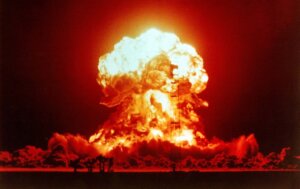
Nuclear flashpoints around the world are under growing pressure. From the war in Ukraine to India–Pakistan tensions, the Korean Peninsula, and Iran’s advancing capabilities, the risk of nuclear use in conflict is both real and rising. Crises are unfolding faster and escalating further than ever before, driven by intensifying great-power rivalry, rapid military modernization, and emerging technologies. Strategies to manage and mitigate nuclear risk are under mounting strain as arms control frameworks fray and confidence-building measures fail to account for new forms of instability. As regional crises risk spiraling into global nuclear confrontation, there is an urgent need to understand these evolving sources of instability, encourage restraint, and invest in novel mechanisms for crisis management.
Tensions among major powers, at their highest point in decades, threaten to reignite a new, three-way nuclear arms race among the United States, Russia, and China as they expand and modernize their arsenals. Meanwhile, uncertainty about U.S. commitment to the defense of long-standing strategic partners drives open deliberation about their seeking their own nuclear weapons. The international community’s failures to prevent North Korea’s nuclear weapons program or to establish transparency into Iran’s nuclear program further add to the forces eroding the decades-old “grand bargain” of the Nuclear Nonproliferation Treaty, opening the world to a new era of sharply increased nuclear risk.
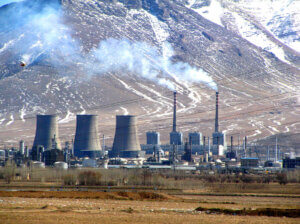
The global nuclear industry is undergoing a profound transformation, driven by technological innovation, decarbonization, energy security, and geopolitical competition. Civilian demand for power is rising just as disruptions are affecting traditional nuclear fuel supply chains. Start-ups, Big Tech, and established firms alike are developing next-generation fission and fusion reactors, redefining what is possible for both newcomers and traditional nuclear states. At the same time, artificial intelligence, quantum technologies, and other innovations are reshaping every stage of the nuclear enterprise, from fuel cycle management and reactor design to safeguards, verification, and decision-making. These advances offer powerful tools for operational efficiency and strengthening nuclear security. This growing technological and industrial diversity brings risks of fragmented supply chains and uneven regulation but also presents an opportunity to rethink governance and cooperation towards building a more resilient, secure, sustainable nuclear future.
You can opt out at any time. We respect your privacy and will not sell your personal information. See our privacy policy for more.