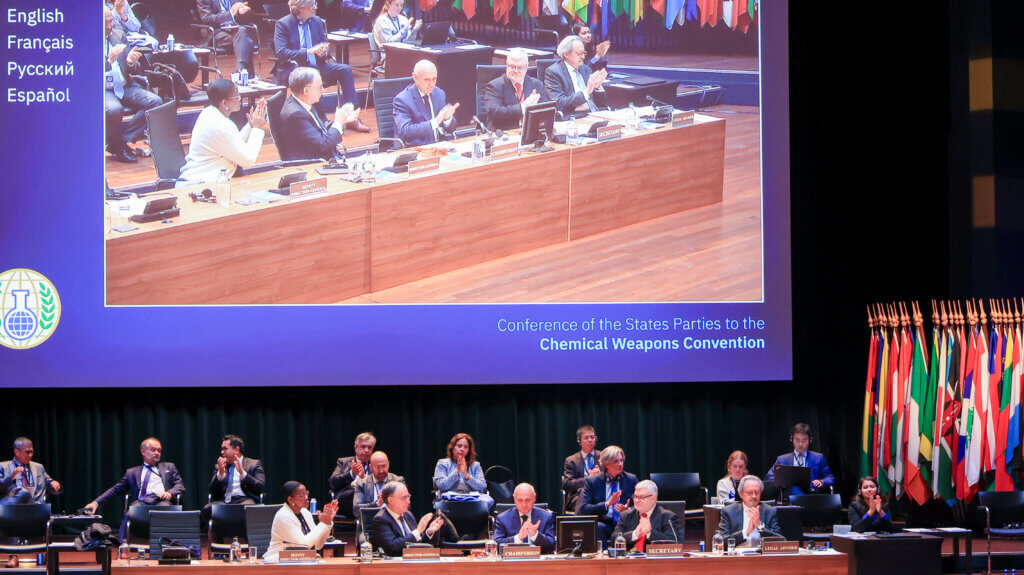
The Chemical Weapons Convention (CWC) requires that States Parties report annually on the transfer of chemicals listed under the Convention as part of ongoing efforts to prevent the re-emergence of chemical weapons programs. States report aggregate national data to the Organisation for the Prohibition of Chemical Weapons (OPCW), where the Technical Directorate does the challenging work of matching imports with exports.
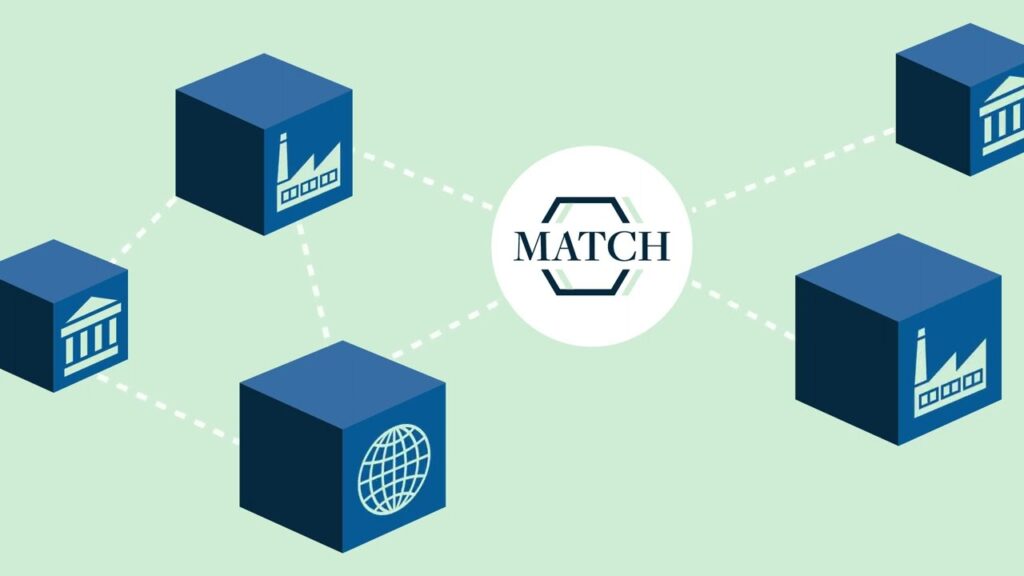
The Monitoring and Tracking Chemicals (MATCH) project is a prototype software system that will attempt to address fundamental challenges to reconciling transfer data for commonly traded Schedule 2 and Schedule 3 chemicals by establishing a secure, authoritative distributed ledger to simulate transfers between hypothetical States Parties.
The MATCH project began in September 2021 and the second iteration of project development will conclude in January 2025. The MATCH 2.0 proof-of-concept is being developed with financial contribution by Global Affairs Canada’s Weapons Threat Reduction Program.

You can opt out at any time. We respect your privacy and will not sell your personal information. See our privacy policy for more.