











































In 2013, the United Nations General Assembly adopted the Arms Trade Treaty (ATT), the only legally binding international instrument to regulate the global arms trade and promote transparency and accountability in arms transfer decisions. Stimson’s Arms Trade Treaty-Baseline Assessment Project (ATT-BAP) supports effective and comprehensive implementation of the ATT.
The Arms Trade Treaty-Baseline Assessment Project (ATT-BAP) was founded in 2014 to:
While the ATT provides information on treaty requirements, it does not offer explicit guidance on how States Parties should fulfill their obligations. ATT-BAP assists States in discerning critical gaps in national arms control systems and in identifying the resources required for effective treaty implementation, enabling the development of projects that are targeted and relevant to the needs of individual States. The project further provides tools and guidance for supporting ATT implementation and evaluating efficacy of the treaty over time.
Analytical research on ATT implementation, covering topics such as reporting compliance, the development of national control systems, and implementation challenges and opportunities.
Under Article 13(3) of the ATT, States Parties must report annually to the ATT Secretariat on their conventional arms exports and imports that occurred during the preceding calendar year. ATT-BAP provides a yearly review of ATT annual reporting practices, compliance, and trends for insight into the status of arms trade transparency under the treaty.
Tools, checklists, and trainings to aid States in completing the necessary steps for ATT ratification/accession, implementation, and reporting.
At-a-glance factsheets that provide insights into ATT reporting obligations, the current status of reporting, and challenges that hinder reporting efforts.
Analytical research on ATT implementation, covering topics such as reporting compliance, the development of national control systems, and implementation challenges and opportunities.
Tools, checklists, and trainings to aid States in completing the necessary steps for ATT ratification/accession, implementation, and reporting.
The ATT Implementation Checklist and Assistance Assessment supports States in conducting internal reviews of their existing measures that can facilitate implementation of
The Arms Trade Treaty (ATT) and UN Security Council Resolution (UNSCR) 1540 (2004) are two seemingly separate but interrelated regimes that impose
Reporting is a cornerstone of the Arms Trade Treaty (ATT) and contributes to the fulfillment of the treaty’s object and purpose as articulated in Article 1: “Promoting cooperation, transparency and responsible action by States Parties in the international trade in conventional arms, thereby building confidence among States Parties.”
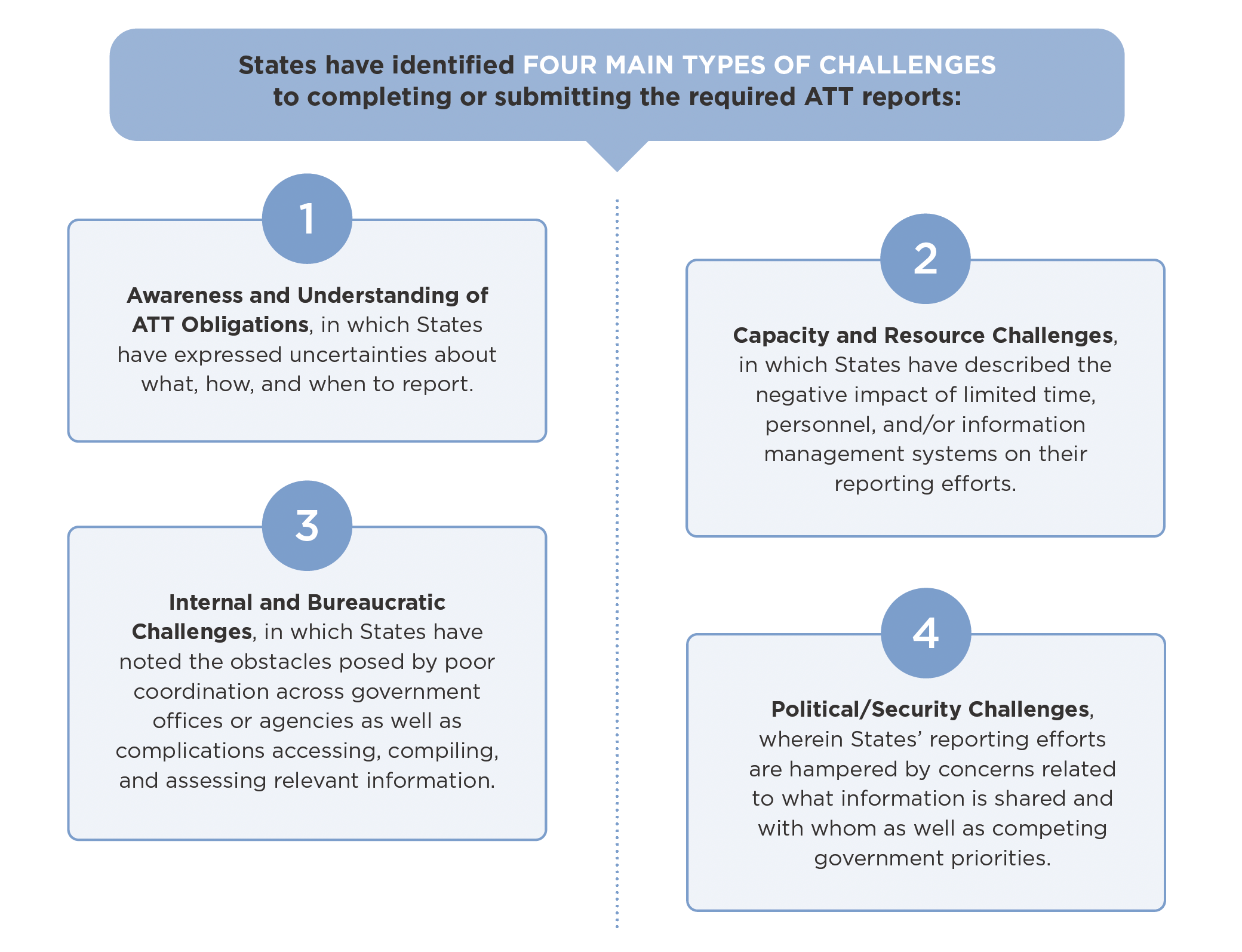
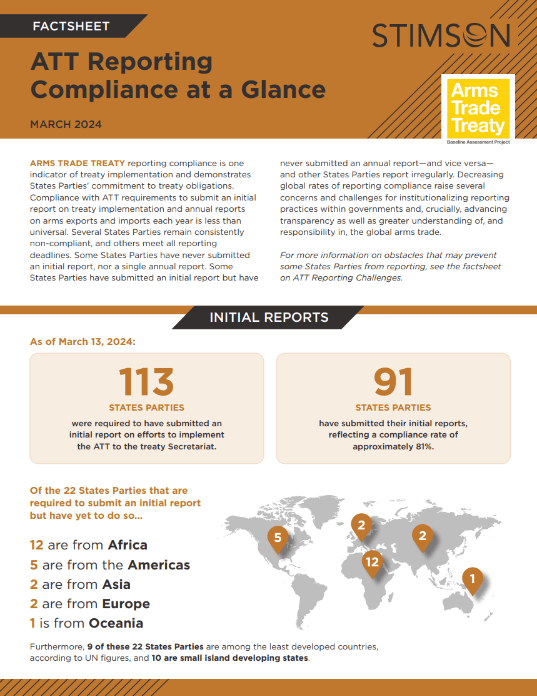
To support States Parties in better understanding and adhering to the ATT’s reporting requirements – as well as inform key stakeholders of current challenges to and trends in ATT reporting – these reporting factsheets provide insights into ATT reporting obligations, the current status of reporting, and challenges that hinder States Parties’ reporting efforts.
Explains the requirements in ATT Articles 13.1 and 13.3 – including what States Parties must report, when and how often, and to whom. The factsheet also offers insights on synergies between ATT reporting and other reporting efforts that could streamline States Parties’ reporting processes.
Contains data on the number and percentage of States Parties that have and have not met their ATT reporting requirements. The factsheet offers aggregate data on reporting compliance for the ATT initial report and the ATT annual reports and provides regional reporting snapshots.
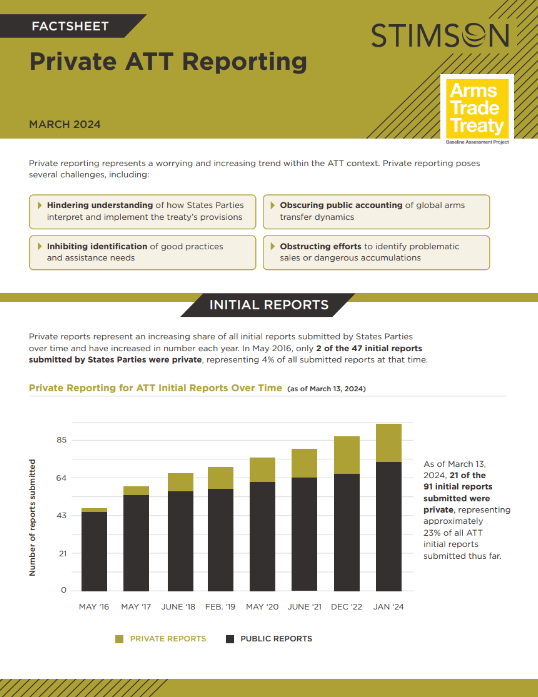
Highlights the growing trend in private reporting to the ATT. The factsheet compares yearly rates of public and private reporting for the ATT initial report and the ATT annual reports and offers insights on regional trends.
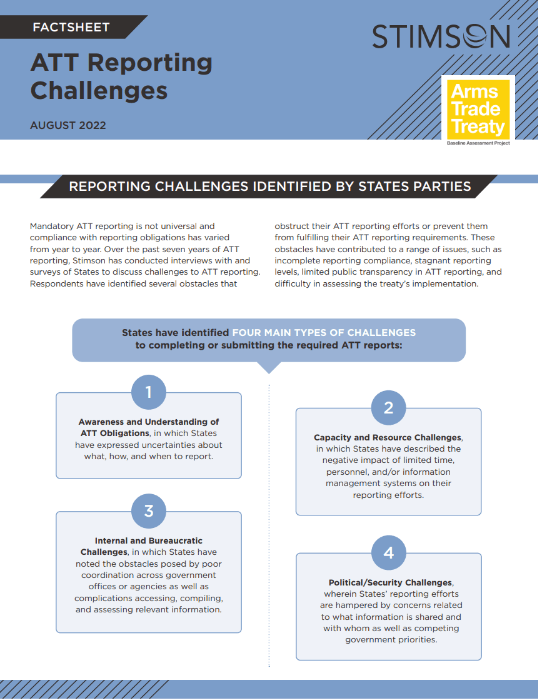
Highlights obstacles to reporting that hinder States Parties’ reporting processes and efforts. The factsheet references assistance tools that States Parties can use to help overcome reporting challenges.
Since its inception, ATT-BAP has been generously funded by the Governments of Australia, Germany, Ireland, the Netherlands, Norway, Switzerland, and the United Kingdom, as well as the UN Trust Facility Supporting Cooperation on Arms Regulation. In addition, the project has engaged in partnerships with the UN Office for Disarmament Affairs and its regional centers; regional organizations (including CARICOM and the European Union); and civil society organizations, including the Center for Armed Violence Reduction, Control Arms, and the ATT Monitor.
ATT-BAP is a project of the Stimson Center. For questions on the project or its products, please contact Rachel Stohl at [email protected].
Past Event
Past Event
Past Event
Past Event
You can opt out at any time. We respect your privacy and will not sell your personal information. See our privacy policy for more.