



Ocean Security and Sustainable Fisheries

Research to action to combat IUU fishing, protect our ocean, support maritime security

Protecting ocean assets and promoting transparency across the global fishing industry to safeguard the economic, health and food security of the billions of people who depend on our oceans.

The ocean, an engine for food, economic and environmental security is under assault from overuse—collapsing fish stocks, pollution, and the devastating effects of climate change. At the same time, fishing is big business, with over 56 million people working on vessels to support it worldwide. Despite this, the seafood supply chain is opaque, impeding effective fisheries management and risking the livelihoods and food security of millions.

Illegal, unregulated, and unreported (IUU), an illicit business which generates estimated annual profits of $36.billion, poses unique challenges to states and communities, undermining their ability to manage fish stocks while also being associated with transnational organized crime, labor concerns and trafficking. These issues pose a direct threat to U.S. national and global security. This project provides decision makers with resources and information needed to quantify and understand the convergence of these critical issues and its links to other security threats.

Our work seeks to combat IUU fishing by operationalizing civil-military response to IUU fishing, supporting diplomacy between governments, and increasing cooperation between the security and conservation communities, with the goal of protecting valuable marine resources.

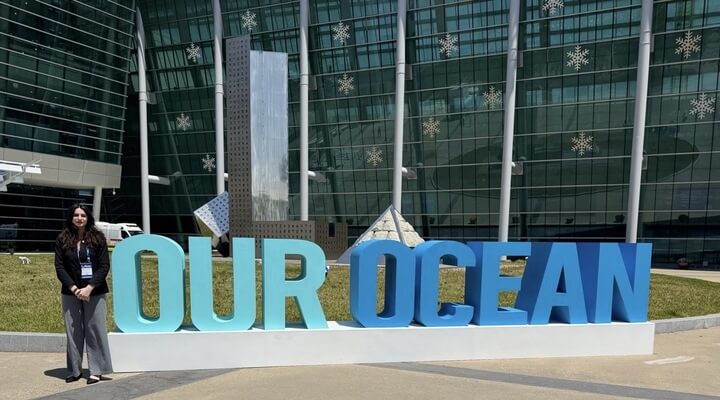
Through engagement with stakeholders around the globe, Stimson also serves as an advisor to the annual Our Ocean Conference, a global conference that focuses on commitments and actions to protect the ocean, while ensuring the ocean remains a foreign policy imperative entering the ocean decade.

Latest

Field Note
The Environmental Security Program assessed maritime security threats, advanced policy-driven innovations, and explored cutting-edge technologies to safeguard our oceans for the future
Madelyn MacMurray
Policy Memo
IUU fishing disrupts global supply chains, but the U.S. can lead in advancing seafood traceability with state of the art tools
Carolyn Gruber • Madelyn MacMurray • Sally Yozell
Policy Memo
The United States needs to get off the sidelines and develop a sensible seabed mining policy that integrates ocean science, geopolitics, economics, and national security.
Sally Yozell
Commentary
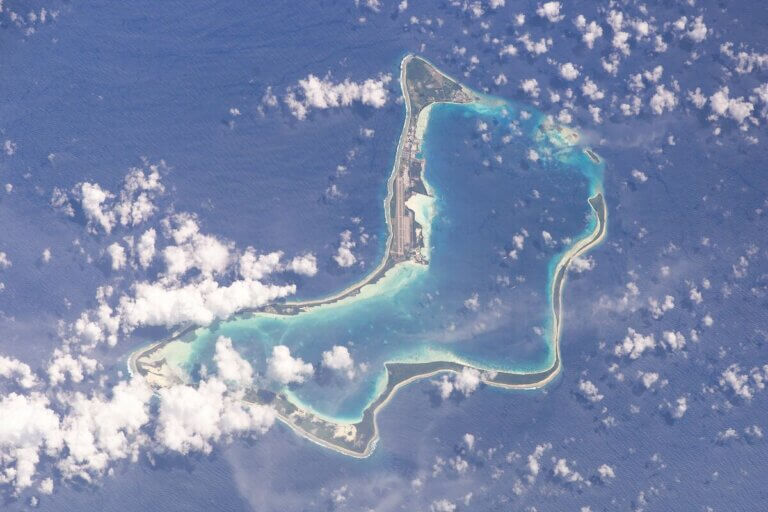
With the announcement of Mauritian sovereignty over Chagos, policy-planners should consult with Chagossians to establish a new policy to protect Chagossian cultural heritage
Madelyn MacMurray
Report
A summary of the second stakeholder workshop on reimagining the U.S. Seafood Import Monitoring Program, which crowdsourced how to implement new ideas and approaches
Sally Yozell • Sara Lewis • Michele Kuruc...
Report
A summary of the first workshop in the "Reimagining SIMP" series
Sally Yozell • Sara Lewis • Michele Kuruc...
Commentary
A call for global coordination to end illegal, unreported, and unregulated fishing on the high seas
Monica P. Medina

News & Commentary

Commentary
With the announcement of Mauritian sovereignty over Chagos, policy-planners should consult with Chagossians to establish a new policy to protect Chagossian cultural heritage
Madelyn MacMurray
Commentary
A call for global coordination to end illegal, unreported, and unregulated fishing on the high seas
Monica P. Medina
Commentary
As more countries around the globe move to ban Russian seafood and implement seafood traceability systems, they are looking to the US as a global leader
Sally Yozell
Op-Ed
Identifying trends and actors involved in IUU fishing, exploring political and socioeconomic factors, and offering recommendations to government
Lily Schlieman
Testimony
Program Director Sally Yozell called to testify before the Congressional-Executive Commission on China
Sally Yozell

Events

Search this project

Filter