Libya remains trapped in a prolonged cycle of instability despite years of international mediation and repeated political negotiations. While these efforts have often focused on elite-level bargains to secure short-term calm, they have largely failed to address the deeper economic dynamics sustaining conflict—namely competition over state resources, weak economic governance, institutional capture, and entrenched rent-seeking networks. These unresolved economic drivers continue to fuel political fragmentation and recurrent security shocks.
This webinar is convened in response to a recent policy brief by Tim Eaton, Senior Research Fellow, Middle East and North Africa Programme at Chatham House, Escaping the Cycle of Conflict in Libya. Drawing on extensive field research and comparative insights, the brief argues that economic governance must move from the margins to the center of Libya’s political settlement efforts.
The discussion will explore how an internationally mediated economic track could complement political negotiations by addressing corruption, rent distribution, and institutional fragmentation, while creating more sustainable pathways to stabilization. The conversation will also consider the implications of these findings for international policymakers—including the United States—as they reassess their engagement strategies in Libya.
Please find Tim Eaton’s policy brief on Libya, which provides the analytical foundation for this discussion, here: Escaping the cycle of conflict in Libya
Featured Speakers
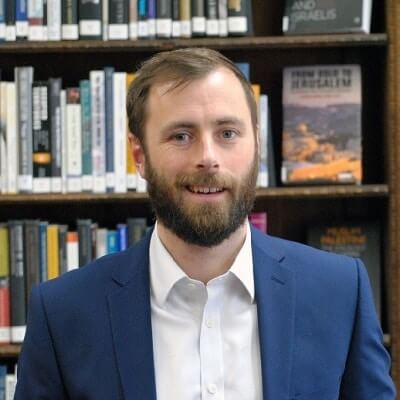
Tim Eaton, Senior Research Fellow, Middle East and North Africa Programme, Chatham House
Tim Eaton is a senior research fellow in the Middle East and North Africa Programme at Chatham House. His research focuses on the political economy of conflict in the MENA region and on that of the Libyan conflict, in particular.

Lana Bleik, Fellow and Deputy Director of the North Africa, Mediterranean, and the Sahel Program, The Stimson Center (Moderator)