
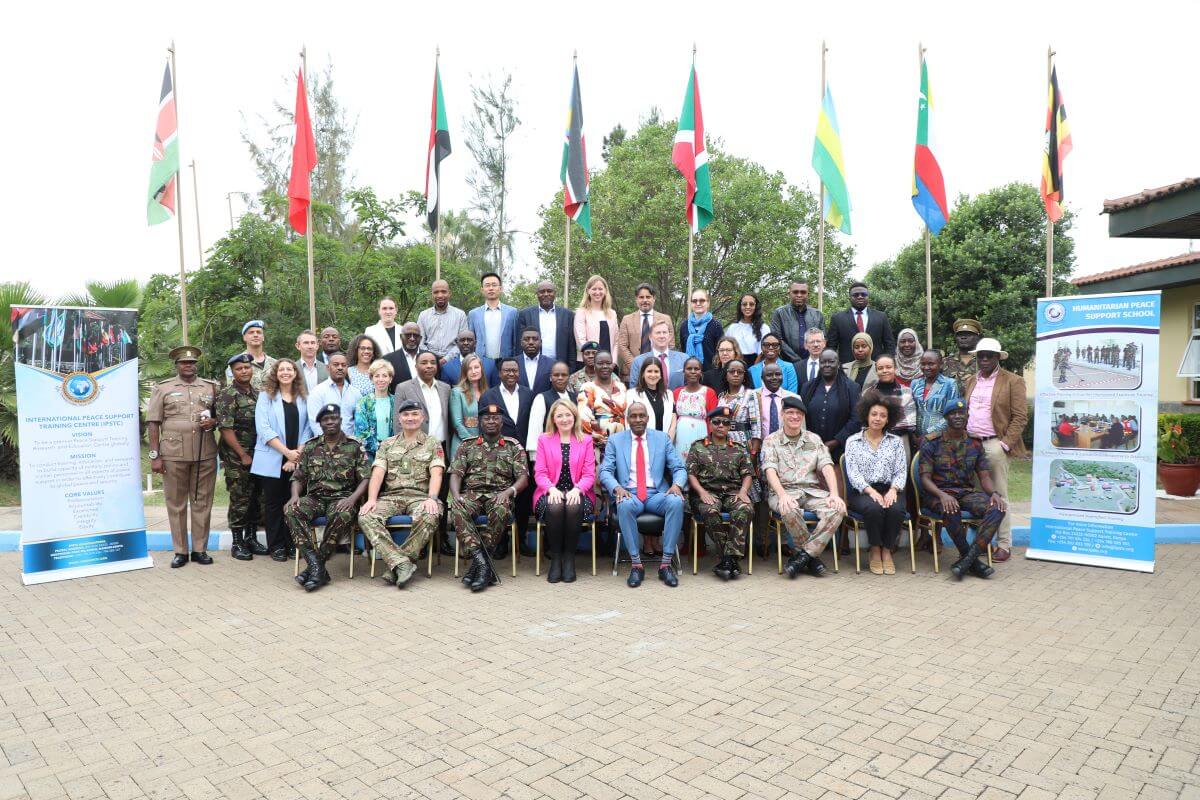
In early June, Lisa Sharland, Julie Gregory, and Juliet Weis traveled to Nairobi, Kenya to facilitate the delivery of the first dialogue on ‘Protection of Civilians in the Context of Peace Operations: Operational Realities and Challenges’ as part of a series throughout 2024 examining the strategic and operational challenges facing peace operations when it comes to protecting civilians. Over the last 25 years, peace operations—including UN peacekeeping missions and AU-led peace support operations—have developed more comprehensive approaches to protecting civilians.
The Stimson Center has been engaged in these efforts for more than two decades, undertaking evidence-based research to share with UN officials, member states, researchers and civil society in support of reforms to strengthen peace operations and their capacity to protect civilians. This dialogue series draws on Stimson’s cumulative expertise to shape reform efforts at a moment when the situation for civilians in conflict settings is facing setbacks across the globe. In settings of armed conflict, compliance with international humanitarian law (IHL) and international human rights law remains under constant threat, and peacekeeping missions continue to grapple with a crisis of trust and legitimacy in several contexts where they are deployed.
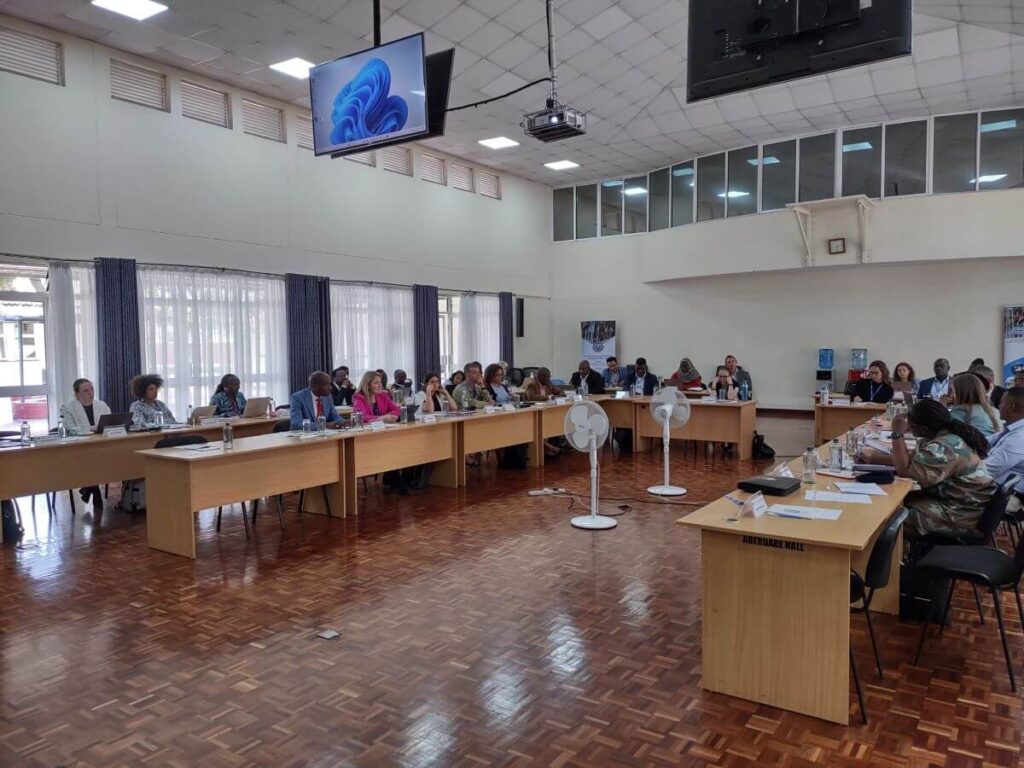
Photo credit: International Peace Support Training Centre (IPSTC), Kenya
Concerted Engagement
The Nairobi dialogue had an operational focus, drawing substantively on the diverse military, police, and civilian peacekeeping expertise of participants. This included mission representatives from all five UN peacekeeping missions with an explicit protection of civilians (POC) mandate (MINUSCA, MONUSCO, UNIFIL, UNISFA and UNMISS),1Note: MINUSCA stands for United Nations Multidimensional Integrated Stabilization Mission in the Central African Republic; MONUSCO stands for United Nations Organization Stabilization Mission in the Democratic Republic of the Congo; UNIFIL stands for United Nations Interim Force in Lebanon; UNISFA stands for United Nations Interim Security Force for Abyei; and UNMISS stands for United Nations Mission in South Sudan. the AU-led peace support operation in Somalia (ATMIS, as well as the UN political counterpart, UNSOM), the Southern African Development Community Force in eastern DRC (SAMIDRC), the former political mission in Sudan (UNITAMS) and East African Community Regional Force in eastern DRC (EACRF). These perspectives were complemented by the contributions of policy experts from the UN and the AU headquarters, the International Committee of the Red Cross (ICRC), representatives from civil society organizations in South Sudan and the Democratic Republic of the Congo, researchers and scholars, humanitarian actors, and personnel from peacekeeping training centers.
The dialogue was held at the Humanitarian Peace Support School (HPSS), the brick-and-mortar site of the International Peace Support Training Centre (IPSTC), an institution that hosts and facilitates courses relating to peace support missions. With the kind and dedicated support of the hosts at IPSTC, the dialogue served its purpose: to bring together those deployed and employed in service of peace support operations that work towards the protection of civilians in conflict to discuss lessons learned, share good practices, and consider action to address current and future challenges.
The discussions were framed by a keynote from the Chief Guest, former Force Commander of the East African Community Regional Force, Major General Aphaxard Kiugu, as well as remarks from the Director of the International Peace Support Training Center, Brigadier Joyce Sitienei. Over the course of two days, these diverse and varied interlocutors engaged in close and dedicated discussion on the operational realities and challenges in conceptualizing, supporting, and implementing strategies for the protection of civilians in settings where peace operations are or may be deployed.
The dialogue took place on the African continent at a time when concerted effort and attention are being directed towards the role of AU-led peace support operations following the adoption of United Nations Security Council Resolution 2719, which has paved the way for the use of UN-assessed funding for AU-led peace support operations.
Two Days, Six Sessions
The discussions that took place in Nairobi spanned six sessions.
- Session One, ‘Framing Protection of Civilians in Peace Operations’, surveyed POC mandates over the last 25 years, highlighted innovations and good practices, and shared lessons learned.
- Session Two, ‘Evaluating Emerging Threats to Civilians’, looked at contemporary contexts and the ways in which exacerbating factors, such as resource competition, climate change, disinformation and hate speech, organized crime, and the evolving composition of armed groups, complicate and perpetuate conflict.
- Session Three, ‘Exploring Protection of Civilians in Contexts Beyond Peacekeeping’, examined efforts to protect civilians and mitigate harm in peace support operations led by regional and sub-regional organizations, with a particular focus on peace enforcement.
- Session Four, ‘Building National and Local Capacity to Protect’, highlighted the ways that peace operations have supported and assisted national and local capacities in the protection of civilians through people-centered approaches, while also exploring the tensions between local, national, and international efforts to understand the best mechanisms for protection.
- Session Five, ‘Coordinating Protection Across Time and Actors’, aimed to address the different contexts in which peace operations are deployed. In four smaller breakout groups, participants examined the context-specific dynamics within the Central African Republic, the Democratic Republic of the Congo, Somalia, and Sudan, surveyed the threats to operations acting to protect civilians, and sought to analyze the effectiveness of activities to protect civilians.
- Session Six, ‘Assessing Models of Peace Operations to Protect Civilians’, reflected on the two-day dialogue, drawing connections and making comparisons between different approaches to peace operations and their efforts to protect civilians. Comparative advantages of different types of peace operation models were weighed, and, in a conversational back and forth, participants advocated for varied methods to address different conflict dynamics, while calling attention to the realities faced by civilians in these contexts.
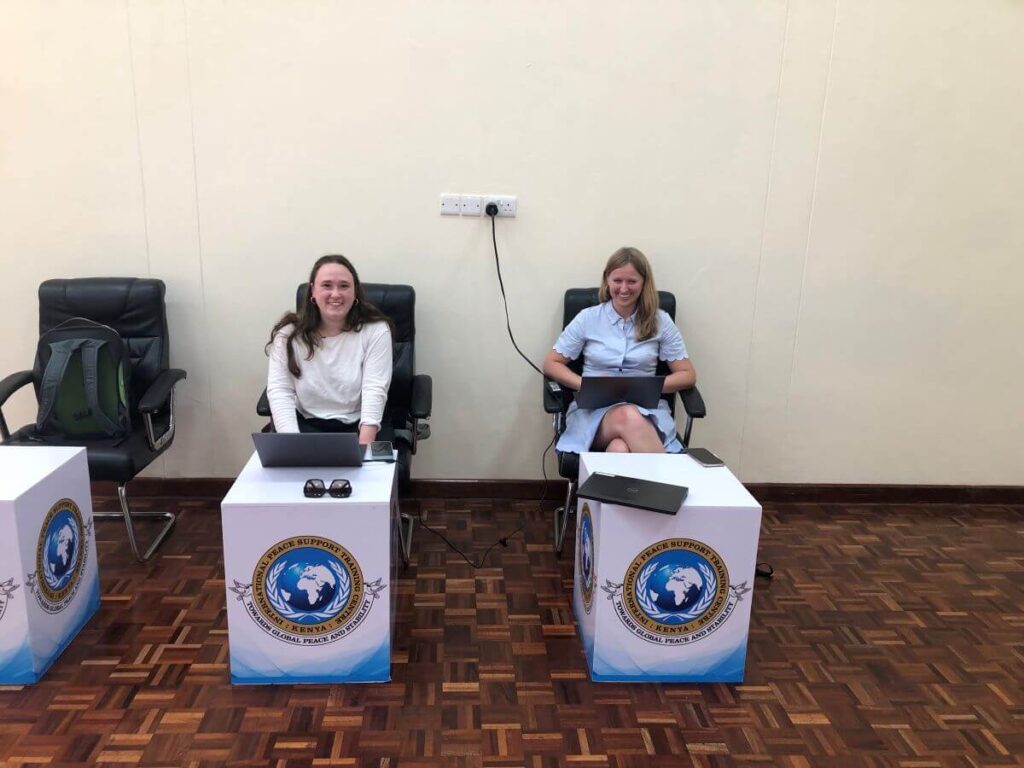
Forging Connections
The dialogue was exactly that – an extended conversation between participants who came from different and diverse backgrounds. Military, police, and civilian representatives from peace operations, those with lived experiences of conflict, as well as people working in the research and academic spaces, engaged each other not only in the confines of the established sessions, but also over morning and afternoon tea, lunch, and dinner.
These more casual (yet substantive and meaningful) moments of engagement begun the first night in Nairobi. At the welcome dinner, local Kenyan culture was on display as performers showcased a wide range of dances. By the end of the evening, dialogue participants were up dancing alongside the performers. On the second evening, during a reception hosted by Switzerland, participants joined in reflecting on their conversations from the day, expanding discussion to wider considerations of the importance of the protection of civilians, the role of the UN, AU, and other regional bodies.
Both formally and informally, connections were made. Despite the diverse set of contexts from which participants came, all engaged in a dynamic, respectful, and committed effort to continue conversations on the protection of civilians, inform each other’s work, and inspire creative and innovative thinking. Two days certainly wasn’t enough.
It is within this context that the Protecting Civilians and Human Security Program is continuing the conversation. The second and third installments of the dialogue series will take place in Geneva and New York later this year.
Header image: International Peace Support Training Centre (IPSTC), Kenya

Current Geopolitics Shift Deep-Sea Mining Debates