

Executive Summary
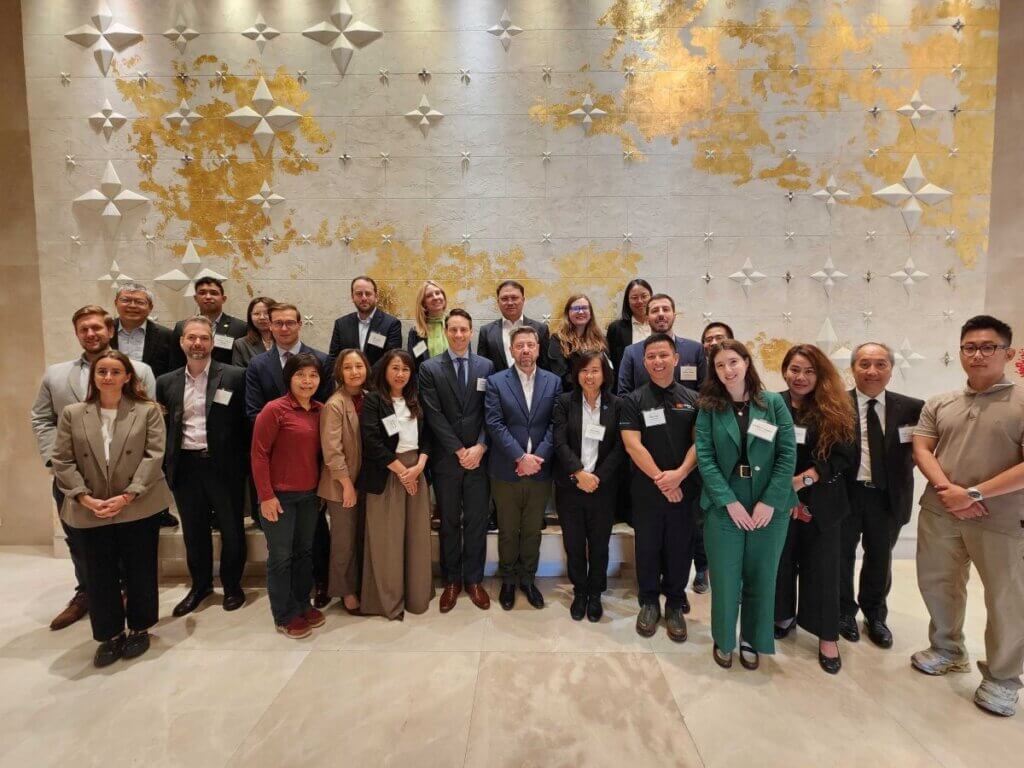
On May 13-14, 2024, the Stimson Center and FishWise co-hosted a two-day workshop dedicated to “reimagining” the Seafood Import Monitoring Program (SIMP). This was the second workshop in a series that brought together over 75 stakeholders from the U.S. government, the fishing industry, customs brokers, environmental and labor NGOs, seafood consultants, and traceability technology providers to have an open and honest conversation about how to implement a reimagined SIMP.
This report is a summary of Workshop II, which explored how to operationalize an improved and expanded SIMP. Discussion and ideas focused on five major areas.
The content of this report captures the discussion, broad themes, and key ideas raised during the workshop. This report is a summary of the workshop; the findings herein do not indicate consensus.
RISK TARGETING AND PREDICTIVE ANALYTICS
- Think beyond species to include product-based and contextual IUU fishing risks.
- Layer the most impactful data to paint a more comprehensive picture of risk.
- Make a flexible, intelligent tool that can take advantage of artificial intelligence (AI)/
- machine learning (ML) programming.
DASHING (DIGITIZE, ANALYZE, STANDARDIZE, HARMONIZE) TO THE FUTURE
- Fully digitize the SIMP process, moving beyond electronic submissions.
- Leverage datasets that work together to emphasize additional contextual and product-based risks.
- Standardize data forms, data formats, structure, and nomenclature.
- Align all unilateral import control rules.
LABOR AND HUMAN RIGHTS ABUSES
- Address human rights by including appropriate labor KDEs and other relevant information in program requirements.
- Clarify the roles of other U.S. Government (USG) agencies in this work.
APPLYING LESSONS LEARNED FROM THE EU
- Leverage government- and industry-supported catch certificate programs.
- Integrate advance/prior notice to move towards a pre-import screening process.
INTERAGENCY COMMUNICATION AND COORDINATION
- Create a regular and transparent feedback loop to share program updates and learnings with all stakeholders.
- Clearly define the roles and responsibilities of all stakeholders in supporting a successful SIMP.
- Identify and remove data-sharing barriers to improve program management and enforcement and support a whole-of-government approach.
Next Steps
The “Reimagining SIMP” workshop series was developed as a direct response to NOAA Fisheries’ withdrawal of its proposed rule to revise SIMP and initiation of a comprehensive program review of SIMP. The program review aims to “identify possible strategies for increasing the effectiveness and impact of SIMP, and other relevant tools in countering IUU fishing and seafood fraud.” This report, together with the summary report of Workshop I, offer exactly that: a comprehensive collection of innovative strategies to improve the effectiveness SIMP.
The workshop series included 75 stakeholders from the fishing industry, customs brokers, environmental and labor NGOs, traceability technology providers, and seven U.S. government agencies. Together, these stakeholders brainstormed what a successful traceability-based import control program for seafood could look like and how to operationalize it. The discussions during the workshops showed that creating a seafood traceability-based import control program that is effectively and efficiently designed to combat IUU fishing and seafood fraud, that can also address labor and human rights abuses in the seafood supply chain, is not an impossible goal. There are many ways to improve SIMP over the short, medium, and long term. Some ideas put forward by the stakeholders are internal, structural changes that NOAA Fisheries can make right now to its programs and protocols. Other ideas will require strategic changes to existing statutory authorities. Some other ideas will require a wholesale change to statutory authorities or indeed a new source of authority altogether. All the suggestions will require continued funding for SIMP and, in many cases, increased resources, to be effective.
The Stimson Center and FishWise will host a public webinar on July 30, 2024, to summarize the workshops with the broader stakeholder community and discuss the next steps that the different communities of interest—NGOs, industry, customs brokers, USG agencies—can take to support SIMP 2.0, 3.0, and beyond.





Current Geopolitics Shift Deep-Sea Mining Debates