Executive Summary
This report presents a policy roadmap for reducing illegal, unregulated, and unreported (IUU) fishing in the South China Sea (SCS) and Sulu-Sulawesi Seascape (SSS), in Southeast Asia. Recommendations upon which this roadmap is based on were derived from an interactive policy dialogue activity at the South China Sea Regional Exchange (REX) in Manila, Philippines held in January of 2024 and are further developed by research conducted by the Stimson Center. As part of the REX, participants were asked to develop policy recommendations that are relevant and actionable for policy planning at the national government and intergovernmental organization levels.
Thematic areas encompass: (i) Marine Ecosystem Conservation and Protection; (ii) Fisheries Governance; Regional Cooperation and Collaborative Management; and Capacity Building and Technical Support Gaps. The recommendations apply to a wide range of policy actors working in the space to reduce IUU fishing in Southeast Asia including regional organizations, national governments, development partners, academia, and civil society organizations who support policy outcomes.
High Level Summary of Policy Roadmap:
- Governments should establish co-managed offshore marine protected areas (MPAs) in the SCS and SSS to protect transboundary marine resources and address ecosystem destruction and degradation. Collaborations between national-level Departments of Fisheries (DoFs), enforcement agencies, regional organizations, and academic institutions are needed to conduct ecosystem-wide ecological assessments and policy development with the UN Biological Diversity of Areas beyond National Jurisdiction (UN-BBNJ) Secretariat. Improving conservation and management of marine resources requires enhanced knowledge of fish populations and climate change impacts. Therefore, institutions should engage with local governments/communities to enhance their assessments and policy development process. Increasingly, coastal development is having run-off effects on marine habitat health. Coastal development policies should embrace integrated coastal management to address developmental inequalities and environmental damage.
- Intergovernmental organizations should assess and align their policies, leveraging artificial intelligence and legal expertise to resolve current conflicts. Intergovernmental organizations and national governments can streamline policy development by establishing working groups to combat IUU fishing, forming advisory boards for underrepresented groups, and promoting community-based management practices to increase stakeholder engagement. Multi-sectoral investments should invest in projects that establish linkages between fisheries governance, disaster risk reduction (DRR), plastic pollution, and food security. To strengthen prosecution for IUU fishing crimes and at-sea enforcement, national governments should spearhead collaborative patrols, centralized databases, and regional summits.
- In order to reduce regional tensions in the SCS, national governments should enhance regional cooperation to overcome political obstacles and improve maritime resource management amid territorial disputes. Specifically, governments should engage in international dialogues, organize workshops through intergovernmental organizations to reduce tensions, and collaborate on research and training programs to build technical expertise in fisheries resource assessment and management. Actors from the SSS engaged in joint patrols are encouraged to share best practices with actors in the SCS. Regional organizations should assist in standardizing domestic counter-IUU fishing policies among member states by mapping similarities and disparities, developing a standardized regional language for IUU fishing policies, and facilitating policy exchanges.
- National and local governments should address technological gaps among fishers by monetizing data and partnering with tech providers for cost-effective traceability solutions. To address underutilization of vessel monitoring systems (VMS) in the commercial fishing industry, governments should impose incentives to encourage uptake and compliance with international standards. Surveys and training by private sector partners can help identify and address tech needs. National agencies should promote knowledge sharing through workshops, and coordinate with the UN Food and Agriculture Organization (FAO) to develop educational resources to boost technological literacy. To improve resilience against climate change, enhanced collaboration on safety and traceability systems is needed, with local ordinances and awareness campaigns supporting these efforts. Strengthening data collection and surveillance through community capacity building and research partnerships will address technical gaps.
Thematic Areas and Policy Focus Areas
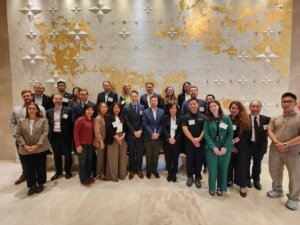
The key concerns and policy focus areas discussed in this report were the result of an interactive policy dialogue process conducted with more than 50 government officials, IUU Fishing experts, and civil society participants who participated in the South China Sea Regional Exchange (REX) in Manila, Philippines in January 2024. Key problems and challenges were identified across four thematic categories discussed during the multi-day REX conference and include: (i) Marine Ecosystem Protection and Conservation; (ii) Fisheries Governance; (iii) Regional Cooperation and Collaborative Management; (iv) and Capacity Building and Technical Support Gaps.
The policy dialogue activity focused on key problems and challenges articulated over the course of the three-day workshop into small group breakout sessions. After an interactive polling exercise to determine the most prioritized issues, workshop participants engaged in a constructive discourse and co-developed policy recommendations to some of the region’s most pressing regional marine governance issues, including IUU fishing. Via desk research and distribution of these policy recommendations for feedback among participants in Sustainable Fish Asia Technical Support Regional Exchanges which focus on the South China Sea (SCS) and the Sulu-Sulawesi Sea (SSS), these recommendations and concerns were expanded to covering the broad Southeast Asia seascape within the maritime territories of Cambodia, Indonesia, Malaysia, Philippines, Thailand, and Vietnam and international waters falling within the Southeast Asian region. Participants further confirmed via a follow-up survey that the recommendations listed below are relevant and actionable for national agencies and sub-agencies, donor institutions, and/or intergovernmental organizations working in the SCS and SSS.
Policy focus areas in the sections are organized by the four aforementioned categories. Each categorical section includes a brief overview providing context, a discussion of key threats and challenges, and current efforts to address these challenges. Where possible, policy recommendations highlight the specific national agencies and sub-agencies, donor institutions, and/or intergovernmental regional organizations such as the ASEAN Sectoral Working Group on Fisheries (ASWGFi), Coral Triangle Initiative on Coral Reefs, Fisheries, and Food Security (CTI-CFF), Regional Plan of Action IUU (RPOA-IUU), Southeast Asia Fisheries Development Center (SEAFDEC), and/or organizations which can adopt and forward these recommendations. While the report highlights recommendations for specific national and sub-national agencies, these recommendations are not endorsed by any particular agency or regional partner organization.
Marine Ecosystem Conservation and Protection
Overview
The SCS and the SSS are two of the most biodiverse marine ecosystems in the world. In the SCS, scientists have cataloged over 3,365 species of fish and 571 species of coral.1 Teh et al., “Status, Trends, and the Future of Fisheries in the East and South China Seas”; and Mike Ives, “The Rising Environmental Toll of China’s Offshore Island Grab,” Yale Environment 360, October 10, 2016 https://e360.yale.edu/features/rising_environmental_toll_china_artificial_islands_south_china_sea. Located in the heart of the Coral Triangle, the SSS is home to over two thousand species of fish, 33 types of mangroves, 22 marine mammal species, and five of the world’s seven species of sea turtle.2 “Sulu Sulawesi Marine Ecoregion,” WWF International Corals Initiative https://wwfeu.awsassets.panda.org/downloads/wwfssme2.pdf. The Coral Triangle is also home to 605 coral species, representing 76% of coral diversity worldwide.3 Veron, J. & Devantier, Lyndon & Turak, Emre & Green, Alison & Kininmonth, Stuart & Stafford-Smith, Mary & Peterson, Nate. (2009). Delineating the Coral Triangle. Galaxea, Journal of Coral Reef Studies. 11. 91-100. 10.3755/galaxea.11.91. Coral reefs, seagrass beds, mangroves, and estuarine habitats provide spawning grounds for critical fish stocks and endangered, threatened, and protected (ETP) species. Habitat health in both seascapes is critical to the food security and economic security of coastal residents. Approximately 40 million people who live along the SSS rely on its marine resources for their livelihoods.4 Ellett, Lindsey G., “Transboundary Marine Management in the Sulu-Sulawesi Seascape” (2021). Graduate Student Theses,
Dissertations, & Professional Papers. 11803. https://scholarworks.umt.edu/etd/11803 Similarly, the SCS is one of the most trafficked seascapes in the world with an estimated 55% (1.77 million) of the world’s vessels operating in marine waters traversing the SCS, making the seascape critical for the livelihoods of regional residents and for stability in global economic supply chains.5 U.
Rashid Sumaila and William W.L. Cheung, “Boom or Bust: The Future of Fisheries in the South China Sea,” ADM Capital Foundation, November 2, 2015, 9 https://www.admcf.org/research-reports/boom-or-bust-the-future-of-fish-in-the-south-china-sea.
However, both the SCS and SSS face severe threats that jeopardize their ecological balance. In the SCS, overfishing, destructive fishing practices like trawling and giant clam harvesting, and habitat destruction from land reclamation and dredging are significant concerns.6 Monica Sato et al., “Deep Blue Scars: Environmental Threats to the South China Sea,” the Center for Strategic and International Studies, 18 December 2023, https://features.csis.org/environmental-threats-to-the-south-chinasea/#:~:text=About%2022%20percent%20of%20the,tuna%2C%20also%20traverse%20the%20area. Coral reefs are particularly vulnerable, with coral cover declining by 16% per decade due to coral bleaching caused by rising sea temperatures.7 Ibid. Further, geopolitical tensions in the SCS exacerbate the problem, as contested maritime boundaries drive aggressive resource extraction and island-building, further degrading marine environments. The SSS faces challenges from destructive fishing practices such as fish bombing and trawling, which damage seabed ecosystems and disrupt marine habitats. Coral bleaching, mangrove forest degradation, and poaching of critical ETP species also threaten the seascape’s health. The effectiveness of conservation efforts in the SSS is hindered by inadequate management and monitoring capacities, which limit the ability to enforce regulations and protect marine habitats within marine protected areas (MPAs).
Addressing these complex challenges requires robust regional collaboration. Additionally, integrated management approaches that consider ecological connectivity and socioeconomic factors are essential. Regional cooperation facilitates the development of comprehensive management plans and the sharing of scientific data, research findings, and best practices. In the SCS, cooperation can help mitigate geopolitical conflicts and promote agreements that prioritize environmental conservation. In the SSS, a unified approach can improve the protection of ETP species and combat IUU fishing more effectively. Progress has been made through the endorsement of the Regional Plan of Action 2.0 (RPOA 2.0), which sets clear regional objectives for the protection of coastal and marine ecosystems and sustainable development.8 RPOA 2.0 Objectives: : (i) Objective A: By 2030, health of coastal and marine ecosystems, priority threatened species and fisheries in the Coral Triangle region are improved through effective management actions; (ii) Objective B: By 2030, Risk resilience and socioeconomic conditions, in particular food security and coastal livelihoods, of communities living in the Coral Triangle region are improved; and (iii) Objective C: CTI-CFF Governance, Leadership and Partnership. 9 Regional Plan of Action (RPOA) 2.0 2021-2030. Manado, Indonesia: Coral Triangle Initiative on Coral Reefs, Fisheries and Food Security Regional Secretariat, 2022. Additionally, the sub-regional groups for both the SCS and SSS collaborate to set objectives for marine conservation and protection. Therefore, there are opportunities for national governments, CSOs, local communities, and intergovernmental networks to continue aligning policy planning and objectives with regional-level marine conservation and protection goals to work collaboratively and protect transboundary ecosystems and resources.
Priority Issues and Policy Recommendations
1. National governments should work together to establish co-managed offshore MPAs beyond national jurisdictions in the SCS and the SSS. Marine protection and conservation outcomes in these seascapes are dependent upon protecting transboundary natural resources. Securitization of ocean governance in the SCS and porous boundaries in the SSS encourage encroachments that harm marine ecosystems. Consequently, fish resources are declining, and the quality of catch is declining in each respective seascape. Actors in the SSS have taken steps to address the protection of transboundary marine resources through CTI-CFF’s and SEAFDEC’s endorsement of the SSS Ecosystem Approach to Fisheries Management (EAFM) Plan, offering an opportunity to build on these initiatives and exchange best practices with actors in the SCS.10 “Sub-Regional Plan for Managing Transboundary Fisheries in the Sulu-Sulawesi Seascape: Taking an Ecosystem Approach to Fisheries Management.” The USAID Oceans and Fisheries Partnership, December 2018, https://repository.seafdec.or.th/bitstream/handle/20.500.12067/1044/2018-12-31%20Sulu-Sulawesi-Seascape-Subregional-EAFM-Plan_December-2018_ENDORSED-1.pdf?sequence=1&isAllowed=y
- National-level Departments of Fisheries (DoFs)/Ministries of Environment (MoEs) should encourage partnerships between academic institutions and at-sea enforcement sub-agencies—Philippines’ BFAR, Vietnam’s DFISH, Indonesia’s MMAF—to conduct rapid ecological assessments shared waters to assess biodiversity, habitat conditions, and fish stocks.
- DoFs/MoEs should work with local governments, fisherfolk, NGOs and civil society organizations, and academic institutions to evaluate the socioeconomic impacts of no-take zones in potential offshore MPAs.
- Ministries of Foreign Affairs (MoFAs) of governments and at-sea enforcement sub-agencies—Philippines’ BFAR, Vietnam’s DFISH, Indonesia’s MMAF—should consult the UN Biological Diversity of Areas beyond National Jurisdiction (UN-BBNJ) Secretariat to draft a policy framework to guide the establishment and management of the MPAs. Actors in the SSS and SCS could adopt best practices for the governance of offshore MPAs from the maintenance of the Turtle Islands Heritage Protected Area (TIHPA), the first transboundary marine park for turtle conservation co-managed by Indonesia, Malaysia, and the Philippines.11 “A Sanctuary for Green Sea Turtles in Southeast Asia,” Brunei Darussalam-Indonesia-Malaysia-Philippines East ASEAN Growth Area, 22 May 2020, https://bimp-eaga.asia/article/sanctuary-green-sea-turtles-southeast-asia Research and academic institutions should consult with the private sector and community leaders to conduct in-depth assessments of the social and economic impacts of the proposed MPAs.
- Based on prior consultations and planning, MoFAs and academic institutions should consolidate all information and consultations on the proposed MPA into a comprehensive report.
- MoFAs of governments should negotiate and finalize a multilateral agreement with the UN-BBNJ Secretariat. Intergovernmental organizations—ASWGFi, CTI-CFF, RPOA-IUU, and SEAFDEC—should encourage member-states to ratify and implement the agreement.
2. Governments should collaborate on efforts to improve knowledge on the region’s fish population dynamics and connectivity to facilitate better management of marine resources. Governments should evaluate how destructive fishing practices, knock-on effects of climate change, and overexploitation of fish stocks are altering the broader SSS and SCS ecosystems. Currently there is limited understanding of how the region’s fish population and ecosystems are connected.
- Governments and large donor institutions should facilitate a joint a scoping study on fish migration, fish population connectivity, hydrodynamics, and the sources and sinks of fish populations by engaging with regional organizations, scientists, and academics. Identified donors include USAID, the EU, GEF, and the ADB. This will aid in aligning priorities for ecosystem protection and maintenance between governments, intergovernmental organizations, and donors. Initiatives can build upon research and joint assessments between countries—such as the Philippines and Vietnam—and the on-going implementation of the Strategic Action Programme for the SCS by the UNEP Global Environment Facility (GEF).12 “Implementing the Strategic Action Programme for the South China Sea.” UN Environment Programme Global Environment Facility, 2024, https://www.unep.org/gef/projects/implementing-strategic-action-programme-south-china-sea.
- DoFs/MoEs should work with local governments and academic institutions to enhance local and regional capacities for research and management and integrate knowledge from local communities and small-scale fishers (SSFs) into scientific studies.
- Scientists and academics should utilize modern technologies—artificial intelligence (AI), machine learning (ML), and remote sensing—and innovative approaches to enhance data collection and analysis. AI/ML enables complex systems modeling to understand multi-level policy planning impacts on countries, allowing for informed decision-making and policy implementation.
- Large regional donors should work with academics and intergovernmental organizations–ASWGFi, CTI-CFF, RPOA-IUU, and SEAFDEC, as well as regional and international organizations such as the ASEAN Center for Biodiversity, SEAFDEC and WorldFish – to integrate ecological, hydrodynamic, and socioeconomic data to conduct a comprehensive study on the SCS and SSS Large Marine Ecosystems (LMEs) to be disseminated to national and local-level governments. Such assessments in the SSS can be completed as part of the current EAFM plan under CTI-CFF and SEAFDEC.13 “Sub-Regional Plan for Managing Transboundary Fisheries in the Sulu-Sulawesi Seascape: Taking an Ecosystem Approach to Fisheries Management.”
3. In the coming decades, knock-on effects of climate change are expected to be a major risk multiplier for the resilience of marine ecosystems in the SCS and the SSS. Governments should increase the funding and prioritization of integrated, multi-sectoral, and place-based research on the systemic impacts of climate change on marine ecosystems. Currently there is a lack of research and information on climate change impacts on habitats, stock status biomass, and species migration.
- Research institutions, DoFs, and MoEs should develop and use models to project the effects of climate change on marine habitats, fish stocks, and ecosystem services.
- Research institutions should work with DoFs and MoEs to collect, and regularly update, data on climate impacts including changes in fishery resources, habitat conditions, biomass, and migration patterns. In the SSS, for example, this can be achieved by funding the implementation of the SSS EAFM Plan which supports regional collaboration on ecological research and stock assessments, fish landing data collection, and studying MPA spillover effects on fish stocks.
- DoFs and MoEs should work together to conduct public consultations with coastal communities, fishers’ associations, and civil society organizations (CSOs) to gather traditional knowledge on local experience related to climate change impacts.
- DoFs and MoEs should adopt a participatory approach when engaging with coastal communities, ensuring that consultations are inclusive, and that input is integrated into research and policy development.
- National governments should engage via intergovernmental organizations–ASWGFi, CTI-CFF, RPOA-IUU, and SEAFDEC–to create and align climate action plans while integrating findings from research consultations, encouraging cross-agency and sectoral collaboration.
4. Unregulated coastal development is having adverse effects on habitats, ecosystems, and access to marine resources for small-scale fishers. Governments should mainstream integrated coastal management (ICM) for implementation into national and local laws and policies on development. Developmental policy in coastal communities has worsened inequalities in access to marine resources for small-scale fisheries by incentivizing land grabbing by developers and tourism companies. These pressures can drive small-scale fishers out of the industry, create migrant fishers at risk of labor exploitation, or promote the use of unsustainable or illegal fishing tactics to maintain their livelihoods. In addition, coastal development is negatively impacting habitats and ecosystems due to land dredging and mangrove forest destruction.
- Regional partners, local governments, and national sub-agencies should facilitate the dissemination and sharing of successful examples and methodologies for planning and managing marine spaces—including marine spatial planning—to academic institutions, coastal communities, and CSOs—highlighting lessons learned from ICM and integrated coastal zone management (ICZM) initiatives in Southeast Asia. Governments can learn from the Philippines’ implementation of their fisherfolk engagement program which mandates ICZM in its Department of Environment and Natural Resources Bureau of Fisheries and Aquatic Resources. A potential regional partner identified by workshop participants includes PEMSEA.
- National governments, port authorities, MoEs, DoFs, and at-sea enforcement agencies–Philippines’ BFAR, Vietnam’s DFISH, and Indonesia’s MMAF –should work together to develop, implement, and streamline standards and guidelines for conducting comprehensive environmental and social impact assessments (ESIAs) for coastal development projects.
- National and local governments should engage with CSOs and coastal communities to embed ICM principles into legal frameworks and developmental policies and to track the adoption and effectiveness of ICM practices and policies through regular assessments.
Fisheries Governance
Overview
In both the SCS and the SSS, the impacts of IUU fishing are exacerbated by limited governmental capacity for effective fisheries management. The SCS, known for being one of the world’s most productive fishing grounds, has an estimated annual catch of 10.19 million metric tons, valued at approximately USD 11.34 billion.14 Louise Teh et al., “Status, Trends, and the Future of Fisheries in the East and South China Seas,” Fisheries Centre Research Report 27, no. 1 (2019): 9. There are approximately 3.7 million people directly employed in the fisheries sector across the seascape, with marine resources and the fisheries sector indirectly supporting the livelihoods of 190 million people in coastal communities across the region.15 Jianwei Li and Ramses Amer, “Closing the Net against IUU Fishing in the South China Sea: China’s Practice and Way Forward,” Journal of International Wildlife Law and Policy 18, no. 2 (2015): 139; and U. Rashid Sumaila et al., “Sink or Swim: The Future of Fisheries in the East and South China Seas,” ADM Capital Foundation, November 3, 2021 https://www.admcf.org/wp-content/uploads/2021/11/Sink-or-Swim-Full-Report_171121.pdf. The SSS contributes approximately 1.06 million metric tons of fish annually, worth USD 1.18 billion.16 Teh et al., “Status, Trends, and the Future of Fisheries in the East and South China Seas,” 9–10. There are approximately 40 million residents of coastal communities in SSS countries that directly, and indirectly, rely on marine resources for their livelihoods. However, both regions have seen their fish stocks come under severe pressure due to overfishing driven by economic growth, population increases, and territorial disputes. A recent analysis by the Food and Agriculture Organization of the United Nations (FAO) highlights the SCS and the SSS as global hotspots of IUU fishing.17 Wilcox, C., Mann, V., Cannard, T., Ford, J., Hoshino, E. and Pascoe, S. 2021. A review of illegal, unreported and unregulated fishing issues and progress in the Asia-Pacific Fishery Commission region. Bangkok, FAO and Hobart, CSIRO. https://doi.org/10.4060/ cb2640en Developmental pressures have driven overexploitation of regional fish stocks in tandem with IUU fishing. In the SCS, 26% of fish stocks are classified as overexploited, and 21% have collapsed. Similarly, in the SSS, 33% of fish stocks are overexploited, with 13% having collapsed.18 Aekarach Sattaburuth, “Pheu Thai Champions Fishermen’s Rights,” Bangkok Post, December 15, 2018. https://www.bangkokpost.com/thailand/general/1594334/pheu-thai-champions-fishermens-rights.
Governance issues further complicate stock overcapacity in both seascapes. In the SCS, territorial disputes and the securitization of the fishing industry has led governments to focus resources on territorial defense rather than on sustainable fisheries management. This prioritization creates an environment of distrust between regional states, making collaborative efforts on data sharing and fisheries management extremely challenging. In contrast, government initiatives to counter-IUU fishing in the SSS are generally better received, but they are still undermined by several issues. Porous national boundaries limit monitoring, control, and surveillance (MCS) efforts, enabling transnational criminal enterprises to engage in IUU fishing and other illicit activities across the seascape. Both the SSS and the SCS suffer from confusion over enforcement responsibilities, conflicting policies and procedures at various government levels, and cumbersome licensing processes. In both seascapes, the commercial fishing industry maintains a substantial amount of political and economic clout due to high levels of financial capital, which can undermine the implementation of policies centered on community welfare and small-scale fisheries.19 Toan Dao, ”Proposed rollback of Thai fisheries reforms could carry human rights, economic consequences.” Seafood Source, 21 June 2024, https://www.seafoodsource.com/news/supply-trade/ejf-cautions-that-proposed-rollback-of-thai-fisheries-reforms-could-carry-human-rights-economic-consequences These governance challenges hinder effective fisheries management, making it difficult to address IUU fishing and ensure the long-term sustainability of marine resources.
Overall, the interplay of overfishing, inadequate governance, and the impacts of IUU fishing in the SCS and SSS highlights the urgent need for improved regional collaboration and capacity building. Effective fisheries management requires coordinated efforts to strengthen governance structures, enhance data sharing, and address enforcement challenges across national boundaries.
Priority Issues and Policy Recommendations
1. Governments should strengthen and synergize current mechanisms to promote the effective protection, sustainable use, and development of fisheries. In the SCS, securitization of the fisheries industry has hampered further regional fisheries governance collaboration. Fisheries governance in both seascapes is hampered by conflicting policies which makes fisheries governance and management a cumbersome process, both domestically and regionally.
- Intergovernmental organizations—ASWGFi, CTI-CFF, RPOA-IUU, and SEAFDEC—should evaluate the effectiveness of existing processes and policies at each organization to ensure that practices align with regional and international standards.
- Intergovernmental organizations—ASWGFi, CTI-CFF, RPOA-IUU, and SEAFDEC—could provide guidance framework to their country members in working collaboratively with CSOs focused on legal issues and technology companies utilizing AI/ML to ensure national policies are aligned with intergovernmental policies.
- Governments should work together and with the Hague to resolve conflicting policies and avoid potential legal disputes.
- Intergovernmental organizations—ASWGFi, CTI-CFF, RPOA-IUU, and SEAFDEC— should create issue-focused working groups to develop and implement strategies to combat IUU fishing with stakeholders such as national governments, community fishing organizations, CSOs, the People’s Republic of China (PRC), and the private sector.
- The ASWGFi should consult with DoF personnel to promote discussions at the ASEAN Secretariat level involving political and security dimensions related to fisheries.
- Intergovernmental organizations—ASWGFi, CTI-CFF, RPOA-IUU, and SEAFDEC— should convene a summit of Southeast Asian fisheries organizations, national government agencies, community fisheries, and experts from sub-working groups to discuss and coordinate on fisheries management and policy issues.
2. National governments and intergovernmental organizations should streamline policies that increase capacity building for community organizations and emphasize community needs, hopes, and aspirations. Stakeholder and public engagement in the fisheries management process varies depending on governance systems, ranging from limited engagement to active participation. In decentralized governance systems in Southeast Asia, consultation with key stakeholders has been part of the Fisheries Management Area and local level fisheries management processes, for e.g., in major FMAs in Indonesia and the Philippines. Limited engagement will result in overlooking community and traditional management practices. To generate feasible and impactful policy solutions, it is important to establish activities and mechanisms that provide a consistent feedback loop between local community leaders, and national-level policy planners.
- National and local governments should coordinate the creation of an advisory board for fisheries management that gives underrepresented stakeholders such as small-scale fishers a seat at the table. Governments in the region can learn best practices from the Philippines and Indonesia’s development of their National Plan of Action for Small-Scale Fisheries (NPOA-SSF) for pathways to establish their own NPOA-SSFs and to elevate the voices of underrepresented stakeholders, in alignment with the FAO Voluntary Guidelines on SSF.20 “National Plan of Action for Small-Scale Fisheries (NPOA-SSF),” FAO, https://openknowledge.fao.org/server/api/core/bitstreams/9f19390e-efcb-486b-a3fe-0b0505040cc7/content
- Intergovernmental organizations–ASWGFi, CTI-CFF, RPOA-IUU, and SEAFDEC– should convene a summit to explore best practices and progress member countries have made at integrating consultations with stakeholders into policies. For example, the summit could feature Indonesia’s and the Philippines’ decentralized consultation processes with key local stakeholders as part of the fisheries management area development process.21 Imanda Pradana, “Building Momentum for Better Fisheries Management in Western Indonesia,” Conservation Strategy, 30 November 2018, https://www.conservation-strategy.org/news/building-momentum-better-fisheries-management-western-indonesia
- Local universities should work together to host a community and traditional management practices learning exchange to increase interest and engagement with students.
- Academics and scientists should work with CSOs to enhance scientific communications in a digestible way that people from all walks of life can understand to facilitate broader stakeholder engagement.
3. Governments should incentivize multi-sectoral investments to create linkages between fisheries governance and disaster risk reduction (DRR), reducing plastic pollution, food security, and blue economy development. Current governance efforts lack linkages to these sectors, which leaves gaps in sustainable fisheries development and in developmental policy across related sectors.
- Governments should collect and share resources on convergent sectors such as experts, logistics, assets, and data to support multi-sectoral initiatives and project funding.
- Governments should work with media organizations to highlight and promote successful examples of integrated approaches that link fisheries governance to other sectors to garner more interest from researchers.
- MoFAs should develop a regional exchange where stakeholders can invest in and collaborate on projects that address fisheries governance from a multi-sectoral perspective and include linkages to DRR, plastic pollution, and food security.
- Governments should encourage public-private partnerships that provide financial or other incentives to organizations and individuals that transition to system-level fisheries management planning.
- Intergovernmental organizations–ASWGFi, CTI-CFF, RPOA-IUU, and SEAFDEC– should institutionalize linkage mechanisms among member-states by creating formal mechanisms for regular collaboration and developing regional agreements.
4. National government agencies should improve rules-based identification and prosecution of IUU fishers. Currently there is a low rate of identification and prosecution of suspected IUU fishers since approximately 75% of reported illegal fishing by value in Southeast Asia is undertaken by foreign vessels.22 “A review of illegal, unreported and unregulated fishing issues and progress in the Asia-Pacific Fishery Commission region.” At-sea enforcement agencies are hindered by low capacity which hampers enforcement and prosecution.
- In the SCS, governments should conduct collaborative patrols to enhance enforcement capabilities and increase visibility of IUU fishing activities. In the SSS, the Trilateral Agreement between Indonesia, Malaysia, and the Philippines should be reviewed to identify best practices and room for improvement in joint operations. Additionally, states should review and streamline policies under the CTI-CFF fisheries enforcement terms of reference with their own national-level policies.23 https://coraltriangleinitiative.org/sites/default/files/resources/Terms%20of%20Reference%20for%20Establishment%20of%20Sulu%20Sulawesi%20Seascape%20Sub-%20group.pdf
- National DoFs/MoEs should work with at-sea enforcement agencies and academic institutions to develop a centralized database or repository containing case studies, legal frameworks, and enforcement records related to IUU fishing to be made accessible to enforcement agencies and relevant stakeholders. This repository can be built into current initiatives like ASEAN Network-IUU (AN-IUU), an interactive platform established in 2022 for fisheries enforcement agencies to upload and share reported incidents of IUU fishing.24 “ASEAN, EU Ramp Up Efforts to Fight Illegal Fishing,” Association of Southeast Asian Nations, 18 July 2024, https://asean.org/asean-eu-ramp-up-efforts-to-fight-illegal-fishing National DoFs/MoEs should then utilize the developed repository to create a comprehensive manual and training program outlining procedures, best practices, and protocols for fisheries law enforcement in each respective seascape.
- At-sea enforcement authorities should develop public-private partnerships with technology providers to coordinate high seas inspection and boarding operations using advanced technology—satellite monitoring, drones, and automated identifications systems (AIS)—to monitor and address IUU fishing activities.
- Intergovernmental organizations–ASWGFi, CTI-CFF, RPOA-IUU, SEAFDEC–should host a summit consisting of governments, enforcement authorities, legal experts, and international partners to discuss challenges, share experiences, and develop strategies for improving fisheries law enforcement.
- Academic institutions should host a remote sensing tech expo with technology providers to showcase emerging technologies, facilitate partnerships, and promote the use of remote sensing technology for MCS.
Regional Cooperation and Collaborative Management
Overview
Both the SCS and the SSS face significant transboundary threats that impact their ecological and economic security. Effective seascape governance relies heavily on regional cooperation to develop and distribute marine resources sustainably. Currently, the SCS is not governed by a Regional Fisheries Management Organization (RFMO), which hinders efforts to manage shared marine resources comprehensively. In the SSS, migratory fish stocks are governed in part by the Western and Central Pacific Fisheries Commission (WCPFC). Additionally, there is limited capacity in both the SCS and SSS to establish a sub-regional and/or ecosystem-specific RFMO within the respective LMEs due to disinterest from the commercial fishing industry, financing limitations, and dis-trust between states bordering the SCS.25 Pomeroy, Robert & Parks, John & Courtney, Kitty & Mattich, Nives. (2016). Improving marine fisheries management in Southeast Asia: Results of a regional fisheries stakeholder analysis. Marine Policy. 65. 20-29. 10.1016/j.marpol.2015.12.002. The absence of a cohesive governance framework has adversely affected the protection, preservation, and sustainable use of fisheries in both seascapes. Both regions support large populations of commercially important fish species, such as tuna and mackerel, that traverse national boundaries and therefore require regional collaboration.
In the SCS, regional cooperation is severely undermined by widespread distrust among the countries involved. The ongoing territorial disputes and competing national interests create a challenging environment for collaborative efforts, preventing the establishment of effective management systems for transboundary resources. Conversely, the SSS exhibits a more proactive approach to regional cooperation on marine issues. Absent securitization exhibited by actors in the SCS, the overexploitation of shared resources has driven Indonesia, Malaysia, and the Philippines to form the Trinational Committee on the Sulu-Sulawesi Marine Ecosystem (SSME). This mechanism aims to coordinate efforts on habitat protection, the development of networks of MPAs, and the promotion of sustainable fisheries practices. Additionally, bordering states have established bilateral Memorandum(s) of Understanding (MOUs) and a Trilateral Agreement (2016) to facilitate joint at-sea enforcement initiatives, enhancing regional collaboration.26 Prashanth Parameswaran, “Indonesia, Malaysia, Philippines Consider Expanding Sulu Sea Trilateral Patrols,” The Diplomat, April 19, 2022, https://thediplomat.com/2022/04/indonesia-malaysia-philippines-consider-expanding-sulu-sea-trilateral-patrols/
However, challenges remain in the SSS, particularly regarding data sharing. While progress in data sharing and reporting has been made across both seascapes through the AN-IUU among ASEAN members, and the development of a data sharing mechanism among RPOA-IUU participating countries27 “Building a Foundation for Regional Data Sharing: First RPOA-IUU Data Sharing Mechanism Working Group Meeting.” RPOA-IUU, 4 December, 2024, https://rpoaiuu.org/2024/12/04/building-a-foundation-for-regional-data-sharing-first-rpoa-iuu-data-sharing-mechanism-working-group-meeting/ supported by USAID SuFiA TS, in the status quo critical information necessary for effective fisheries management is not fully shared among the countries involved.
Addressing data gaps on fish stocks, fishing vessels, and marine ecosystems is essential for improving the management and sustainability of marine resources in the SSS, highlighting the need for enhanced regional cooperation and information exchange. In the SCS, regional collaboration should focus on re-centering discussions of IUU fishing around environmental concerns, while building trust through data sharing mechanisms and enhanced regional cooperation.28 Key priorities and perspectives for the regional framework on collaborative fisheries management based on the SCS REX: (1) Promote long-term sustainable fisheries in an integrated process in the SCS region; (2) Facilitate international cooperation – Secretariat or a Coordinating Unit that may include several committees such as finance and administration to support all cooperating partners; (3) Hold a regional forum or platform to undertake integrated/ecosystem approach to regional fisheries management,; (4) Promoting science-based management.
Priority Issues and Policy Recommendations
1. National governments should strengthen regional cooperation to address political obstacles through effective maritime resource management. Currently there are major political obstacles to resolving territorial and maritime disputes. Territorial incursions in the SCS have promoted a race-to-fish mentality that hampers maritime resource management while tying fisheries production to state sovereignty. In the SSS, vessels from bordering states encroach on the waters of their neighbors and fish outside of registered zones, while foreign-flagged vessels and transnational criminal enterprises encroach on the seascape, posing challenges for enforcement.
- National governments should attend relevant international and regional cooperation meetings to foster dialogue and collaboration with the PRC to address political obstacles in maritime disputes.
- Intergovernmental organizations–ASWGFi, CTI-CFF, RPOA-IUU, and SEAFDEC– should organize events, workshops, and dialogues to build relationships among stakeholders, including the commercial fishing industry, and key government institutions, and CSOs representing fisheries organizations as a way to reduce tensions and establish mechanisms to solve regional disputes peacefully.
- Intergovernmental organizations–ASWGFi, CTI-CFF, RPOA-IUU, and SEAFDEC– and national governments should encourage cross-country collaboration on research projects related to marine resources, environmental impacts, and fisheries management to build a common understanding and support collaborative management approaches.
- SEAFDEC should collaborate with FAO Regional Office in Asia and the Pacific, which provides technical and capacity building support in fisheries management at respective country-levels, research institutions and national government agencies to offer cross-country training programs and workshops to build technical expertise in marine resource management and dispute resolutions.
2. Regional governmental and intergovernmental organizations should promote domestic-level policy commonalities in institutional arrangements, controls and licensing, and enforcement. Currently there are structural differences between countries in which institutions and actors manage different levels of IUU fishing management and enforcement, which hampers progress in both.
- Intergovernmental organizations—ASWGFi, CTI-CFF, RPOA-IUU, and SEAFDEC—should analyze and map regional similarities and disparities in institutional arrangements, policies, and practices to map current points of harmonization, and to understand actors for future harmonization.
- Intergovernmental organizations–ASWGFi, CTI-CFF, RPOA-IUU, and SEAFDEC–and relevant government agencies–DoFs, MoEs, and at-sea enforcement agencies–should develop a common language and definitions to ensure consistent interpretation and application of policies across both the SCS region and the SSS.
- Intergovernmental organizations–ASWGFi, CTI-CFF, RPOA-IUU, and SEAFDEC–should facilitate the exchange of successful strategies and experiences between countries and organizations to foster learning and improvement. Similarly, organizations should promote exchanges with other regions, for example between the SSS and SCS, to share successful case studies and practices from other regions.
- Intergovernmental organizations–ASWGFi, CTI-CFF, RPOA-IUU, and SEAFDEC–should develop and agree upon a regional framework or standard to guide policy development and implementation.
- DoFs/MoEs and at-sea enforcement sub-agencies should establish a program where officials from different countries exchange roles to gain insights and build capacity. In the SCS, this could be modeled after current initiatives centered around joint operations in the SSS.
- Governments should offer financial support or shared technologies to encourage states to align their policies with the regional framework.
3. Intergovernmental organizations should work to increase confidence building measures amongst countries and subregions including government, civil society, and science providers to facilitate data sharing. Currently there is a lack of trust for data sharing among key parties in the SCS and the SSS, which has hampered de-securitizing the fisheries industry in Southeast Asia and has hampered fisheries management. Through bilateral MoUs and the Trilateral Agreement, nations on the SSS collaborate and share information and technology regarding at-sea enforcement of fisheries-related crimes. Most recently, fisheries enforcement data sharing has expanded to ASEAN-member states through AN-IUU. Intergovernmental organizations should promote expanding data-sharing to encompass fish stocks, vessels, and marine ecosystems to promote transboundary ecosystem-based management.
- National government DoFs/MoEs should work with relevant local governments and data and information sub-agencies to assess and understand the types of data that are sensitive or confidential to different stakeholders to address concerns and establish guidelines for data sharing.
- Intergovernmental organizations–ASWGFi, CTI-CFF, RPOA-IUU, and SEAFDEC–should facilitate coordination amongst national governments to determine the interests of different parties and identify areas where data sharing could align or conflict, paving the way for mutual agreements.
- Regional/intergovernmental organizations such as the ASEAN Centre for Biodiversity (ACB), FAO APFIC, CTI-CFF, RPOA-IUU, and SEAFDEC–should create opportunities for dialogue and collaboration through joint events, forums, and platforms to facilitate trust-building and data sharing among countries and stakeholders.
4. National governments should work with intergovernmental organizations to identify gaps in national governmental policy to meet international regional binding standards. Currently, it is difficult to adopt legally binding standards and measures at the national level. Therefore, it is critical to streamline this process by identifying shortcomings.
- National government agencies should work with international and regional organizations to assess the current capacities of national governments to implement and adhere to regional and international legally binding standards. This involves evaluating legal frameworks, enforcement mechanisms, and institutional capabilities.
- Regional organizations (e.g., ASWGFi, RPOA IUU SEAFDEC) should work with intergovernmental platforms to determine which existing regional standards need to be formalized as legally binding to enhance their implementation and enforcement across member states.
Capacity Building and Technical Support Gaps
Overview
The SCS and the SSS are both facing significant challenges due to capacity building and technical gaps, which undermine their ecological and economic security. Many SSFs in these regions lack the technical knowledge and tools to utilize advanced traceability technologies effectively. For example, despite regulations requiring the use of AIS for small-scale vessels in Indonesia, up to 90% of Indonesia’s domestic small-scale fleet was operating unmonitored.29 Olive Heffernan, “The Hidden Fight to Stop Illegal Fishing from Destroying Our Oceans,” Wired, March 9, 2019, https://www.wired.co.uk/article/illegal-fishing-global-fishing-watch. This problem is compounded by the high costs associated with these technologies and a lack of incentives to encourage their adoption. For example, in Indonesia between 60% and 80% of North Sulawesi provincial government support is spent on input-based support such as vessel modernization to encourage uptake, with significantly less spent on fisheries management.30 Anissa Suharsono et al.,“Supporting Marine Fishing Sustainability :A review of central and provincial government support for marine fisheries in Indonesia,” International Institute for Sustainable Development, July 2021, https://www.iisd.org/system/files/2021-07/sustainable-marine-fisheries-indonesia-en.pdf Consequently, the management and monitoring of marine resources are less effective, and the potential benefits of improved traceability and sustainability are not fully realized.
Effective management of marine resources requires robust data infrastructure to gather, analyze, and utilize information on fish stocks, fishing practices, and ecosystem health. Currently, there are significant gaps in community-level data collection, which limits the integration of citizen science into policy development. Indeed, the 2023 FAO status of marine fishery stock assessments in the Asian region highlighted a need to incorporate local knowledge and consultations with coastal communities into stock assessment and ecosystem assessment processes and models.31 AO. 2023. The status of marine fishery stock assessments in the Asian region and the potential for a network of practitioners. Bangkok. https://doi.org/10.4060/cc9002en Findings from the report also conclude that findings from stock assessments are not well connected to management decision-making and action due to a lack of communication to various stakeholders on the value of stock assessments in managing fisheries, leading to gaps in data collection in models. Without comprehensive and actionable data, policymakers and stakeholders cannot make fully informed decisions, which hampers efforts to address issues such as overfishing and habitat degradation.
Moreover, the lack of effective data-sharing mechanisms exacerbates these challenges. In both regions, critical information on marine resources is not always accessible to policymakers, researchers, and the public. This lack of transparency and accessibility hinders the development of informed management strategies and limits the ability to respond to emerging threats. Addressing these technical and capacity gaps is crucial for improving the sustainability and resilience of the marine ecosystems in the SCS and the SSS. Recommendations must be backed by financial and human resources to encourage long-term capacity building.
Priority Issues and Policy Recommendations
1. National/Local governments should promote incentivization schemes monetizing data entries by small-scale fishers. Additionally, local governments should facilitate public-private partnerships with technology developers to encourage uptake amongst small-scale fishers. Currently, there is low technological literacy among fisherfolk, partially related to low incentives and high costs for fishers to use technological solutions related to traceability.
- National/Local governments should conduct surveys, interviews, and training sessions to understand the needs, challenges, and opportunities for fishers regarding traceability technologies. SDVICO32 https://www.kisstartup.com/en/sdvico was identified as a possible implementing partner for such activities in Vietnam.
- Local governments should work with tech providers and the processing industry to design and implement systems that encourage technology uptake by offering tangible benefits to fishers, such as monetizing their data, reducing technology costs, and providing technology training.
- DoFs/MoEs should work with private industry and local governments to facilitate knowledge sharing through workshops, conferences, and online platforms to exchange best practices and success stories related to technology adoption and traceability.
The UN FAO in collaboration with regional organizations such as SEAFDEC may work with technology providers to create educational resources and courses focused on traceability and their benefits to improve technological literacy and skills in traceability. Other potential course providers that were suggested include Coursera and Khan Academy.
2. The UN Regional Collaboration Centre Asia and the Pacific should coordinate increased year over year engagement between Coast Guards, local governments, fisheries associations, and small-scale fishers to better understand how climate change impacts livelihood decision-making. Currently, there is a need for an increased focus on safety at sea as climate change introduces more vulnerability.
- Coast Guards, local governments, and fisheries associations should work together to develop and implement systems that integrate safety measures with traceability systems like vessel monitoring systems (VMS) to enhance both operational safety and regulatory compliance, while improving monitoring and response capabilities. Governments should encourage commercial compliance with VMS by highlighting safety concerns and the benefits of using VMS to analyze fishing productivity and compliance with sustainability standards.
- Local governments should establish ordinances that mandate the use of life vests, providing enforcement support from Coast Guards to ensure compliance.
- Local governments should partner with CSOs and fisheries associations to conduct awareness campaigns and training sessions on climate change and disaster risk reduction (DRR) tailored to the needs of small-scale fishers and coastal communities.
- Coast Guards and fisheries associations should use safety at sea initiatives to build trust and foster discussions on broader issues, including political and maritime conflict resolution.
3. DoFs/MoEs and local governments should integrate data collection and surveillance regarding fishing through existing channels. Currently there is limited capacity to collect community data and surveillance data due to a lack of access to MCS tools, CDT tools, and low-cost VMS equipment, which reduces the uptake of citizen science into policy building. Few on-going efforts at the local level include the Philippine IUU Fishing Index and Threat Assessment Tool (I-FIT)33 I-FIT Suite – https://sites.google.com/fishright.crcuri.org/ifit/home with USAID Philippines and BFAR.
- DoFs/MoEs should coordinate with local governments to develop and implement educational and engagement programs to build capacity among youth, fisherfolk, and the private sector for data collection and surveillance.
- Local governments should work with staff at national government agencies and academia to compile and present community-collected data and research findings in a format that is accessible and actionable for policymakers.
- Local governments should develop partnerships with academia and the private sector for joint research initiatives that leverage scientific expertise and local knowledge to address data gaps and improve surveillance.
- Local governments should engage with fisherfolk to ensure that data collected and subsequent analyses by national-level governments are relevant to the needs and realities of fisherfolk and incorporate their feedback.
- DoFs/MoEs should work with marine scientists and researchers to integrate marine scientific research with community data collection efforts to enhance the understanding and management of natural resources.
- Intergovernmental organizations should convene member states and the PRC to create a scientific research and data sharing roadmap focused on shared challenges, such as climate change, to reduce regional tensions.
- Academics/academia should organize scientific research and technology expos for young people to showcase innovations and research related to marine science and data collection to encourage youth engagement, participation, and innovation. Current initiatives to build on include the USAID SuFiA TS-supported Youth Ambassadors Program with CTI-CFF and the Too Big to Ignore Initiative for SSF.
4. Governments should incentivize the inclusion of IUU fishing in the prioritization of issues in political and social discourse. Currently, there is no shortage of information on IUU fishing, but it needs to be made accessible to people on the ground and to policymakers.
- Media and CSOs should frame IUU fishing as a critical issue within the larger context of food security, marine sustainability, and economic development to ensure it is prioritized in political and social discussions. For example, two organizations working to frame IUU fishing within the context of food security and sustainability in the Philippines are Oceana and Rare.
- National government agencies and CSOs should promote the success stories of existing programs to secure more investment and support for counter-IUU fishing projects from the government and non-governmental sources.
- Media and CSOs should increase media coverage on the detrimental effects of IUU fishing on food security, sustainability, and marine ecosystems to raise public awareness and pressure policymakers.
- National government agencies should work with technology providers and CSOs to build and maintain a user-friendly, interactive platform that aggregates and displays data on IUU fishing, making it accessible to policymakers, researchers, and the public. Data can be sourced from both national-level databases, and regional-level databases such as AN-IUU.
- National government agencies should work with technology providers and CSOs to market, publicize, and continue to update collaborative regional platforms focused on sharing information about initiatives and issues related to IUU fishing in the SCS and SSS, with an emphasis on media engagement and storing key reports and documents in one place for ease of access. For example, USAID SuFiA TS supported the establishment of the Knowledge Hub34 RPOA-IUU Knowledge Management Platform: https://kmp.rpoaiuu.org/ hosted by the RPOA IUU Secretariat aimed at information sharing. SEAFDEC also has its own regional repository of various outputs for information sharing.
- ASWGFi and enforcement agencies should work with technology providers and CSOs to launch a mobile platform as part of AN-IUU that allows citizens to report observations and incidents of IUU fishing, providing incentives for active participation.
Notes
- 1Teh et al., “Status, Trends, and the Future of Fisheries in the East and South China Seas”; and Mike Ives, “The Rising Environmental Toll of China’s Offshore Island Grab,” Yale Environment 360, October 10, 2016 https://e360.yale.edu/features/rising_environmental_toll_china_artificial_islands_south_china_sea.
- 2“Sulu Sulawesi Marine Ecoregion,” WWF International Corals Initiative https://wwfeu.awsassets.panda.org/downloads/wwfssme2.pdf.
- 3Veron, J. & Devantier, Lyndon & Turak, Emre & Green, Alison & Kininmonth, Stuart & Stafford-Smith, Mary & Peterson, Nate. (2009). Delineating the Coral Triangle. Galaxea, Journal of Coral Reef Studies. 11. 91-100. 10.3755/galaxea.11.91.
- 4Ellett, Lindsey G., “Transboundary Marine Management in the Sulu-Sulawesi Seascape” (2021). Graduate Student Theses,
Dissertations, & Professional Papers. 11803. https://scholarworks.umt.edu/etd/11803 - 5U.
Rashid Sumaila and William W.L. Cheung, “Boom or Bust: The Future of Fisheries in the South China Sea,” ADM Capital Foundation, November 2, 2015, 9 https://www.admcf.org/research-reports/boom-or-bust-the-future-of-fish-in-the-south-china-sea. - 6Monica Sato et al., “Deep Blue Scars: Environmental Threats to the South China Sea,” the Center for Strategic and International Studies, 18 December 2023, https://features.csis.org/environmental-threats-to-the-south-chinasea/#:~:text=About%2022%20percent%20of%20the,tuna%2C%20also%20traverse%20the%20area.
- 7Ibid.
- 8RPOA 2.0 Objectives: : (i) Objective A: By 2030, health of coastal and marine ecosystems, priority threatened species and fisheries in the Coral Triangle region are improved through effective management actions; (ii) Objective B: By 2030, Risk resilience and socioeconomic conditions, in particular food security and coastal livelihoods, of communities living in the Coral Triangle region are improved; and (iii) Objective C: CTI-CFF Governance, Leadership and Partnership.
- 9Regional Plan of Action (RPOA) 2.0 2021-2030. Manado, Indonesia: Coral Triangle Initiative on Coral Reefs, Fisheries and Food Security Regional Secretariat, 2022.
- 10“Sub-Regional Plan for Managing Transboundary Fisheries in the Sulu-Sulawesi Seascape: Taking an Ecosystem Approach to Fisheries Management.” The USAID Oceans and Fisheries Partnership, December 2018, https://repository.seafdec.or.th/bitstream/handle/20.500.12067/1044/2018-12-31%20Sulu-Sulawesi-Seascape-Subregional-EAFM-Plan_December-2018_ENDORSED-1.pdf?sequence=1&isAllowed=y
- 11“A Sanctuary for Green Sea Turtles in Southeast Asia,” Brunei Darussalam-Indonesia-Malaysia-Philippines East ASEAN Growth Area, 22 May 2020, https://bimp-eaga.asia/article/sanctuary-green-sea-turtles-southeast-asia
- 12“Implementing the Strategic Action Programme for the South China Sea.” UN Environment Programme Global Environment Facility, 2024, https://www.unep.org/gef/projects/implementing-strategic-action-programme-south-china-sea.
- 13“Sub-Regional Plan for Managing Transboundary Fisheries in the Sulu-Sulawesi Seascape: Taking an Ecosystem Approach to Fisheries Management.”
- 14Louise Teh et al., “Status, Trends, and the Future of Fisheries in the East and South China Seas,” Fisheries Centre Research Report 27, no. 1 (2019): 9.
- 15Jianwei Li and Ramses Amer, “Closing the Net against IUU Fishing in the South China Sea: China’s Practice and Way Forward,” Journal of International Wildlife Law and Policy 18, no. 2 (2015): 139; and U. Rashid Sumaila et al., “Sink or Swim: The Future of Fisheries in the East and South China Seas,” ADM Capital Foundation, November 3, 2021 https://www.admcf.org/wp-content/uploads/2021/11/Sink-or-Swim-Full-Report_171121.pdf.
- 16Teh et al., “Status, Trends, and the Future of Fisheries in the East and South China Seas,” 9–10.
- 17Wilcox, C., Mann, V., Cannard, T., Ford, J., Hoshino, E. and Pascoe, S. 2021. A review of illegal, unreported and unregulated fishing issues and progress in the Asia-Pacific Fishery Commission region. Bangkok, FAO and Hobart, CSIRO. https://doi.org/10.4060/ cb2640en
- 18Aekarach Sattaburuth, “Pheu Thai Champions Fishermen’s Rights,” Bangkok Post, December 15, 2018. https://www.bangkokpost.com/thailand/general/1594334/pheu-thai-champions-fishermens-rights.
- 19Toan Dao, ”Proposed rollback of Thai fisheries reforms could carry human rights, economic consequences.” Seafood Source, 21 June 2024, https://www.seafoodsource.com/news/supply-trade/ejf-cautions-that-proposed-rollback-of-thai-fisheries-reforms-could-carry-human-rights-economic-consequences
- 20“National Plan of Action for Small-Scale Fisheries (NPOA-SSF),” FAO, https://openknowledge.fao.org/server/api/core/bitstreams/9f19390e-efcb-486b-a3fe-0b0505040cc7/content
- 21Imanda Pradana, “Building Momentum for Better Fisheries Management in Western Indonesia,” Conservation Strategy, 30 November 2018, https://www.conservation-strategy.org/news/building-momentum-better-fisheries-management-western-indonesia
- 22“A review of illegal, unreported and unregulated fishing issues and progress in the Asia-Pacific Fishery Commission region.”
- 23https://coraltriangleinitiative.org/sites/default/files/resources/Terms%20of%20Reference%20for%20Establishment%20of%20Sulu%20Sulawesi%20Seascape%20Sub-%20group.pdf
- 24“ASEAN, EU Ramp Up Efforts to Fight Illegal Fishing,” Association of Southeast Asian Nations, 18 July 2024, https://asean.org/asean-eu-ramp-up-efforts-to-fight-illegal-fishing
- 25Pomeroy, Robert & Parks, John & Courtney, Kitty & Mattich, Nives. (2016). Improving marine fisheries management in Southeast Asia: Results of a regional fisheries stakeholder analysis. Marine Policy. 65. 20-29. 10.1016/j.marpol.2015.12.002.
- 26Prashanth Parameswaran, “Indonesia, Malaysia, Philippines Consider Expanding Sulu Sea Trilateral Patrols,” The Diplomat, April 19, 2022, https://thediplomat.com/2022/04/indonesia-malaysia-philippines-consider-expanding-sulu-sea-trilateral-patrols/
- 27“Building a Foundation for Regional Data Sharing: First RPOA-IUU Data Sharing Mechanism Working Group Meeting.” RPOA-IUU, 4 December, 2024, https://rpoaiuu.org/2024/12/04/building-a-foundation-for-regional-data-sharing-first-rpoa-iuu-data-sharing-mechanism-working-group-meeting/
- 28Key priorities and perspectives for the regional framework on collaborative fisheries management based on the SCS REX: (1) Promote long-term sustainable fisheries in an integrated process in the SCS region; (2) Facilitate international cooperation – Secretariat or a Coordinating Unit that may include several committees such as finance and administration to support all cooperating partners; (3) Hold a regional forum or platform to undertake integrated/ecosystem approach to regional fisheries management,; (4) Promoting science-based management.
- 29Olive Heffernan, “The Hidden Fight to Stop Illegal Fishing from Destroying Our Oceans,” Wired, March 9, 2019, https://www.wired.co.uk/article/illegal-fishing-global-fishing-watch.
- 30Anissa Suharsono et al.,“Supporting Marine Fishing Sustainability :A review of central and provincial government support for marine fisheries in Indonesia,” International Institute for Sustainable Development, July 2021, https://www.iisd.org/system/files/2021-07/sustainable-marine-fisheries-indonesia-en.pdf
- 31AO. 2023. The status of marine fishery stock assessments in the Asian region and the potential for a network of practitioners. Bangkok. https://doi.org/10.4060/cc9002en
- 32https://www.kisstartup.com/en/sdvico
- 33I-FIT Suite – https://sites.google.com/fishright.crcuri.org/ifit/home
- 34RPOA-IUU Knowledge Management Platform: https://kmp.rpoaiuu.org/