
Dear Friend,
October was a big month for U.S. nuclear energy news, with both Amazon and Google announcing deals with small modular reactor (SMR) technology companies for emission-free energy to power their data centers and artificial intelligence businesses. Separately, the U.S. Department of Energy awarded four contracts for domestic production of the high assay low enriched uranium (HALEU) fuel many advanced reactor designs will require to operate. While these projects will take years to come to fruition (and we also highlight this month an article on delays to Argentina’s SMR project), there is no time like the present to raise awareness among newcomers to the field about the importance of integrating appropriate safety, security and safeguards into the designs and plans for such projects. Coincidentally, the International Atomic Energy Agency (IAEA) held an inaugural International Conference on Small Modular Reactors and their Applications from 21 to 25 October 2024 in Vienna, Austria, where researchers from the Vienna Center for Disarmament and Nonproliferation presented on related issues.
With attention in the United States trained on next week’s presidential election, it remains to be seen how those results may affect the both the investments underway in the nuclear energy sector as well as the expensive overhaul of the country’s nuclear arsenal that is underway.
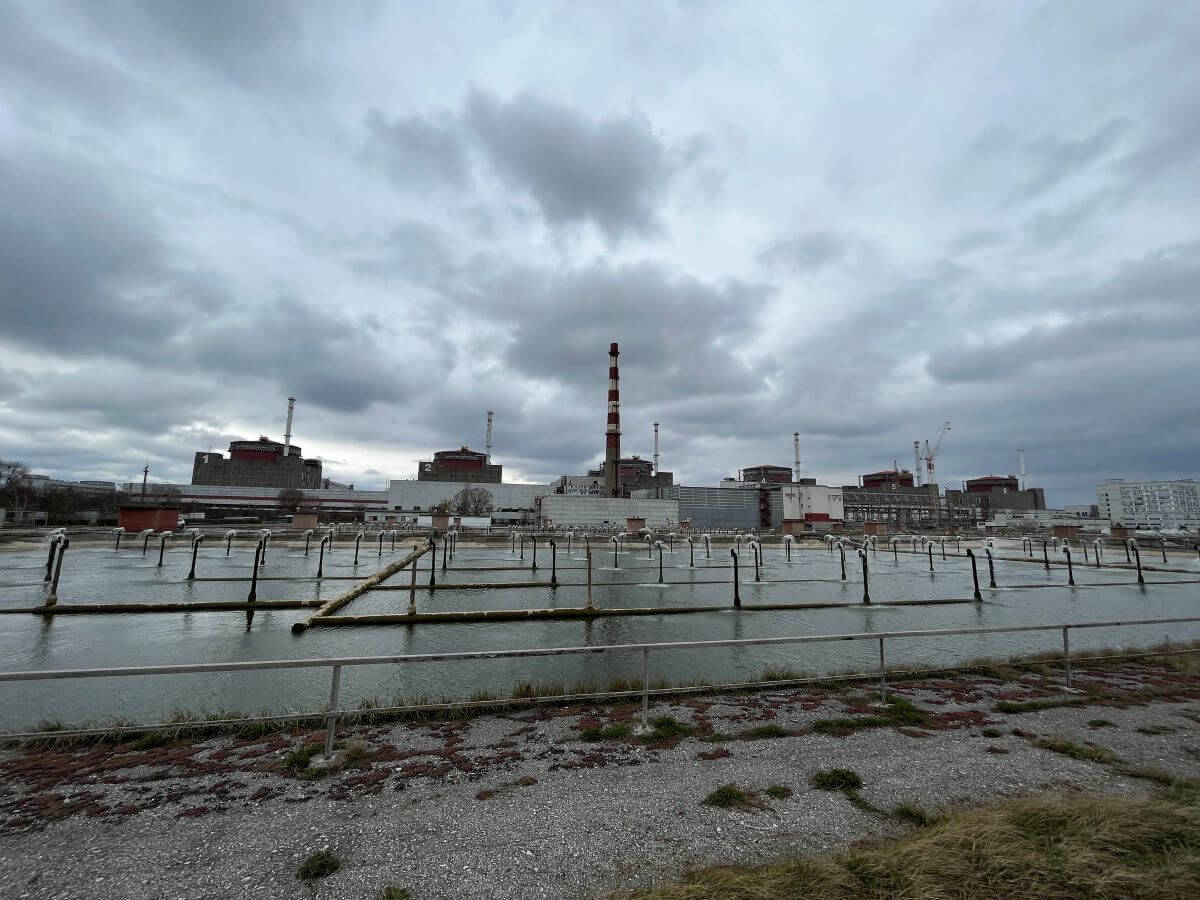
In other news, security concerns around Ukraine’s Russia-occupied Zaporizhzhya nuclear power plant (ZNPP) escalated with the explosion of a car bomb in the neighboring town of Enerhodar that killed a ZNPP security manager, a UK court ordered the Sellafield nuclear waste facility to pay almost £400,000 for cybersecurity lapses, and the U.S. Government Accountability Office said the Nuclear Regulatory Commission has not implemented 11 of 18 recommendations for addressing gaps in how the agency regulates fissile nuclear materials.
Wishing all our members a successful and productive month ahead.
Christina,
Director, International Nuclear Security Forum
Join the conversation on X: @INS_Forum
Follow INSF on LinkedIn here
Updates
- The INSF also welcomes its newest member organization:
- INSF hosted an event, “Strengthening the A/CPPNM: Civil Society and the Next Review Conference,” where INSF member organizations discussed lessons learned from NGO participation in the last Conference of the states parties to the Convention on the Physical Protection of Nuclear Material and its Amendment and recommendations for civil society engagement in the preparation process for the next conference.
- FUNDING APPEAL: If you appreciate this newsletter, please consider a donation to ensure sustainability into the future. Donate and specify where indicated that your gift is intended to support the INSF. Institutional funding for civil society’s nuclear security work is increasingly hard to come by, as many readers already know, and the International Nuclear Security Forum appreciates your support!
Nuclear Security News
Impact: The Russian Invasion of Ukraine
- Update 252 – IAEA Director General Statement on Situation in Ukraine (October 3): “Ukraine’s Zaporizhzhya Nuclear Power Plant (ZNPP) lost the connection to its only remaining back-up power line for 36 hours [the week of September 30], underlining the fragility of the electricity supplies it needs to cool its six reactors and for other essential nuclear safety and security functions, Director General Rafael Mariano Grossi of the International Atomic Energy Agency (IAEA) said [on October 3]. [The October 1]…disconnection of the 330 kilovolt (kV) power line once again left the ZNPP entirely dependent on its sole 750 kV line. Before the military conflict, it had four 750 kV and six 330 kV lines available, highlighting how nuclear safety and security has been severely degraded since February 2022. It was not immediately clear what caused the latest incident, but the line was restored on Wednesday evening. The ZNPP has suffered repeated partial or complete power outages since the conflict began, representing one of the most difficult challenges for maintaining nuclear safety and security during the conflict. In total, it has lost all external power eight times, forcing it to temporarily rely on emergency diesel generators for electricity. ‘The off-site power situation remains a deep source of concern. [The] loss of the 330kV power line shows that the situation is not improving in this regard, on the contrary,’ Director General Grossi said.”
- Zaporizhzhia Nuclear Plant Employee Killed in Bomb Attack, Russia Says (October 4): “An employee at the Russian-controlled Zaporizhzhia nuclear power plant in southern Ukraine was killed on Friday morning in a car bomb attack that Ukrainian military intelligence said had punished a ‘war criminal.’ Russia’s Investigative Committee, which probes serious crimes, said the employee, Andrei Korotkiy, had died after a bomb planted under his car went off near his house in the city of Enerhodar, where the plant is located. Korotkiy worked in the plant’s security department, the Committee said. A criminal case has been opened into his death.”
- Update 253 – IAEA Director General Statement on Situation in Ukraine (October 7): “The [IAEA] has been informed both by the Russian Federation and Ukraine about the assassination [the week of September 30] of an individual in the city where most staff of the [ZNPP] live, Director General Rafael Mariano Grossi said [October 7]. The person, identified as Mr. Korotkiy, reportedly died in a car bomb explosion on [October 4] morning in Enerhodar, which is located a few kilometers from the ZNPP. […] Director General Grossi reiterated that while the IAEA does not have forensic capabilities or authorities to investigate the incident, maintaining nuclear safety and security remains of paramount importance to prevent a nuclear accident during the conflict. With this vital objective, the IAEA in March 2022 established seven indispensable pillars for nuclear safety and security that have been supported by all IAEA Member States. Pillar 3 states that ‘the operating staff must be able to fulfil their safety and security duties and have the capacity to make decisions free of undue pressure.’ ‘Any targeting of employees of nuclear power plants would constitute a blatant violation of this pillar fundamental for overall nuclear safety and security,’ Director General Grossi said. ‘In addition, any statements indicating further retaliatory measures – potentially affecting staff of the Zaporizhzhya NPP – would be unacceptable and contrary to the safety pillars established by the IAEA,’ he said. ‘Any such threats deny staff who are not responsible for the overarching political and military situation the minimum standards of working conditions to do their jobs properly.’ Director General Grossi once again called for maximum restraint during the conflict and said any action targeting staff at the ZNPP – in order to address issues related to its status – has a direct impact on nuclear safety and security and must cease. ‘The only way to avert the threat of a nuclear accident with transboundary radiological consequences during this war is to fully respect and adhere to the seven indispensable pillars for nuclear safety and security as well as the five concrete principles for the protection of the Zaporizhzhya NPP,’ he said.”
- Update 254 – IAEA Director General Statement on Situation in Ukraine (October 10): “Ukraine’s [ZNPP] has restored its connection to a 150 kilovolt (kV) power line that could be used as a back-up option for the plant, although the supplies of electricity needed for reactor cooling and other essential functions remain fragile, Director General Rafael Mariano Grossi of the [IAEA] said [October 10]. The 150 kV line was reportedly damaged in shelling late last month, further limiting the potential availability of power supplies for the ZNPP as this line connects the site to the switchyard of the nearby Zaporizhzhya Thermal Power Plant. However, the IAEA team stationed at the ZNPP was informed this week that the repairs had been completed and the line was once again available, if needed. During the military conflict, the ZNPP has been relying on two power lines – one 750 kV and one 330 kV – for off-site electricity but both have suffered repeated disconnections as a result of the fighting, underlining the potential importance of any additional source of electricity. Before the conflict, the ZNPP had ten power lines available. During the [week of October 7], the IAEA team has continued to hear explosions, including some blasts close to the ZNPP, although no damage to the plant was reported.”
- Update 255 – IAEA Director General Statement on Situation in Ukraine (October 18): “Experts from the [IAEA] stationed at Ukraine’s [ZNPP] are reporting daily military activity in the vicinity, with some explosions occurring close to the facility. This ongoing situation underscores the persistent threat faced by the nuclear power plant, which remains at the heart of an active war zone, IAEA Director General Rafael Mariano Grossi stated [on October 18]. No damage has been reported to the plant within the [week of October 14], and the IAEA team at the site has focused its efforts on assessing the condition of the plant, as well as ongoing maintenance and training activities.”
- Update 256 – IAEA Director General Statement on Situation in Ukraine (October 24): “Ukraine’s [ZNPP] lost the connection to its only remaining 330 kilovolt (kV) back-up power line for a second time this [October], once again leaving the facility dependent on one single source of the external electricity it needs for reactor cooling and other key nuclear safety and security functions, Director General Rafael Mariano Grossi said [on October 24]. The IAEA team stationed at the plant was informed that the power line was disconnected for more than 26 hours between [October 21 to 22]…due to unspecified damage on the other side of the Dnipro River. It took place three weeks after another disconnection of the same line. In both instances, the ZNPP continued to receive electricity from its sole 750 kV line. Before the military conflict, Europe’s largest nuclear power plant (NPP) had four 750 kV and six 330 kV lines available. ‘What once would have been unthinkable – a major nuclear power plant suffering repeated off-site power cuts – has become a frequent occurrence during this devastating war. The situation is clearly not getting any better in this regard. The nuclear safety and security situation at the Zaporizhzhya Nuclear Power Plant remains highly precarious,’ Director General Grossi said.”
International Architecture
- 2023 IAEA Annual Report Presented to the UN General Assembly: “The 2023 IAEA Annual Report is now available to read online, in all the official UN languages. The 2023 report was submitted to the United Nations General Assembly [on October 15] by the IAEA’s Director General, Rafael Mariano Grossi. A resolution on the ‘Report of the IAEA’ was adopted by consensus and had 91 sponsors. ‘By adopting this draft resolution, the General Assembly will reaffirm its strong support for the work of the Agency and recognize the importance of the cooperation between the United Nations and the Agency,’ said Ghana’s representative Harold Agyeman. ‘Every day on every continent, the IAEA assists nations in overcoming challenges like diseases, poverty, hunger, pollution and climate change,’ said Mr. Grossi in his written statement to the UN General Assembly. ‘In partnership with our 178 Member States, we are enabling communities to improve healthcare, agriculture and energy systems through the power of nuclear science and technology.’”
- Regional Countries Gather for Nuclear and Radioactive Material Workshop: “Ten countries, including Zimbabwe, are gathered in Harare for the Geiger Working Group meeting for Southern Africa where issues of security in relation to nuclear and radioactive materials are being discussed…Officiating at the opening ceremony, Minister of Home Affairs and Cultural Heritage Kazembe Kazembe reiterated the need for collective efforts to contain nuclear threats in the region and the world at large.”
- International Training Facility for Countering WMD and CBRN Terrorism to be built in Tajikistan: “The Presidium of the National Academy of Sciences of Tajikistan (NAST), in collaboration with the Chemical, Biological, Radiological, and Nuclear Safety and Security Agency (CBRN SSA) of the NAST, hosted a high-level international event on October 15, 2024. The event that took place in Hyatt Regency Hotel, Dushanbe, was reportedly attended by representatives from 14 embassies, including the embassies of Russia, the USA, Saudi Arabia, the European Delegation, and some others. Additionally, 16 international organizations participated in the meeting, including the United Nations, the Organization for Security and Co-operation in Europe (OSCE), the United Nations Office on Drugs and Crime (UNODC), the International Atomic Energy Agency (IAEA), and others, demonstrating broad international support for Tajikistan’s initiative. The project proposals for the establishment of the International Training Facility for Countering WMD and CBRN Terrorism were presented during the event. In addition to this project, more than 30 other project proposals were also presented, covering various aspects of CBRN. The high level of diplomatic participation reportedly highlights the global nature of Weapons of Mass Destruction (WMD) and Chemical, Biological, Radiological, and Nuclear (CBRN) threats and the importance of multilateral cooperation in overcoming them. The event provided a platform for discussions on partnership opportunities and support from donor countries and international organizations.”
Weapons, Materials, and Facilities
- Sellafield Ordered to Pay Nearly £400,000 Over Cybersecurity Failings: “Sellafield will have to pay almost £400,000 after it pleaded guilty to criminal charges over years of cybersecurity failings at Britain’s most hazardous nuclear site. The vast nuclear waste dump in Cumbria left information that could threaten national security exposed for four years, according to the industry regulator, which brought the charges. It was also found that 75% of its computer servers were vulnerable to cyber-attack. Sellafield had failed to protect vital nuclear information, Westminster magistrates court in London heard on Wednesday. Chief magistrate, Paul Goldspring, said that after taking into account Sellafield’s guilty plea and its public funding model, he would fine it £332,500 for cybersecurity breaches and £53,200 for prosecution costs.”
Threats
- Russia Intercepts Drone Near Kursk, No Damage to Nuclear Plant, Governor Says: “Russian forces intercepted a Ukrainian drone on Thursday near the Russian town of Kurchatov but there was no damage to the nearby Kursk nuclear power plant, the regional governor said. Governor Alexei Smirnov said debris from the drone caused explosions in a building unrelated to the plant. Several Russian Telegram channels earlier reported the alleged Ukrainian attack, which they said had been thwarted by air defenses but had resulted in a fire several miles from the nuclear plant. The plant’s operator, Rosenergoatom, said the facility was operating as usual and radiation levels remained within normal limits. […] In a post on X, Ukrainian Foreign Ministry spokesman Heorhiy Tykhyi denied that Ukraine had fired weapons at or near the plant. Reuters could not independently confirm the reports.”
- Russia’s Kursk Nuclear Power Plant is Only Miles from the Front — So Why Isn’t it Better Protected Against Military Strikes?: “In early October, Russian media reported that drones were shot down just three miles from the Kursk Nuclear Power Plant. Regardless of the intended target, the plant’s proximity to the front line is cause for concern. Unlike Ukraine’s Zaporizhzhia NPP, the Kursk plant is still operational — and it wasn’t designed to withstand military strikes. The outlet Verstka spoke with a nuclear power expert and sources within Russia’s state-owned atomic energy corporation Rosatom to find out how well defended the Kursk NPP is against military threats and what the consequences could be if it were damaged. Meduza shares an English-language adaptation of the outlet’s findings.”
- US Nuclear Power Regulator Urged to Address ‘Dirty Bomb’ Risks to Society, Economy: “The U.S. nuclear power regulator has not acted on recommendations to address radiological security risks to the economy and society including those from ‘dirty bombs’, the U.S. Congress’s watchdog agency said on [October 3]. The Government Accountability Office said the Nuclear Regulatory Commission has not implemented 11 of the 18 recommendations it has made to address gaps in how the agency regulates fissile nuclear materials. The GAO said that the U.S. National Nuclear Security Administration and the Department of Homeland Security agree the social and economic consequences of a radiological disaster like a dirty bomb could be devastating. A dirty bomb is a crude atomic weapon that militants could devise in the unlikely, but possible, event they gain access to small amounts of fissile materials in the nuclear supply chain. Such a weapon could cause upwards of $30 billion in damages, it said. The NRC sets regulations based strictly on the radioactive materials’ immediate health effects and does not consider the likely social and economic consequences of a dirty bomb, it said.”
- As World Increasingly Embraces Nuclear Energy for Peaceful Use, General Assembly Also Hears Speakers’ Concerns over Safety, Risk of Disaster in Conflict Zones: “The General Assembly held its annual debate today on nuclear energy in which the [IAEA] says interest across the globe is growing for myriad purposes such as electricity generation and water desalination — while Member States debated over pockets of nuclear safety concern from Ukraine to Iran and the Democratic People’s Republic of Korea. Adopting a text containing the IAEA’s 2023 report (document A/79/L.7), the Assembly reaffirmed its backing for the Agency’s role in assisting the development and practical application of atomic energy for peaceful uses, in technology transfer to developing countries and in nuclear safety, verification and security. ‘By adopting this draft resolution, the General Assembly will reaffirm its strong support for the work of the Agency and recognize the importance of the cooperation between the United Nations and the Agency,’ said Ghana’s representative after introducing the text.”
Emerging Technologies
- US Awards Contracts For Making Higher Enriched Uranium For New Reactors: “The U.S. rolled out initial contracts to four companies hoping to produce a new, more highly enriched uranium fuel for an expected wave of high-tech reactors, the U.S. Energy Department said on [October 17]. Russia is currently the only country that makes the fuel called high-assay low-enriched uranium fuel, or HALEU, in commercial volumes. Funds to make the fuel domestically were included in a law to ban uranium shipments from Russia fully by 2028. Centrus Energy said its subsidiary, American Centrifuge Operating, got a contract to produce HALEU, which is expected to be used in a variety of small modular reactors planned to be built starting around 2030. The other companies are Urenco USA, which is a British, Dutch, German firm with operations in New Mexico; Orano USA, based in Maryland with global headquarters in France; and a company called General Matter.”
- Silicon Valley is Pouring Billions into Nuclear Energy Because Without it, the U.S. Risks ‘Browning the Grid’: “Amazon on Wednesday said that it was investing in small nuclear reactors, coming just two days after a similar announcement by Google, as both tech giants seek new sources of carbon-free electricity to meet surging demand from data centers and artificial intelligence. The plans come as the owner of the shuttered Three Mile Island nuclear power plant said last month it plans to restart the reactor so tech giant Microsoft can buy the power to supply its data centers. All three companies have been investing in solar and wind technologies, which make electricity without producing greenhouse gas emissions. Now they say they need to go further in the search for clean electricity to meet both demand and their own commitments to cut emissions.”
- Argentina’s CAREM-25 SMR Faces Setbacks: “Construction of Argentina’s CAREM-25 small modular reactor (SMR) has once again been stopped, this time by layoffs of construction workers. Some 153 people were laid off, taking the total number of firings to 470 since the beginning of the year. According to the Buenos Aires Herald, the layoffs were carried out by the three private construction contractors in charge of the project due to lack of sufficient funding from the government. According to construction union representatives, CAREM’s construction is 85% complete and was set to go online in 2028, before the latest stoppage. In October 2023, Argentina’s National Atomic Energy Commission (CNEA – Comisión Nacional de Energía Atómica) and Nucleoeléctrica Argentina SA (NA-SA) signed a framework agreement for technical assistance to develop CAREM (Central ARgentina de Elementos Modulares) – Argentina’s first domestically-designed and developed 32 MWe nuclear power unit.”
Member Organization Announcements and Updates
Spotlight: Diversity, Equity, and Inclusion Lines of Effort
- VCDNP held its 28th short course on nuclear non-proliferation and disarmament issues from 23 to 27 September 2024, providing training to 24 diplomats and officials from 23 countries across all regions of the world. Half of the participants were women, and 75% came from developing countries. During the week-long course, participants examined various nuclear-related topics, such as global and regional dimensions of the nuclear non-proliferation regime, arms control and disarmament, nuclear safeguards, nuclear security and regional case studies. Find out about the course.
International Institute for Strategic Studies
- A new episode of The Arms Control Poser podcast, hosted by Fabian Hinz and featuring Amnah Ibraheem, discusses the growing importance of nuclear power and energy policies that shape the strategic calculations of regional powers like Iran and Saudi Arabia, and how such advancements influence the broader political landscape. Listen to the episode.
- Héloïse Fayet, Andrew Futter, and Ulrich Kühn analyze how major European powers may have to contemplate nuclear deterrence without America, along with discussing the national flexibility and European financial support required to make it feasible. Read the analyses.
Nuclear Proliferation Prevention Project, University of Texas
- Alan Kuperman published an op-ed discussing how the risks of adding nuclear reactors to military bases outweigh any benefits. Read the op-ed.
Security Studies Program, School of Humanities, Arts and Social Sciences, Massachusetts Institute of Technology
- MIT’s Security Studies Program has received a $45 million gift from The Stanton Foundation to expand its leading work on the vital issue of global nuclear security. The support will allow the program to create a new center on the topic while extending and enhancing research, teaching, and policy outreach in an area where the Institute is a longstanding leader with wide-ranging faculty expertise. “We are on the cusp of a new and more dangerous nuclear age, with the modernization and expansion of nuclear arsenals, the collapse of arms control agreements, continued proliferation challenges, and the impact of new and emerging technologies on how states will manage their arsenals,” says M. Taylor Fravel, director of the Security Studies Program. “This new center will help us address these new challenges.” Read about the center.
Vienna Center for Disarmament and Non-Proliferation
- CNS Senior Fellow Miles Pomper, President and CEO of the Pacific Forum David Santoro, and VCDNP Senior Fellow Dr. Nikolai Sokov published an occasional paper on the future of NATO’s nuclear posture and arms control in an international environment characterized by challenges that have emerged in recent years, including the dismantlement of key arms control regimes, Russia’s attempts to leverage its nuclear weapons in the context of the war against Ukraine, and the massive increase in China’s nuclear arsenal. Read the paper.
- In the first brief of the new Sustainable Solutions series, senior VCDNP experts Ingrid Kirsten and Anthony Stott outline the benefits of ionizing radiation for agriculture and economic development, highlighting key applications, and explain how the IAEA supports access to the benefits of ionizing radiation around the world. Read the brief.
- The International Atomic Energy Agency (IAEA) convened the inaugural International Conference on Small Modular Reactors and their Applications from 21 to 25 October 2024 in Vienna, Austria. VCDNP Senior Research Associate Noah Mayhew and Senior Fellow Ingrid Kirsten presented expert analyses on two critical aspects of SMR deployment: the necessity of safeguards by design (SBD) for small modular and other advanced reactors, and the importance of stakeholder engagement in the Global South. Read about the conference.
Individual Member Updates
- Ali Alkis has been appointed as a Junior Associate Fellow at the NATO Defense College in Rome. In this capacity, Ali will be conducting research on NATO’s approach to the protection of critical infrastructure within conflict zones. His work will also emphasize the strategic importance of Türkiye inside NATO and its vital role in NATO’s nuclear deterrence.
Opportunities
- Parsons Corporation is seeking a Project Manager for their Global Nuclear Security Projects portfolio – a U.S. Government contract. The Project Manager will provide direction and management for small to medium-sized international nuclear security projects. The projects work with nuclear material security, including efforts to ensure the secure storage and transportation of nuclear warheads, weapons-usable nuclear material, and high-threat radiological material. Read more.
- The Partnership for Global Security (PGS) is seeking applicants for their Research Internship. The intern will primarily focus on researching nuclear security, nuclear energy, and transnational governance issues. Current research projects that interns will support include: exploring the nexus of climate change, nuclear power growth and global security; understanding the growth of nuclear energy in the Middle East and East Asia; tracking the evolution of nuclear security policies and governance structures; using existing voluntary frameworks as a model for nuclear security governance structures; and examining cybersecurity and other potential threats prompted by new technology developments. Read more.
- The Partnership for Global Security (PGS) is seeking candidates for the Della Ratta Global Energy and Security Fellowship. This is a $15,000 stipend-supported six-month position. The applicant’s term will run from January-June 2025. The Della Ratta Fellowship is a unique opportunity for early career candidates to develop the skills and experience that are necessary for a rapidly evolving technological, security, and geopolitical environment. The primary focus is on addressing the intensifying intersection of nuclear energy and commerce, climate change, global security, geopolitics, and international energy security. Read more.
- The Laboratory of Applied Nuclear Physics (LANPh) is announcing two openings at the level of a postdoc and/or research scientist. The selected scientists will have the chance to work on groundbreaking research in nuclear physics applied to problems in nuclear security, such as arms control, cargo security, and nuclear detection. The principal duties include contributing to existing projects at LANPh in leading/co-leading roles’ guiding graduate and undergraduate students in their research, designing experiments and new engineering concepts, and co-authoring papers and proposals.Read more.
- The Nuclear Threat Initiative is seeking a Director, with a focus on Nuclear Energy, to join the Nuclear Materials Security (NMS) team. This position reports to the Vice President for NMS. This is a full-time hybrid position, working a minimum of three days a week in our Washington, DC office. Read more.






Community Adaptation for a Water Festival Without Clean Water