



Internal Security Threats & Sources of Instability in India and Pakistan


DateWednesday, 18 November 2009
Time2:30-5:00 pm
LocationStimson Center

US policy attention in South Asia is focused principally on the conflict in Afghanistan and the relationship of Pakistan’s internal security to that. US policy on India has focused on economic developments. When US policymakers address India’s internal security challenges, they do so principally in terms of the transnational jihadi threat.

Yet both India and Pakistan have experienced endemic long-term social and economic developments that have given rise to alienation and conflict. The legitimacy of both states has been weakened. Both have also seen a deterioration of the capacity of state institutions to respond to the progressively more violent forms of social conflict that have emerged.

Please join us for a discussion of the sources of social conflict, political instability and violence in India and Pakistan, and of the capacity of state institutions to respond.

Experts:

Balachandran, Vappala

V. Balachandran is a Mumbai-based, independent security consultant and a retired Special Secretary, Cabinet Secretariat, Government of India. Mr. Balachandran also served as Minister, Embassy of India, Washington, DC, and previously headed Special Branch of the Mumbai Police. In addition to his private consulting practice, Mr. Balachandran currently acts as a local and regional partner for the Stimson Center’s Regional Voices project. He was also one of two experts who conducted the investigation into the Mumbai bombings for the Maharashtra government. Mr. Balachandran’s areas of expertise include police intelligence, counter-terrorism, crime and insurgency.

Singh, Prakash

Prakash Singh is a distinguished former senior Indian police officer and has led the police reform movement in India. He served in the turbulent areas of Punjab, UP, Assam, Nagaland, & Jammu and Kashmir. He was Director General [DG] of the Border Security Force, and also DG in two states: Uttar Pradesh and Assam. In recognition of his contribution in the field of law enforcement and national security, the Indian government awarded him the Padma Sri in 1991. He recently served on the Planning Commission expert group which brought out the landmark report Development Challenges in Extremist Affected Areas [March 2008]. He is also the author of numerous books including Nagaland and the Naxalite Movement in India. He is an authority on international terrorism and has given talks on that subject in many international forums.

Hussain, Rifaat

Rifaat Hussain is the Chairman of the Department of Defence and Strategic Studies at Quaid-i-Azam University in Islamabad and the former Executive Director of the Regional Centre for Strategic Studies (RCSS) in Colombo. Prior to his current position, Dr. Hussain served as Director General of the Institute of Strategic Studies, Research and Analysis (ISSRA) at the National Defence College, Islamabad and was a Visiting Professor of Political Science at Stanford University, California, during 2002-2003. From 1994 to 1997, he served as Minister for Information in the Embassy of Pakistan in Washington, D.C. Dr. Hussain holds an M.A. from Quaid-i-Azam University and an M.A. and Ph.D. in international studies from the University of Denver. He has published widely on regional and international security issues in Pakistani and foreign journals and books.

Mustafa, Daanish

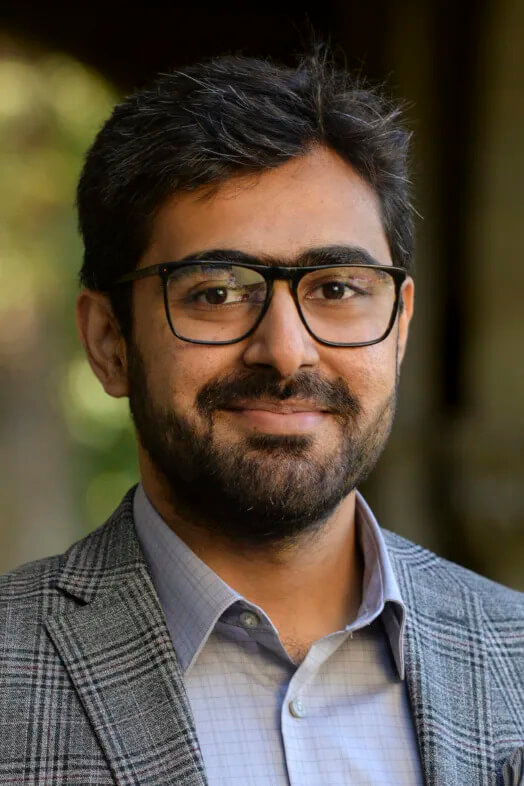
Daanish Mustafa is Senior Lecturer in Environment, Politics and Development in the Department of Geography at King’s College, London. He was previously Visiting Assistant Professor of Geography at George Mason University and Assistant Professor of Geography at the University of South Florida. He focuses on issues relating to water management in Afghanistan and Pakistan as well as water and conflict.

Sharma, Prakhar

Prakhar Sharma is currently a visiting fellow at the Henry L. Stimson Center where his focus is on analyzing trends in the non-traditional security challenges in Afghanistan and their implications on the prospects for internal political dialogue and regional consensus on Afghanistan. He specializes in conflict and post-conflict research in Afghanistan and leverages his academic work, field research and deep knowledge of Afghanistan to synthesize quantitative and qualitative research. Prakhar has nearly two years of in-country field experience in Afghanistan in researching and leading projects in local think-tanks in fields of governance, reconstruction, security, livelihoods and media.

Please RSVP by 16 November to Ms. Stephanie Carnes at .(JavaScript must be enabled to view this email address)g