







The Chemical Weapons Convention (CWC) requires that States Parties report annually on the transfer of chemicals listed under the Convention as part of ongoing efforts to prevent the re-emergence of chemical weapons programs. States report aggregate national data to the Organisation for the Prohibition of Chemical Weapons (OPCW), where the Technical Directorate does the challenging work of matching imports with exports.
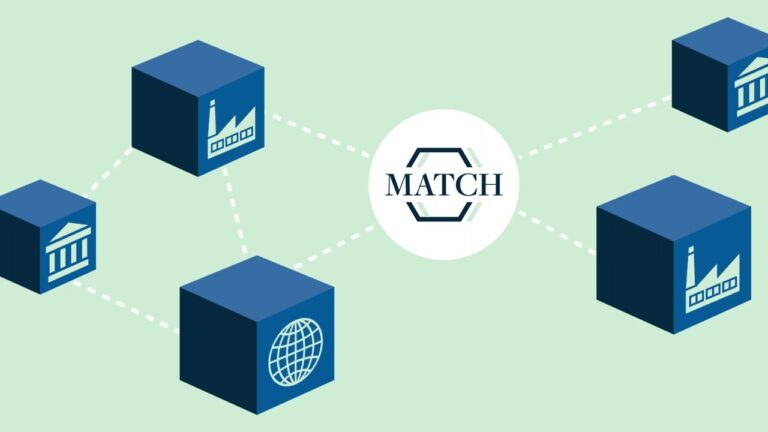
The Monitoring and Tracking Chemicals (MATCH) project is a prototype software system that will attempt to address fundamental challenges to reconciling transfer data for commonly traded Schedule 2 and Schedule 3 chemicals by establishing a secure, authoritative distributed ledger to simulate transfers between hypothetical States Parties.
The MATCH project began in September 2021 and the second iteration of project development will conclude in January 2025. The MATCH 2.0 proof-of-concept is being developed with financial contribution by Global Affairs Canada’s Weapons Threat Reduction Program.

The MATCH prototype shows how blockchain technology can be used to track international transfers of dual-use chemicals
March 9, 2023

Introduction to the use of distributed ledger technology (DLT), or blockchain, to reduce discrepancies in declared dual-use chemical trade.
October 28, 2022
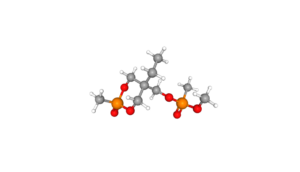
Amgard 1045 is one of the most commonly traded Schedule 2 chemicals
April 21, 2022
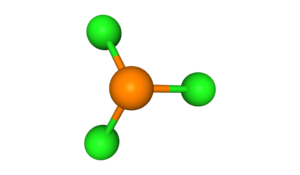
Phosphorus trichloride is one of the most commonly traded Schedule 3 chemicals.
March 21, 2022
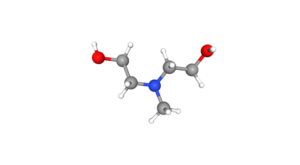
Methyldiethanolamine (MDEA) is one of the most commonly traded Schedule 3 chemicals.
March 21, 2022
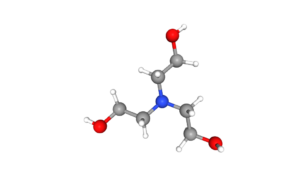
Triethanolamine is one of the most commonly traded Schedule 3 chemicals.
March 21, 2022

Discrepancies in annual declarations of scheduled chemicals transfers challenge the ability to track the international trade of Schedule 2 and 3 chemicals.
March 21, 2022