Anticipatory action (AA) is a preemptive mode of disaster risk management that is central to the Early Warnings for All (EW4All) initiative – linking forecasts and warnings with pre-formed and targeted plans for action deployed before a potential disaster which can reduce impact and save lives. As the IFRC’s Secretary General recently put it: “Forecasts alone do not save lives – action does.”
This webinar will map out the current landscape of anticipatory action in Nepal, which has grown considerably in scope and sophistication over the past 10 years. Panelists will share insights from the 4th National Dialogue on Anticipatory Action (December 22-23, 2025) and review the recently formulated National Anticipatory Action Framework and its Five-Year Roadmap. Building on discussion at the National Dialogue, we will discuss key issues such as: financing and sustainability; the technical challenges of developing “triggers” for action; integrating AA with principles of shock responsive social protection; and methods for promoting locally-led AA efforts. Looking at the Five Year AA Roadmap, we will also collectively consider and evaluate some of the milestones and challenges that could shape the future of AA in Nepal.
This event is made possible with the support of the Australian Government Department of Foreign Affairs and Trade (DFAT), Margaret A. Cargill Philanthropies (MACP), and The McConnell Foundation.
Speakers
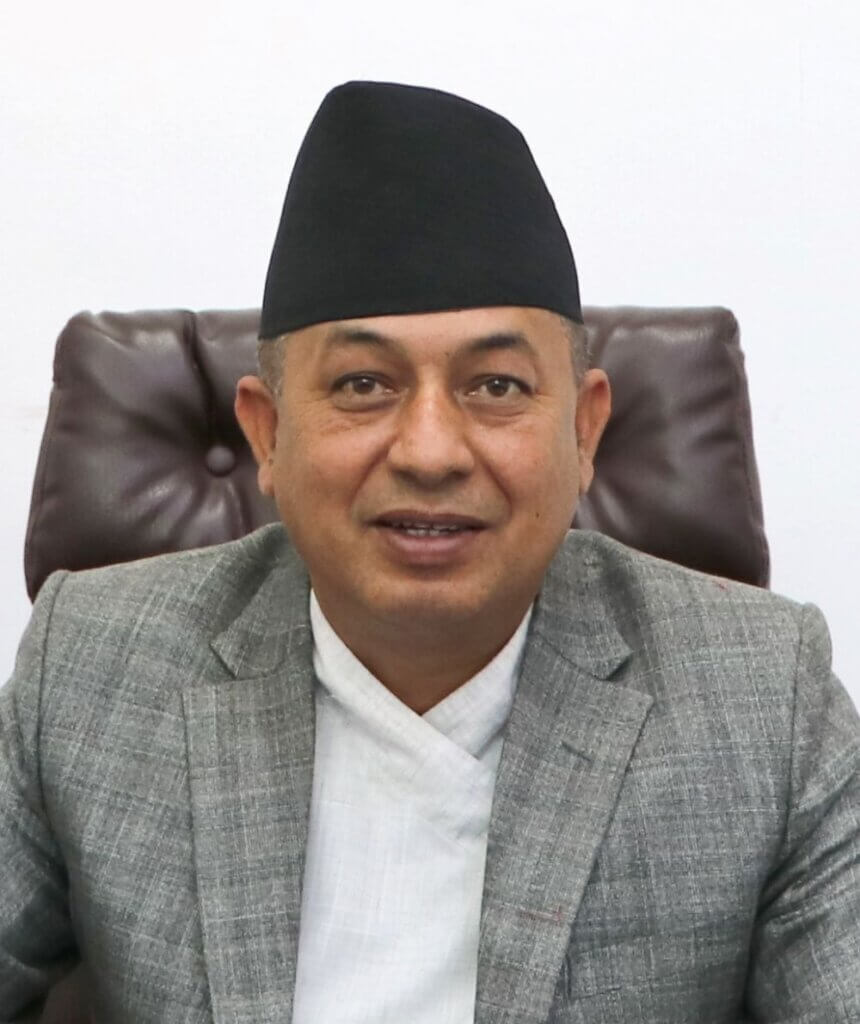
Dinesh Prasad Bhatt, Chief Executive, National Disaster Risk Reduction & Management Authority (NDRRMA) Ministry of Home Affairs, Government of Nepal
Dinesh Prasad Bhatt serves as the Chief Executive of the apex body for disaster management in Nepal. In this role, he is responsible for developing, implementing, and supervising the plans, policies, and guidelines for disaster management across Nepal. Prior to joining NDRRMA, he was an Assistant Professor at Tribhuvan University, and has worked as a consultant for various government departments, private organizations, and international multilateral agencies. He also currently serves as the Chair of the Asian Disaster Preparedness Center (ADPC), contributing to regional disaster risk reduction strategies and initiatives.

Reena Bajracharya, Anticipatory Action Clinic Technical Coordinator, NDRRMA / Danish Red Cross
Reena Bajracharya has over eight years of experience in disaster risk reduction and management in Nepal, spanning research, governance, and field-based practice. Since 2024, Ms. Bajracharya has been serving as the Technical Coordinator at the Anticipatory Action (AA) Clinic housed within Nepal’s National Disaster Risk Reduction and Management Authority (NDRRMA). In this national-level role, she leads the harmonization of anticipatory action in Nepal by steering the development of the National Anticipatory Action Framework, roadmap, and technical guidance. Her work ensures that anticipatory action is coherent, evidence-based, and scalable—positioning Nepal at the forefront of proactive, forecast-based disaster risk management.

Ram Bahadur KC, Under Secretary/Spokesperson and Information Officer, NDRRMA Ministry of Home Affairs, Government of Nepal
Ram Bahadur KC is a dedicated and experienced government professional currently serving as Under Secretary and head of the disaster response section at the National Disaster Risk Reduction & Management Authority (NDRRMA). In this role he contributes to effective policy communication, information management, and the development disaster risk strategies. He has a proven track record of publishing articles on disaster-related topics and contributing to public discourse on risk and resilience.

Jeevika Khadka, Early Warning Systems for Cascading Disasters in Nepal, Project Coordinator, Stimson Center
Jeevika Khadka is a disaster and climate risk professional whose work with the Stimson Center involves close collaboration with Government of Nepal institutions working to design and implement early warning systems, impact-based forecasting, and other disaster risk reduction initiatives. She recently helped organize a session on “Climate Extremes: Connecting High Mountain and Drought” at the 4th National Dialogue on Anticipatory Action

Madhab Uprety, Senior Technical Adviser and Asia Pacific Focal Point, Red Cross Red Crescent Climate Centre
Madhab Uprety is a climate resilience and disaster risk reduction specialist with extensive experience across Asia and the Pacific who provides technical guidance, regional coordination, and strategic engagement to advance climate resilience initiatives for the Red Cross Red Crescent Climate Centre. His work focuses on the design and implementation of forecast-based financing and anticipatory action mechanisms, climate-smart programming, and locally led adaptation, with a strong emphasis on leveraging climate and weather information to enhance risk reduction and resilience outcomes.

Hemanta Prasad Dangal, Humanitarian Manager, Save the Children, Nepal & Bhutan
Hemanta Prasad Dangal is a humanitarian and social protection practitioner with over a decade of experience in disaster risk management, anticipatory action and Shock Responsive Social Protection (SRSP). In his role at Save the Children he leads humanitarian preparedness, anticipatory action, emergency response, early recovery, and SRSP programming in both Nepal and Bhutan. He has played a key role in designing and operationalizing anticipatory action and SRSP frameworks in Nepal, integrating social protection systems into anticipatory action, emergency response and national policy processes.

Austin Lord, Senior Fellow, Energy, Water, and Sustainability Program, Stimson Center (Moderator)