
The UN Cybercrime Treaty: Is it a Crime?
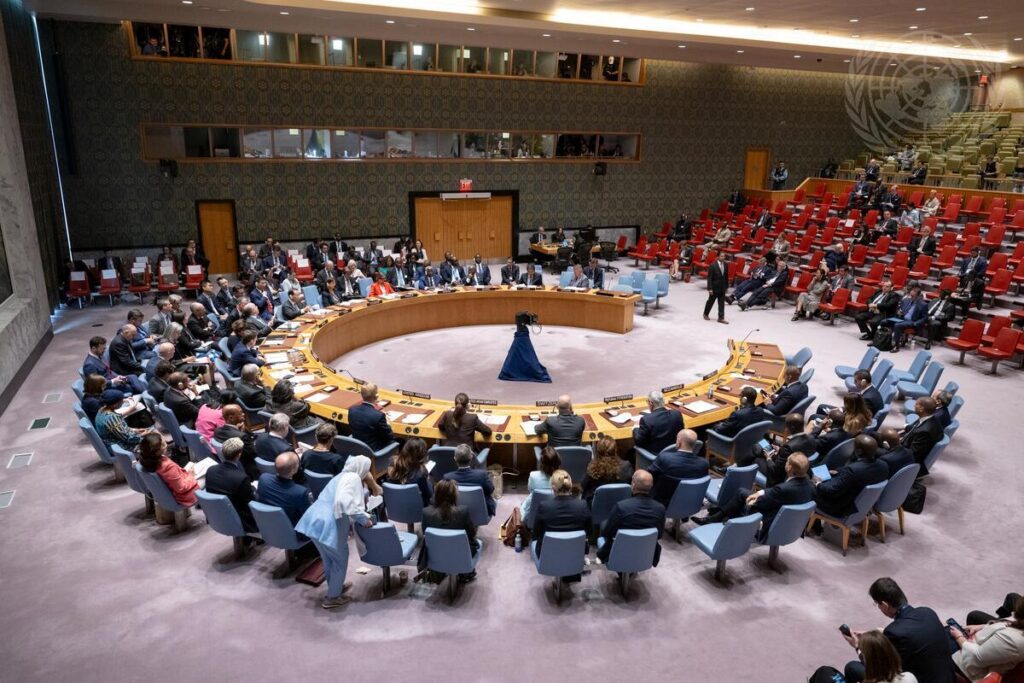
The sixth and what is meant to be final negotiating session for a UN cybercrime treaty ended in August amidst disagreement. The draft new treaty is facing criticism from human rights groups and many others as States head to the concluding session in January 2024 without consensus on fundamental issues such as the treaty’s scope […]
Least Responsible, Most at Risk: Responding to Climate Threats in Coastal Developing Countries

Small Island Developing States (SIDS) and coastal Least Developed Countries (LDCs) face concurrent and compounding threats to their national security from the impacts of climate change. These countries are responsible for only 4% of greenhouse gas emissions but are on the frontlines of rising sea levels, more intense storms, coastal erosion, heat and drought, all […]
Securing a Sustainable Future For All: A Conversation with Ambassador Bonnie Denise Jenkins

Full opening remarks from Ambassador Bonnie Jenkins here. Seven years out from the 2030 deadline set by the United Nations, global progress to meet the Sustainable Development Goals has been slow. As we mark the halfway point toward the 2030 targets, ambitious action is needed from nations to meet these global goals. Against the backdrop […]
Cooperative Threat and Risk Reduction in a New Global Context

Explore the evolving global threat landscape and its implications for Canada at this insightful conference hosted by the Norman Paterson School of International Affairs, alongside esteemed partners: the Barton Chair, the Canadian Defence and Security Network (CDSN), the Stimson Center, and Global Affairs Canada. Key Highlights: Key Questions: Featured Speakers Cindy Termorshuizen, Associate Deputy Minister, […]
Re-Thinking the Periphery: European Policy Towards Northern Africa
On September 7, 2003, Kawa Hassan, Nonresident Fellow, MENA Program gave a presentation at the event of Wilfred Martens Centre for European Studies entitled “Rethink the Periphery: European Policy Towards Northern Africa”. As the EU prepares itself for the next Parliamentary elections scheduled for 6-9 June 2024, it is high time for a critical discussion […]
RAI Session: AI Innovation in the Global South

Whenever the topic of AI comes up in the context of developing countries, it is quickly followed up by the challenges around talent, compute resources, and availability of data. Yet despite these obstacles, AI systems are still being developed in developing countries with great success and in ways that are relevant for their local context. […]
Exploring Distributed Ledger Technology for Managing the Global Conventional Arms Trade
Read the full issue brief: Distributed Ledger Technology for Arms Control and Management. The global arms trade is a vast, dynamic, and complex enterprise, with numerous actors in multiple countries involved in facilitating the transfer of conventional weapons around the world. But its expanding scale, scope, and complexity are straining national regulatory and control ecosystems, […]
RAI Session: AI and Labor

Significant human labor and natural resource investments are needed to build and maintain the infrastructure to support the development and deployment of AI systems. Furthermore, various regions around the world play a role in supplying labor or natural resources in the AI development life cycle. Developing countries show up mostly in supplying the natural resources […]