
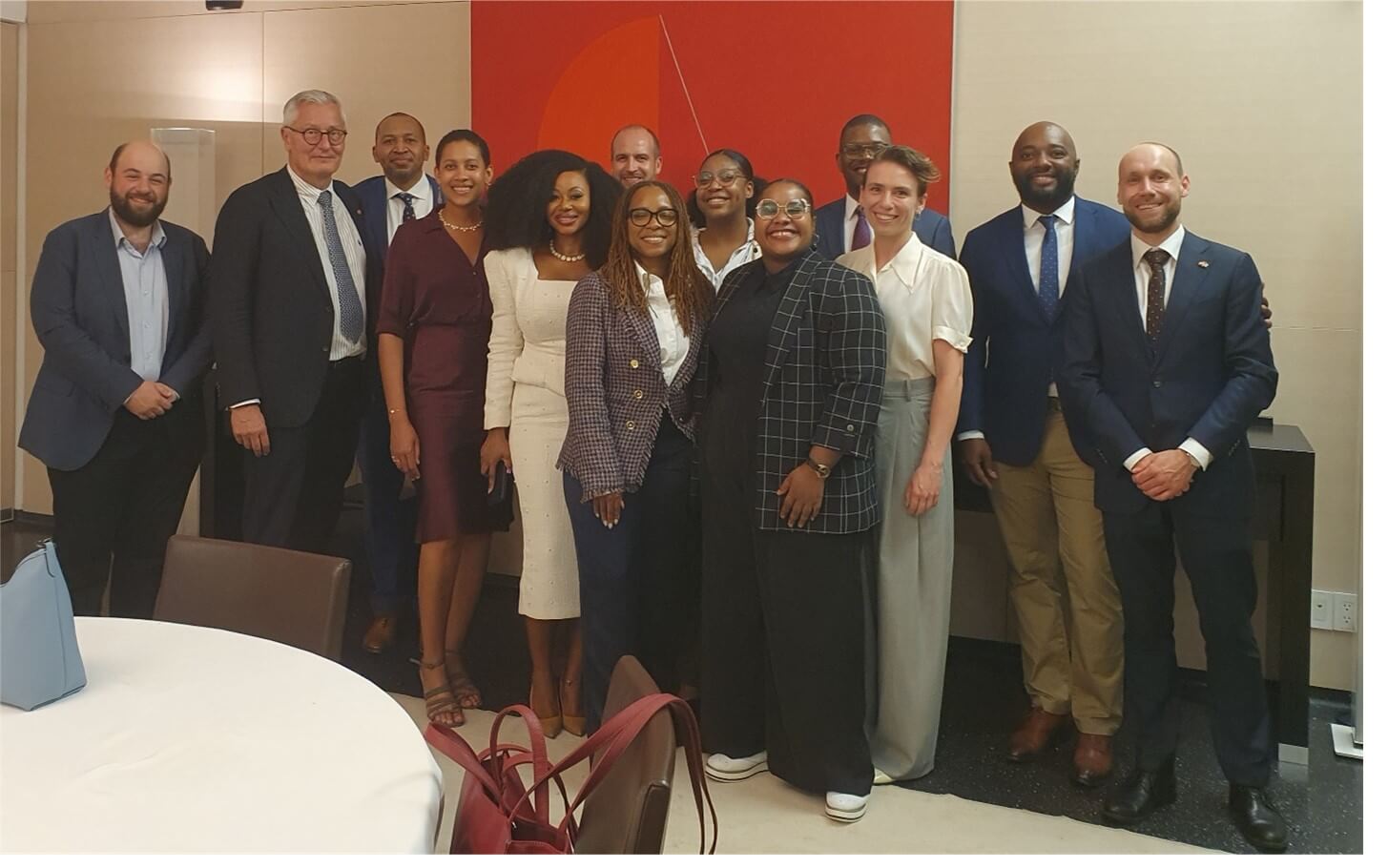
On June 26, 2024, a day after the deployment of Kenyan police officers from the Multinational Security Support (MSS) Mission to Haiti, the Global South in the World Order Project, in partnership with the Embassy of Switzerland in the United States, convened an exclusive dinner with experts on Haiti, policymakers, and diplomats. The event facilitated inclusive conversations about the crisis in Haiti and provided the space to discuss the opportunities as well as shortcomings of the international response to the crisis as well as further pragmatic, sustainable solutions.
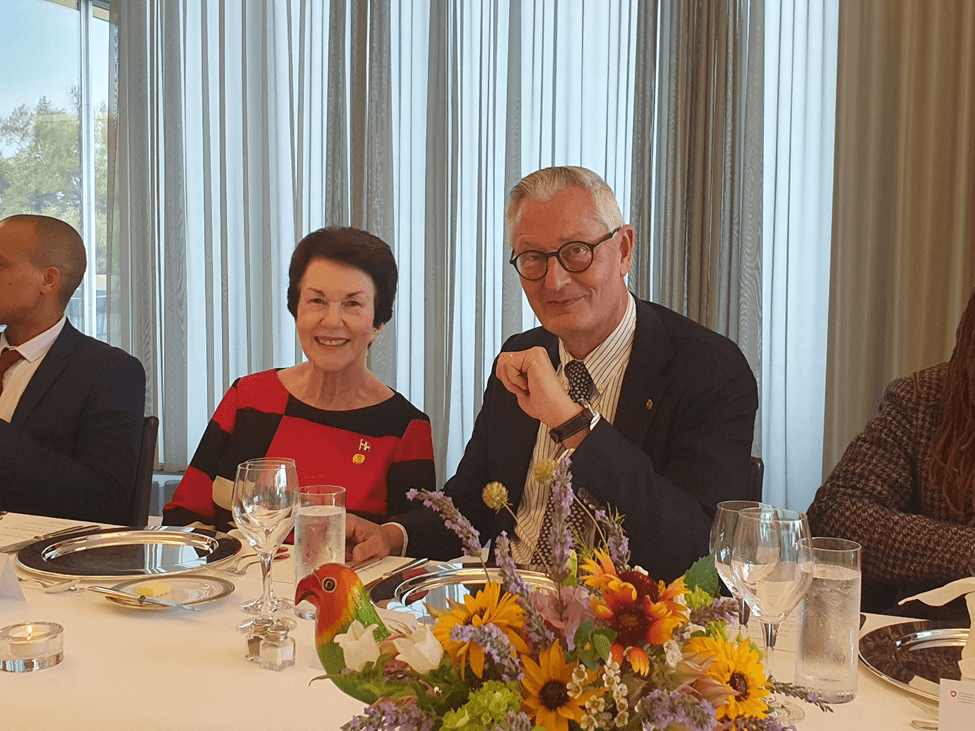
Ambassadors Sonia Guzman Klang and Jacque Pitteloud
“The Multinational Security Support Mission is essential to help Haiti become more stable and prosperous. However, restoring security is just the beginning. For Haiti to develop sustainably in the long run, reliable and legitimate political institutions must be established and respected. This requires a coordinated, whole-of-government effort from all involved, connecting security, criminal justice, economic growth, and anti-corruption efforts, while ensuring active participation from Haitian society,” said Jacques Pitteloud, Ambassador of Switzerland to the United States.
The political, economic, and security crisis in Haiti, worsened by the assassination of President Jovenel Moïse on July 7, 2021, is characterized by acute gang violence, notably in the capital city Port-au-Prince. The United States has heavily influenced the design of the international response to the crisis and has notably supported Kenya’s leadership of the MSS Mission. However, experts have raised concerns about the mission’s lack of transparency and its failure to integrate Haitians’ perspectives, prioritize the strengthening of the Haitian National Police, and develop early on credible oversight mechanisms.
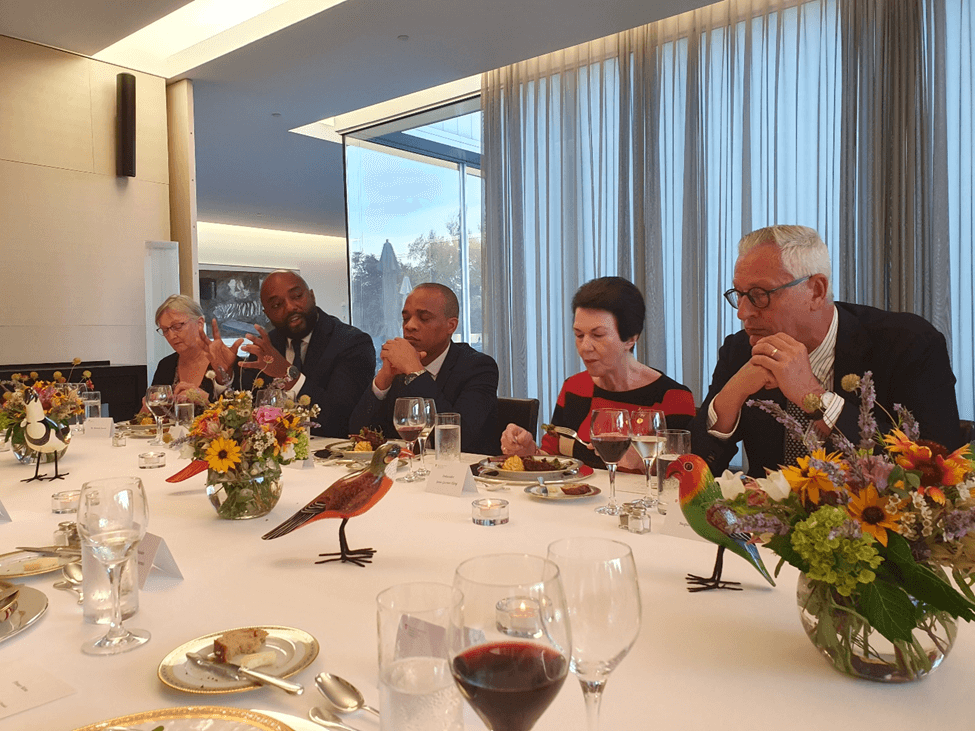
Kimberly Stanson, Jeffsky Poincy, Stanley Makgohlo, Ambassadors Sonia Guzman Klang and Jacque Pitteloud
“In its current form, the MSS Mission can do little to help Haiti solve the security issue. However, as it is being rolled out, there is still an opportunity to make its contribution more effective. The central focus must be on providing comprehensive support and resources to the Haitian police force to modernize and restructure it in a sustainable manner. It is imperative that the new Haitian authorities take ownership of this initiative and that robust accountability mechanisms with clear, independent rules and principles are put in place to prevent atrocities, abuses, and human rights violations that usually accompany this type of mission,” said Jeffsky Poincy, Policy Analyst.
At the time same, experts highlighted criticism of the overly security-driven approach, which, according to them, neglects the economic, social, and political dimensions of the crisis. It was asserted that the current model advanced by the international community risks producing the same mistakes as past missions, and is unlikely to lead to sustainable stability in Haiti. Despite these challenges, experts maintained that there exists an opportunity for the international community to pivot towards a more comprehensive approach― for example, enhancing Haiti’s justice system to restore confidence in its institutions and achieve enduring outcomes.
“For the country to move forward, and for the Haitian population to gain trust in their government, it is critical that the justice system of Haiti and its related institutions be transformed. If individuals accused of crimes are never brought to justice and are able to continue walking freely, there is no hope that the country can ever escape this cycle of instability and administrative changes. This is a key area that Haiti’s international partners can focus on as the country goes through this period of transition.” – Gloria Blaise, Director of Research at Haiti Policy House.
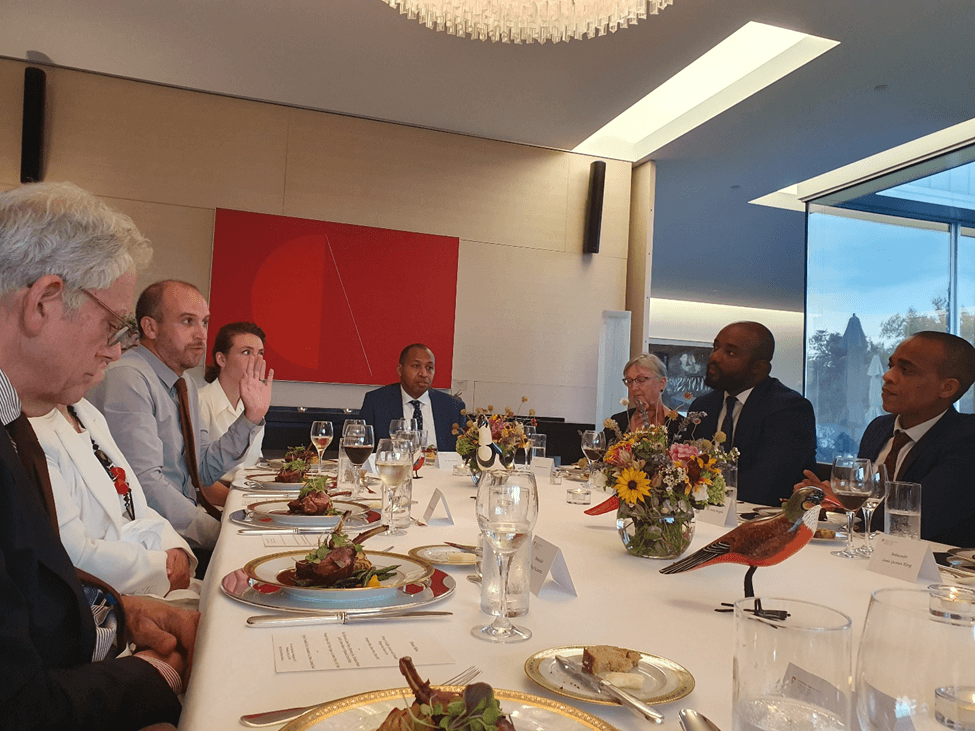
Ambassador Jeffrey Delaurentis, Patrizia Tumbarello, Jake Johnston, Naomi Lake, Derron Bennett, Kimberly Stanson, Jeffsky Poincy, Stanley Makgohlo
Experts emphasized the importance of regional countries in addressing transnational crime, highlighting the need for coordinated efforts. They noted that the United States in particular, bears responsibility for combating illicit arms trafficking originating from its territory, which contributes to the proliferation of weapons across the Caribbean, including Haiti, and unsanctioned violence. Additionally, experts noted an opportunity for the United States to assist the Haitian government in securing its maritime borders.
Ultimately, the consensus was that the crisis in Haiti is a regional concern, demanding synchronized and multi-faceted solutions that fully integrate Haitians. Special recognition was extended to the Embassy of Switzerland in the United States for its role as a facilitator, both in venue and forum, creating a conducive environment for practical, productive, and meaningful discussions to take place.
Read: “Haitian Perspectives on the International Response to the Political and Security Crisis” by Aude Darnal, Louis-Henri Mars, Jeffsky Poincy, Nicole Gilbert, and Natika Kantaria.
Header image: The co-organizers of the event, Ambassador Pitteloud and Aude Darnal, with the speakers and participants of the event






Current Geopolitics Shift Deep-Sea Mining Debates