
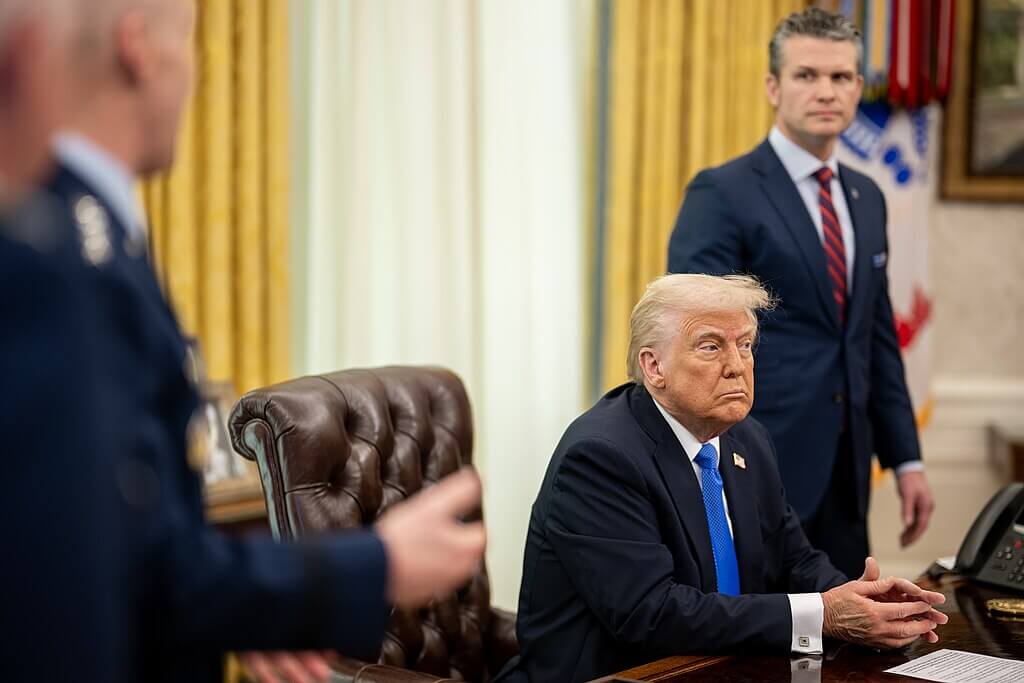
Donald Trump is presiding over an unprecedented boom in stealth jet production. He announced the F-47 in March and the F-55 in May – alongside upgrades to the F-22 Raptor. He inherited the B-21 Raider project and will make a decision about the Navy’s F/A-XX program. It promises to be a deadly stable of airborne thoroughbreds.
But before the President and the rest of the national security apparatus commits future generations to paying for these programs, they should pause and consider a basic reality: in most cases, the military doesn’t need manned aircraft to fly over enemy territory anymore. Most of the functions of the four new, exquisite and very expensive, manned aircraft under development can already be performed by other, far less expensive systems.
Manned bombers lost their relevance even before the US Air Force announced the start of the B-21 a decade ago. The B-21 will complete the airborne leg of the nuclear triad (together with land-based intercontinental ballistic missiles and submarine-launched ballistic missiles), capable of striking strategic targets deep inside enemy territory.
But in 2025, there are plenty of ways to deliver a munition to a distant target. The services can employ cruise, ballistic and hypersonic missiles. They have armed unmanned aerial vehicles like the MQ-9 Predator that can spot and engage targets. The Army and Marine Corps both have long-range artillery to deliver munitions. The Air Force has long-range weapons such as the AGM-158 Joint Air-to-Surface Standoff Missile that has a range of 500 miles and costs $1.5 million.
Read the full article on The Spectator.







Current Geopolitics Shift Deep-Sea Mining Debates