
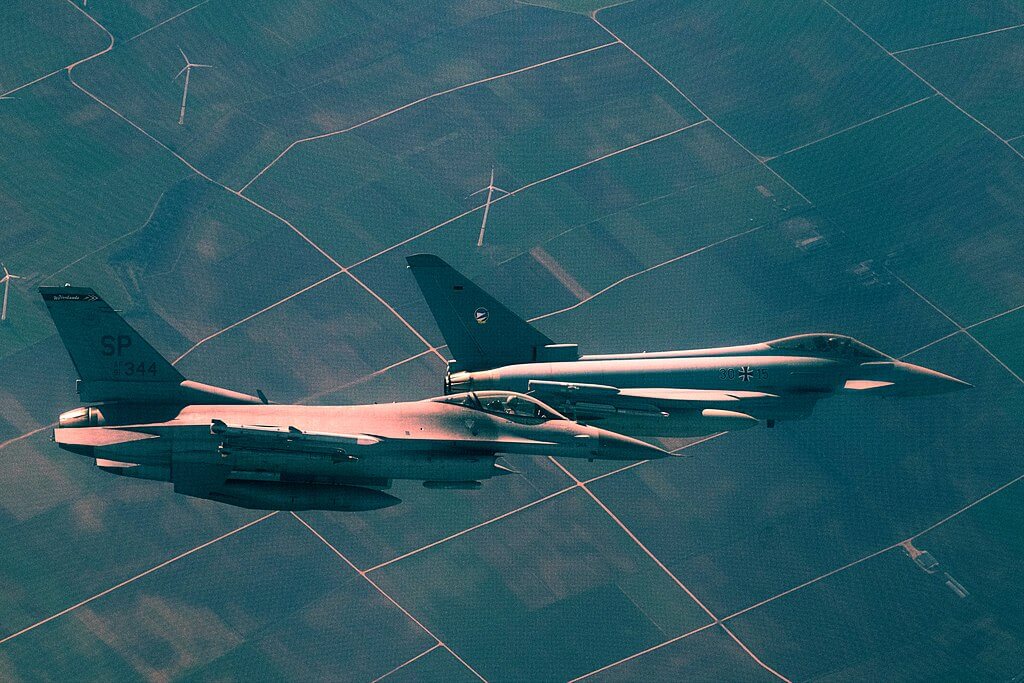
Chief of Staff of the Air Force Gen. David Allvin has called his service to action, warning it faces a “time of consequence” when “the decisions we make, the actions we take” will determine if the Air Force is ready for the future fight. Deciding today what weapons, concepts and capabilities Airmen will need 10 or 20 years from now is no easy task, especially with war’s character changing rapidly.
Despite what some would say, the fundamental problem is not the size of the service’s budget, but a culture that is reluctant to embrace the risks that come with innovation. This leaves the service vulnerable to technological and doctrinal surprise — something we’ve seen before, from the shock of Pearl Harbor to the aerial attacks on September 11.
To meet the moment, the Air Force will need to hedge against a failure of imagination. And that means knowingly opening the service up to risk in several areas — especially around programs being allowed to fail and dollars sometimes being burned on new ideas.
The Air Force, like any organization that has enjoyed enormous success, prefers to hold fast to what worked in the past, pursuing a procurement strategy that revolves around a small number of advanced, expensive platforms with long development cycles. But adding new technology to try to sustain this old way of fighting is unimaginative. The Air Force’s reluctance to embrace the near-term risks that come with innovation creates strategic risks. With Russia adapting to the battlefield in Ukraine, Iran pursuing a cost-imbalance strategy, and China pursuing the same or similar technologies as the United States, adversaries need only employ a little imagination to take the Air Force by surprise.
The Air Force’s caution is understandable: If you are building something designed to last for many decades, you better get it right. Consider the venerable B-52 bomber, a platform still flying after more than 60 years, or the F-16, which remains a workhorse as it approaches its sixth decade in service. This hardware-centered mindset emphasizes perfecting a platform design before it ever reaches full production, much less the warfighter — a process that works well when change is slow and incremental — like moving from 4th to 5th generation fighters.
In an age of rapid technological leaps, however, this process rewards the status quo and stifles real innovation. New capabilities or operational concepts are too easily rejected as unproven, and unprovable, ways of fighting. The Air Force — like the other services — is too often more concerned with near-term risks to budget and procurement programs than long-term strategic and operational upsides.
If the United States and China ever got into a shooting war, Chinese military planners would expect the US Air Force to follow a familiar script, seeking to generate overwhelming precision effects from a smaller number of traditional fighters and bombers, supported by reconnaissance aircraft and aerial refueling tankers. After studying US military operations extensively for the last thirty years, China has honed its anti-access/area-denial playbook to counter it.
Predictability is a vulnerability. And the solution lies in spreading risk.
Read the full article on Breaking Defense.








Community Adaptation for a Water Festival Without Clean Water