
The United States Navy recently extended the deployment of the aircraft carrier USS Dwight D. Eisenhower while it patrols the shipping lanes of the Red Sea and Gulf of Aden protecting commercial shipping from Houthi rebel attacks. The Eisenhower left its homeport at Norfolk on October 14, more than 200 days ago.
The Ike’s sailors aren’t the only ones being forced to spend more time away from home. Many of the carrier’s escort vessels have also seen their deployments extended.
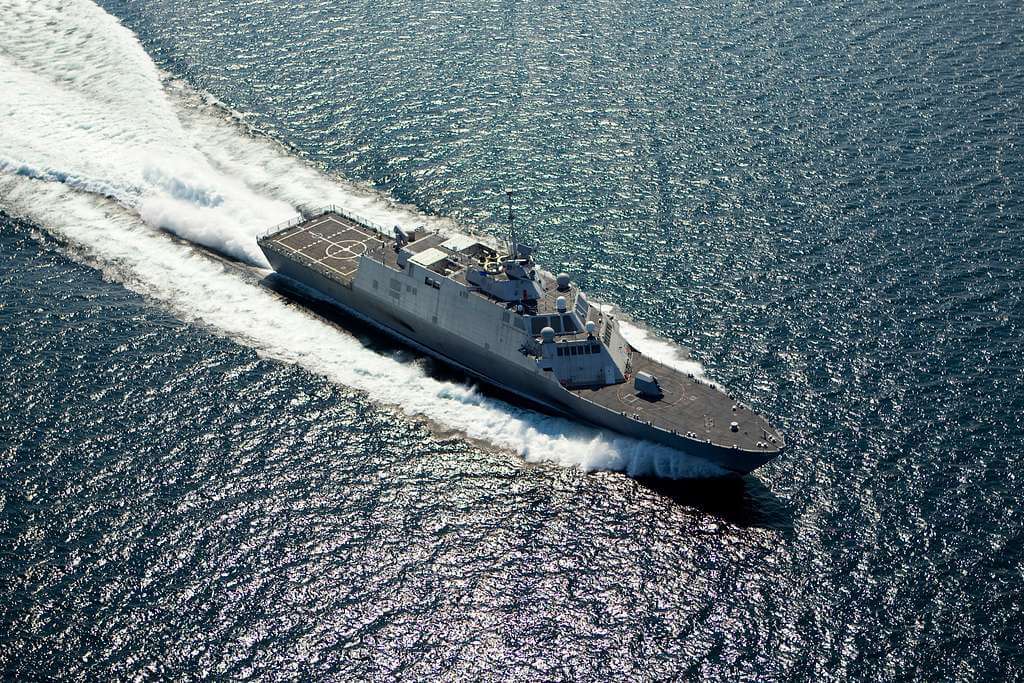
The Navy is struggling to meet some of its operational requirements in part because it simply doesn’t have all the ships it expected. The current threat to navigation in the Red Sea is precisely the scenario for which the Navy invested so much time and resources building the Littoral Combat Ships. The LCS program was sold to the American people as a “networked, agile, stealthy surface combatant capable of defeating anti-access and asymmetric threats in the littorals.”
The Houthi rebels launching missiles and drones from shore and hijacking commercial shipping in the confined waters of the Red Sea meets the textbook definition of an asymmetric threat in a littoral region. Yet the “little crappy ships,” as they have come to be known, are nowhere to be seen inside the Red Sea. Rather, the Navy has to keep a carrier strike group composed of Ticonderoga-class guided missile cruisers and Arleigh Burke-class destroyers on station longer than anticipated in an attempt to keep an important maritime choke point open.
The Littoral Combat Ship is one of two major shipbuilding failures from the past 20 years. The other is the Zumwalt-class destroyer. Both programs began in earnest in the years after 9/11 and almost immediately ran into trouble. The Zumwalt program saw massive cost growth which forced Navy leaders to slash the planned fleet size from the originally planned 32 to 7 and finally to the three which were actually built. These three ships cost nearly $8 billion each while failing to deliver promised combat capabilities.
Read the full article on Responsible Statecraft.








Community Adaptation for a Water Festival Without Clean Water