Managing the Arms Trade

Promoting long-term stability and security through responsible arms sales and advancing transparent and accountable policies and processes for arms transfer decisions

In Conventional Arms Research

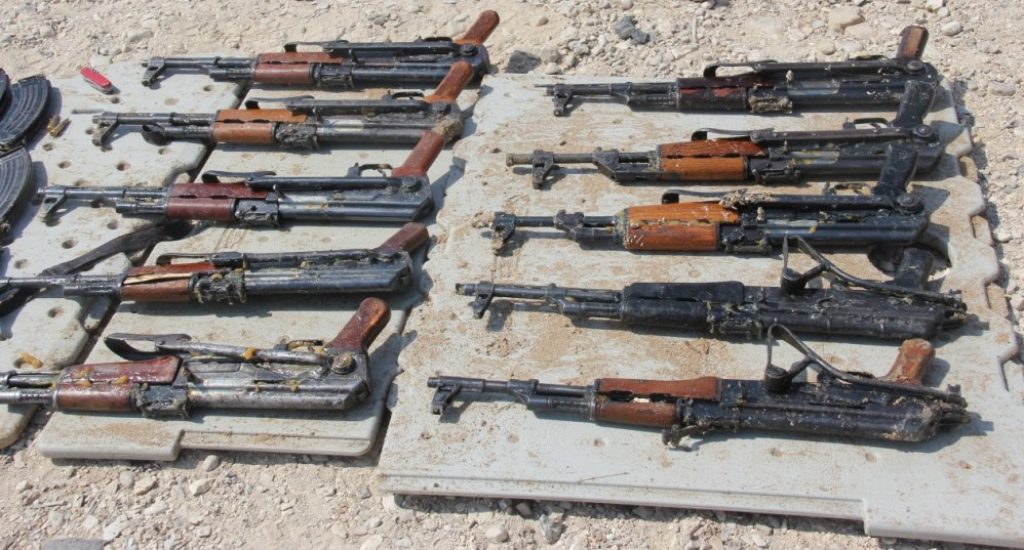
The international arms trade affects all aspects of international relations, as countries around the world buy and sell weapons to advance their foreign policy, national security, and economic interests. Yet the transfer and use of conventional weapons come with inherent risks. The international arms trade is too often poorly regulated and irresponsibly managed, creating an environment that in many cases increases the extent and deadliness of armed conflict, limits economic prosperity, and contributes to human rights abuses and humanitarian harm around the world.

The project seeks to reduce risk and minimize harm associated with the global arms trade. By bringing together governments, international and regional organizations, civil society, and the private sector in common cause, the project seeks to to address concerns surrounding conventional weapons and promotes responsible arms transfer control policies around the world.

Project Team
Research
Project Director
In Focus
Highlighting the crucial role and inherent challenges of transparency in U.S. arms transfers and military assistance programs
Exploring the causes, consequences, and solutions to unaccountability in America’s foreign and domestic security sectors
Data and tracking of arms transfers to Ukraine and analysis on potential tactical, strategic, and diplomatic consequences and risks

Research

Explainer
One year in, looking at the data, policies, and trends in the U.S. arms trade under Trump
Elias Yousif • Rachel Stohl
Policy Paper
Exploring the urgent need for transparency in the US arms trade and identifying pathways for reform
Elias Yousif
Policy Memo
How President Trump can re-orient the U.S. arms trade to deliver stronger returns for U.S. interests.
Rachel Stohl • Elias Yousif
Report
A framework for evaluating progress in the Department of Defense’s plan to prevent and mitigate civilian harm in U.S. military operations
Loren Voss
Resource
How transparency can navigate and confront the most common justifications for weapons trade secrecy – risks to operational security and proprietary commercial information
Elias Yousif
Resource
Deteriorating public reporting on U.S. arms sales and military assistance is adding to the opacity of an already obscure enterprise
Elias Yousif
Issue Brief
Exploring how distributed ledger technology can offer governments and industry improved integrity and security for conventional arms transfers
Elias Yousif • William Marshall
Policy Paper
Examining reporting patterns and identifying good practice for Ukraine’s arms suppliers
Ryan Fletcher • Rachel Stohl

Events

News & Commentary

Commentary
How Trump’s use of emergency powers to rush arms to the Middle East raises concerns about necessity, timing, and congressional oversight
Elias Yousif
Commentary
How the more frequent and substantial revisions to U.S. conventional arms transfer policies point to a strategic drift in U.S. security cooperation approaches
Elias Yousif • Rachel Stohl
Commentary
A newly released U.S. arms transfers strategy elevates economic and industrial priorities at the expense of strategic and foreign policy imperatives
Elias Yousif • Rachel Stohl
Commentary
What Denmark’s abortive purchase of a U.S. air defense system might say about the future of U.S. arms transfers to Europe
Elias Yousif
Commentary
How a 20-year agreement outlining billions in assistance to Israel undermines efforts to ensure U.S. security cooperation is strategically relevant and delivering a return for U.S. interests
Elias Yousif • Rachel Stohl
Commentary
How the shuttering of the Human Rights Reporting Gateway reimposes a blind spot for U.S. security assistance.
Elias Yousif
Commentary
After citing waste and fraud in U.S. foreign aid, the Trump administration is dismantling a key mechanism for transparency and oversight in international assistance
Elias Yousif • Seth Binder
Commentary
How President Trump’s decision to defy the norms of Congressional consultation undermines one of the last meaningful mechanisms of arms transfer oversight

Elias Yousif