



Glenn Diesen, professor at the University of South-Eastern Norway and host of the Greater Eurasia Podcast, joins us to discuss the current state of affairs in Europe, including the West’s approach to the war in Ukraine, the future of integration on the continent, and the militarization of Scandinavia.
November 10, 2025
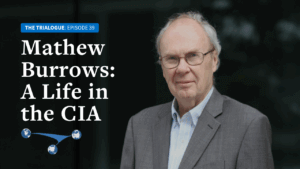
Mathew Burrows, Program Lead of the Stimson Center’s Strategic Foresight Hub, joins us to discuss his career in the CIA and the National Intelligence Council, where he was the lead author of Global Trends, a non-classified report released every four years as an aid to incoming administrations. We also discuss transformative global events of recent decades, the mechanics of predicting trends, and what policymakers often get wrong in confronting the world.
October 24, 2025

John Mearsheimer, world-renowned scholar of international relations, joins us to discuss the state of play in the Middle East, East Asia, and Eastern Europe. We also examine the relationship between realism and morality, the nature of the China threat, and the origins of “offshore balancing.”
October 10, 2025
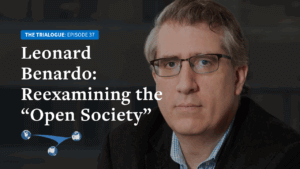
Leonard Benardo, Senior Vice President at the Open Society Foundations, joins us to discuss OSF’s emergence and evolution, defining values of open societies, and heterodox thinking for turbulent times.
October 3, 2025

Zhao Long, Deputy Director of the Institute for Global Strategic and Security Studies in Shanghai, returns to the Trialogue to discuss Beijing’s perspective on a slew of recent high-profile summits, in the context of China’s complex relations with Russia, the United States, India, and North Korea.
September 12, 2025

Samuel Moyn, the Chancellor Kent Professor of Law and History at Yale University, joins us to discuss the philosophical underpinnings of liberalism, its role in international relations, and the possibility of a multipolar liberal order emerging in a period of U.S. decline.
September 5, 2025
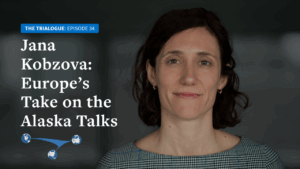
Jana Kobzova, Director of the European Security Program at the European Council on Foreign Relations and former foreign policy adviser to the president of Slovakia, joins us to discuss the European perspective on the Trump-Putin summit in Alaska, the Washington meeting between Trump, Zelensky, and top European leaders, and the future of the war in Ukraine.
August 22, 2025
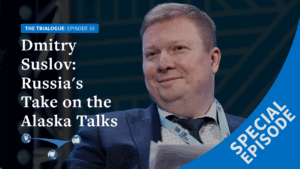
Dmitry Suslov, Deputy Director of the Center for Comprehensive European and International Studies at the Higher School of Economics in Moscow, joins us to discuss the Trump-Putin summit in Alaska and Russia’s expectations for a settlement in Ukraine.
August 21, 2025