
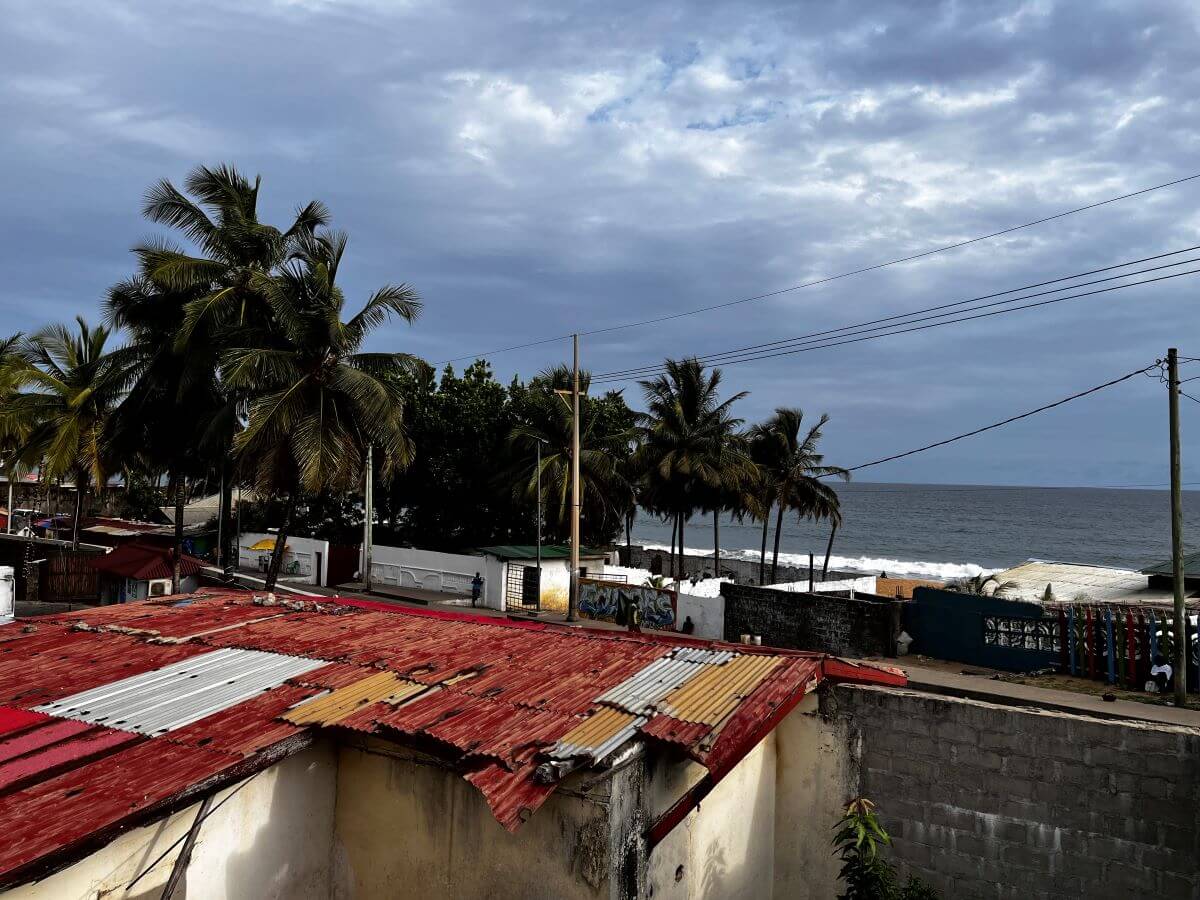
Just three blocks down from a beautiful sandy beach lies the newly established Liberian Office of the War and Economic Crimes Court (OWECC). Even in the sticky, drowsy Monrovia heat, the building hums. Young people work on laptops or watch the Office’s Director answer questions on live video. Walking down a hallway, three doors painted in a dark red with fresh laminate signs proclaim “Anti-Corruption,” “Economic Crimes,” and “War Crimes” Divisions.
The signs are a stark reminder of Liberia’s deadly civil wars. During the conflicts that engulfed the country between 1989-2003, children made up a significant portion of the fighting forces, with estimates that one out of every 10 children was recruited and used in the war effort. After the signing of the 2003 peace agreement, the UN Security Council authorized the deployment of a multinational peacekeeping force—the UN Mission in Liberia (UNMIL)—with a mandate to assist the National Transitional Government in its disarmament, demobilization, rehabilitation, and reintegration (DDRR) of former combatants, maintenance of security, and the building of governmental capacity (among other activities). UNMIL’s mandate also included child-specific protection provisions, including a call for “particular attention to the special needs of child combatants.”
As part of a larger Stimson project on ‘Advancing Child Protection Through Peacekeeping’, we traveled to Liberia in late April 2025 to undertake research on the legacy and sustainability of the mission’s child protection work, eight years since its closure. Liberia’s continued peace and stability, after UNMIL’s departure in 2018, has been widely touted as evidence of the peacekeeping mission’s success. Yet, as the energetic scenes of the OWECC emphasized, this narrative is complicated by a civilian population still seeking closure from the violence and injustices suffered in the country’s not-so-distant history.
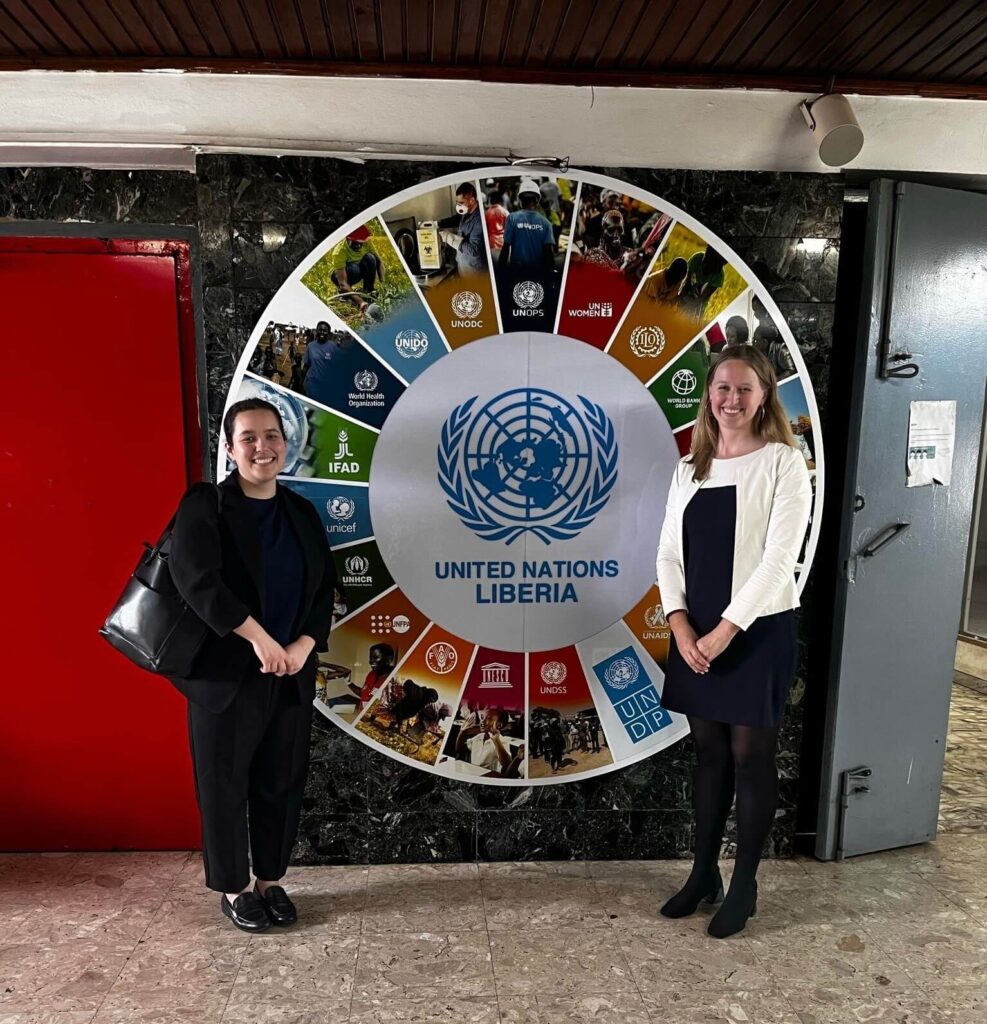
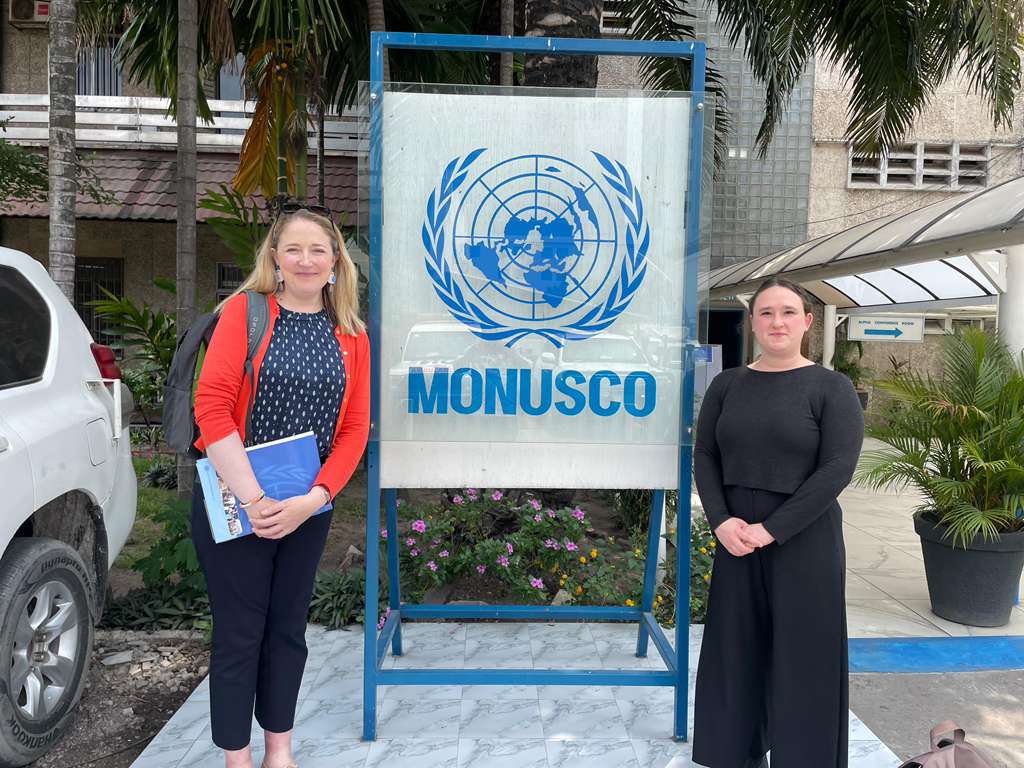
Natalie Bramlett and Julie Gregory (left to right) stand in front of the logo for the UN Country Team in Liberia.
Upon arrival in the capital of Monrovia, we found a strong desire in those we met with to discuss UNMIL and its impact in Liberia, despite the time that has passed since the mission’s withdrawal. Everywhere we went—whether it be in the halls of a government ministry or within the four walls of a local NGO—we were greeted warmly, with many interlocutors in government and civil society describing UNMIL as a positive force for peace, while also highlighting lessons they hope the UN takes away from its deployment in country.
In driving through the city on the way to meetings, the UN compound, with its impressive blue-and-white building—nine stories tall—sits prominently on the road that leads to some of Liberia’s key government institutions, such as the Ministry of Foreign Affairs, Executive Mansion, and National Legislature. This striking edifice remains a lasting reminder of UNMIL’s peacekeeping presence, since repurposed into the headquarters for UN agencies. Across the city in Congo Town, the government continues to build upon the peace and stability that UNMIL left behind, as it puts the finishing touches on the newly constructed Ministerial Complex. The inclusion of the Ministry of Gender, Children, and Social Protection (MoGCSP) at the front of this brand-new Complex can be interpreted as a commitment from the Liberian government to prioritize challenges affecting children, women, and disadvantaged populations and strengthen interministerial collaboration on these issues.
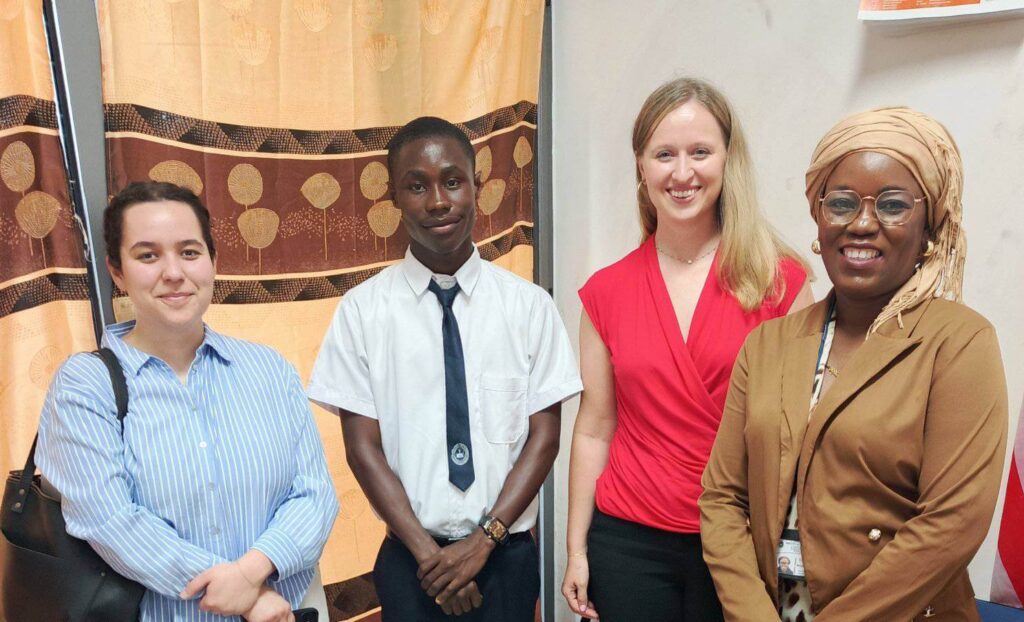
Natalie Bramlett and Julie Gregory were honored to meet Roberto R. Cooper, Jr., Speaker of the National Children’s Representatives Forum, and Victoria Williams Zaway, Director of the Children Division at MoGCSP.
Over the course of our week-long trip, we sought insights on UNMIL’s implementation of its child protection mandate from a wide range of actors in Liberia, including government officials, UN agencies, youth activists, and child-focused civil society organizations. We engaged with as many people connected to UNMIL’s child protection work as possible: former UNMIL personnel and persons who had worked at the cantonment (disarmament) camps; social workers who ran interim care centers for then child combatants; and former child combatants themselves, now grown up with children of their own. And while most of our time was spent in Monrovia, we also traveled to Buchanan City to gain perspectives from outside the capital.
One of the most poignant experiences of the trip occurred in Buchanan, where we spoke with a group of former child combatants who shared personal stories and reflections on the disarmament process and the ongoing impact of the civil wars on their lives. One former child soldier vividly described how his commander had taken his gun from him, promising to return from Monrovia with the disarmament cash incentive provided by the UN, but instead pocketed it for himself. Over twenty years later, the former child soldier reflected angrily on how his commander had robbed him of the opportunity to be able to participate in the DDRR process, depriving him of the educational benefits and reintegration support. Other former child combatants and those who worked in interim care centers spoke about the inadequacies of the short period of rehabilitation and reintegration programming. “When a mind is not molded to be placed back into society with others, it creates further harm,” a former child soldier told us.
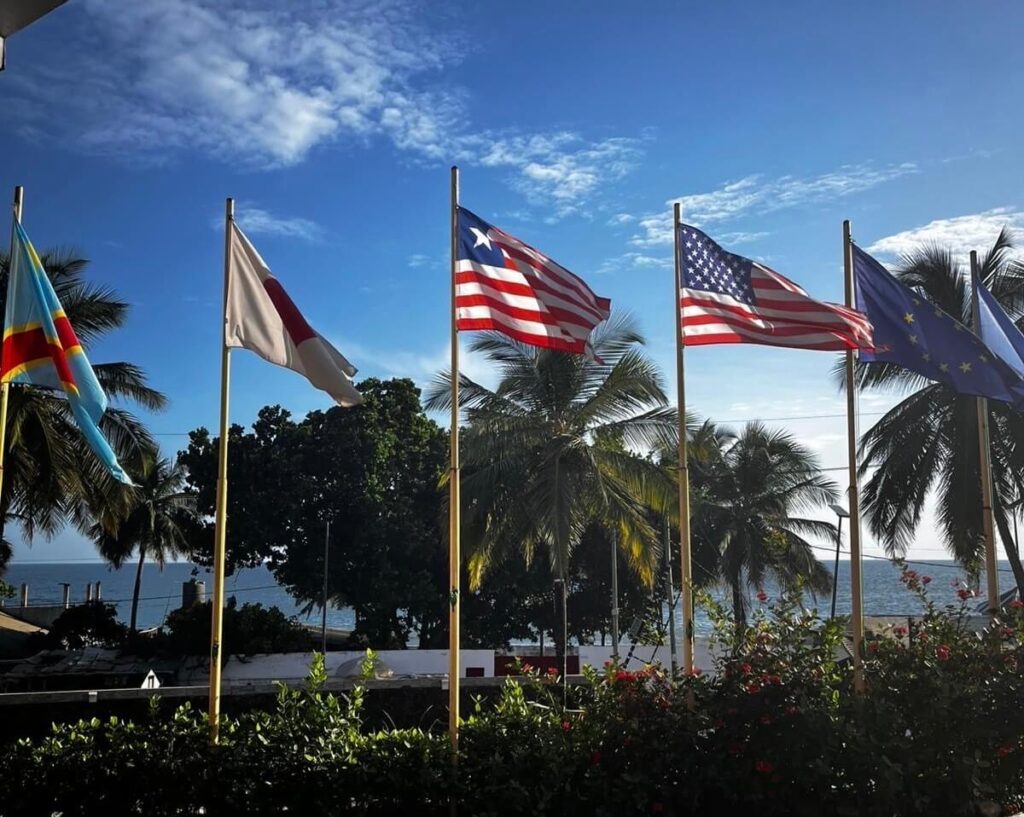
The Liberian flag, surrounded by others, blows in the wind in Monrovia.
At the end of each day in Liberia, as we reflected on the day’s conversations, we kept coming back to an observation. While UNMIL’s presence and implementation of its mandate helped the country find its footing at an uncertain time, the wounds left by the country’s civil wars appear ever-present for many Liberians. Many we spoke to traced connections from gaps in the DDRR process to current societal ills, such as threats of political and mob violence, disadvantaged youth and children living in the streets, widespread substance abuse, and high levels of rape and sexual abuse (including against children). The former child combatants we spoke with, now young adults, described how they had avoided going back to their communities of origin, burdened by social stigma and limited economic opportunities.
As such, Liberia’s nascent Office of the Economic and War Crimes Court seems to serve as a beacon of hope for those who believe that transitional justice is necessary for the country’s continued healing and unity. Looking towards the future, many Liberians shared their desire that the country’s experience with UN peacekeeping—including child protection—be used to help inform the UN’s approach in other contexts coming out of conflict, emphasizing their gratitude to UNMIL while hoping that the peace it left behind will endure.
The Stimson team is grateful to the individuals interviewed for their time and engagement on this project. Stimson’s research in Liberia as part of this project is supported by Global Affairs Canada. The findings from this trip will be featured in a forthcoming Stimson Center paper. All views reflected in this piece are the responsibility of the authors.

Current Geopolitics Shift Deep-Sea Mining Debates