
Highlights
18,398 MTU spent nuclear fuel in storage (2017)
35,518 MTU spent nuclear fuel projected by 2050
1966 First year of commercial nuclear operation
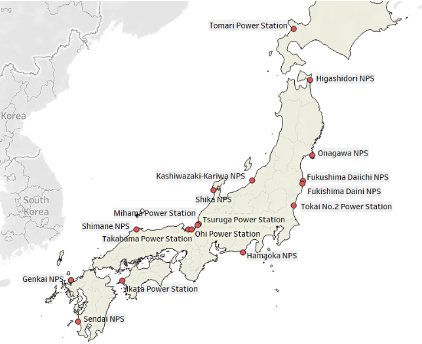
9 operating nuclear power reactors
3 operating research and test reactors
24 power reactors awaiting restart authorization
35.95 GW(e) installed nuclear capacity (2019)
6.2% nuclear share of domestic energy production (2018)
Regulator: Nuclear Regulation Authority (since 2012)
Power Operators: 9 companies
Management and Disposal of Spent Nuclear Fuel
Practices
- From 1969 to July 2001 approximately 7,100 MTU of spent fuel were exported to the UK and France for reprocessing
- SNF is stored wet or partially dry at each NPP and an independent interim storage facility; 3,393 metric tons are also stored at Rokkasho Reprocessing Plant, which has not yet begun commercial operation
- Research reactor fuel is either returned to the U.S. or reprocessed
- Japanese fuel cycle research areas include advanced reactors that could impact fuel reprocessing decisions, including high-temperature gas-cooled reactors and fast breeder reactors
Obligations
- Japan has had an IAEA safeguards agreement (INFCIRC/255) since 1977, and an additional protocol since 1999
- Japan acceded to the Joint Convention in 2003
- Reprocessing is a stated part of Japan’s SNF management policy
- The Japanese government stated in the 2014 Strategic Energy Plan its intent to expand SNF storage, especially intermediate and dry
- The Spent Nuclear Fuel Reprocessing Implementation Act lays out the reprocessing plan, which promotes plutonium use in light water reactors
- Nuclear Waste Management Organization (NUMO) is the entity responsible for HLW and SNF disposal


Community Adaptation for a Water Festival Without Clean Water