On this page

Spotlight

More Water is Needed to Charge the Mekong Flood Pulse

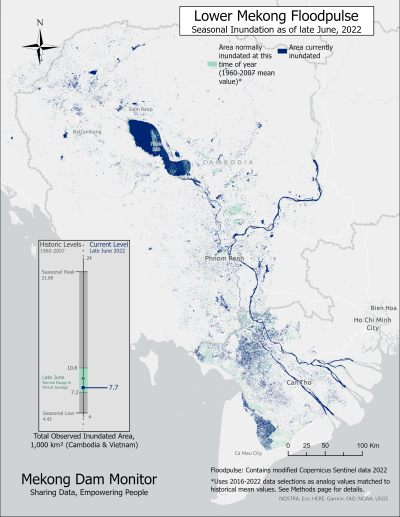
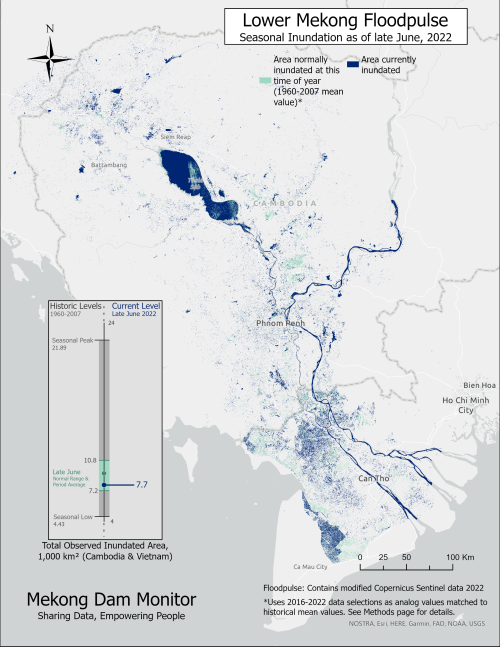
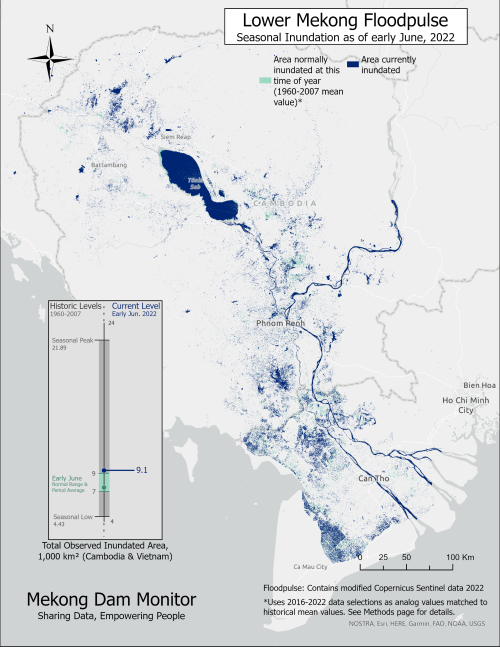
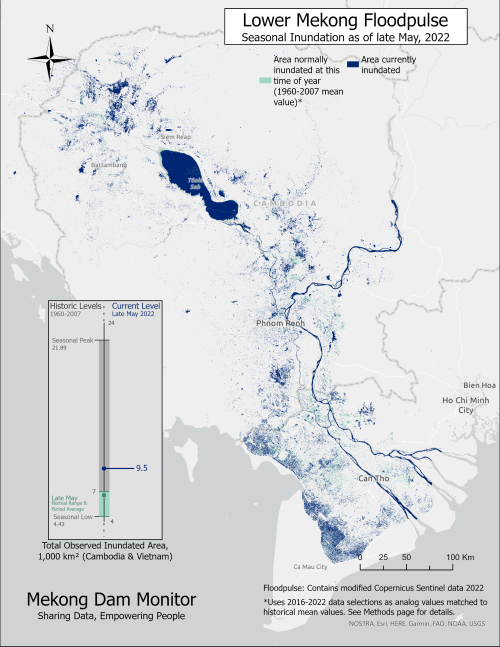
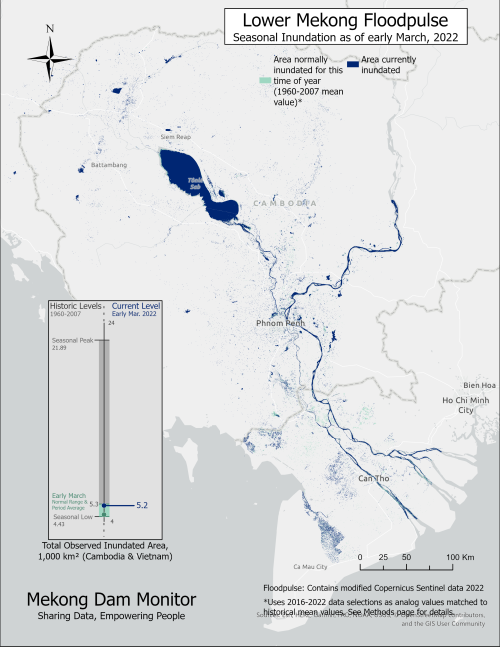
The data shows that despite a wet start to the wet season in late May and early June, the Mekong flood pulse is now trending downward.

There is less seasonal flooding in late June compared to early June of 2022, when typically the opposite is true. This is due to both climate factors and early wet season dam restrictions upstream. Natural seasonal flooding in late June is at the lower end of normal flooding levels, and the data currently shows no signal of the Tonle Sap reversal.

More rain and fewer dam restrictions upstream would strengthen the flood pulse and promote local fisheries and agriculture.

F2022L06LMF

What Happened Last Week?

  • Where’s the Water: Altogether dams in China restricted 2.5 billion cubic meters, whereas downstream dams totaled a minor net release of water.   Where is the water?

  • River Levels: Upstream dam restrictions are really starting to show at Chiang Saen, Thailand where Eyes on Earth estimates 61% of water is missing. The river level at Stung Treng, Cambodia is now about 0.70 meters below historical average. See how this looks.

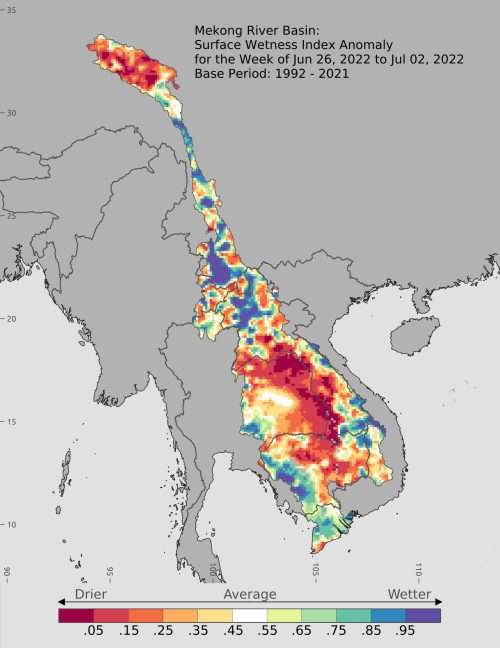
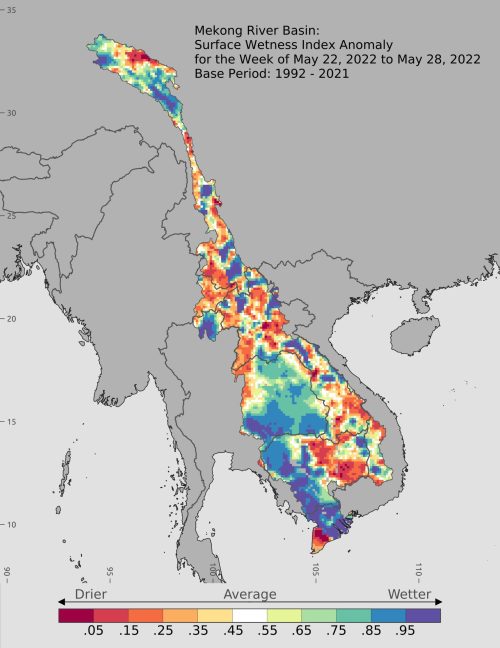
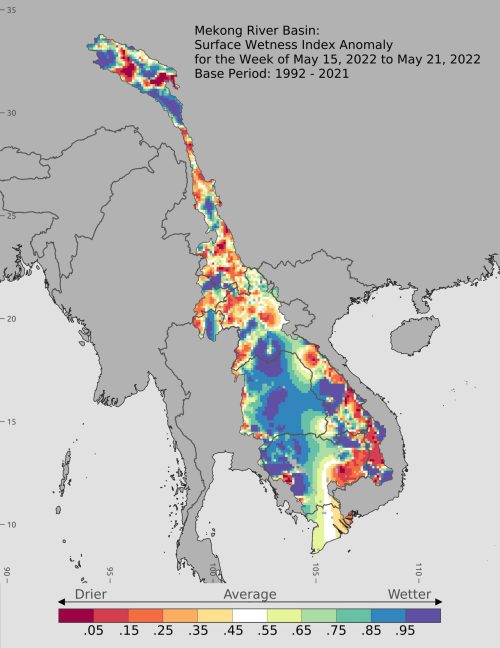
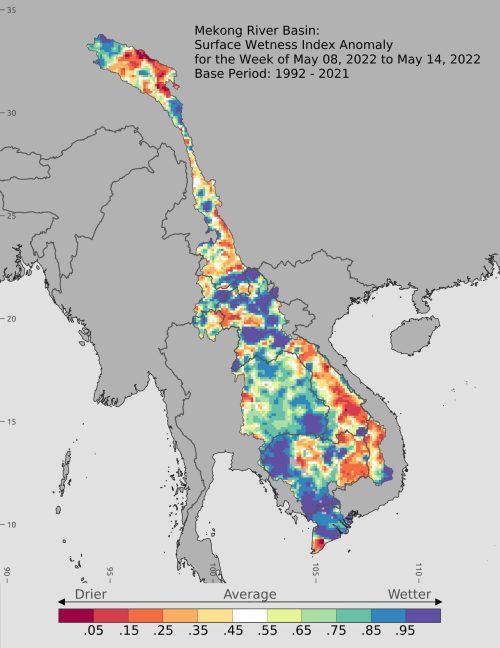
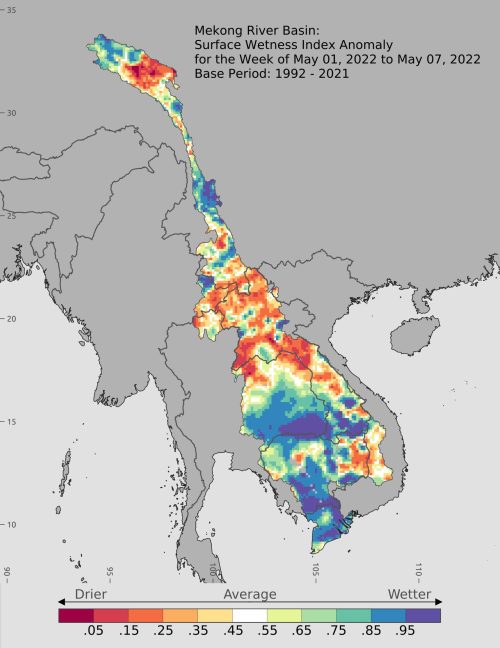
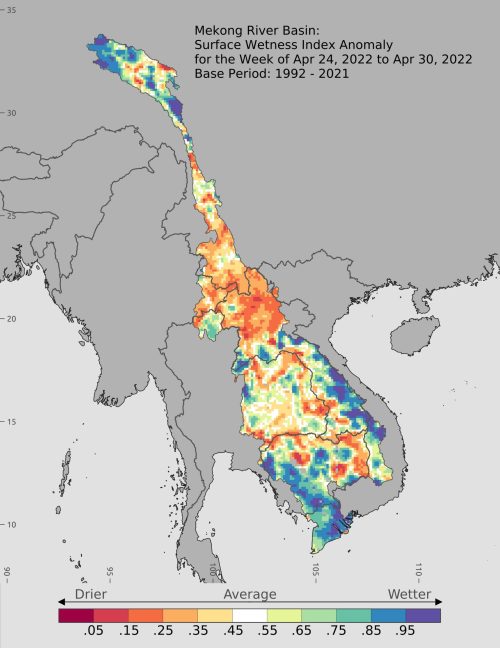
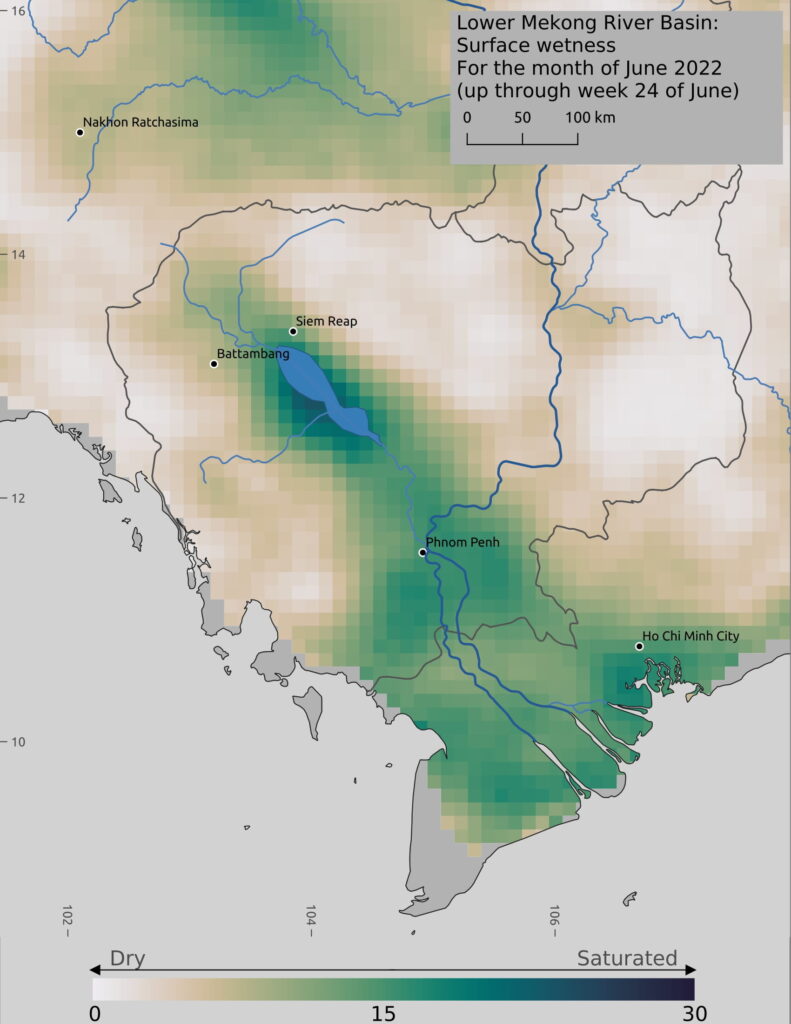
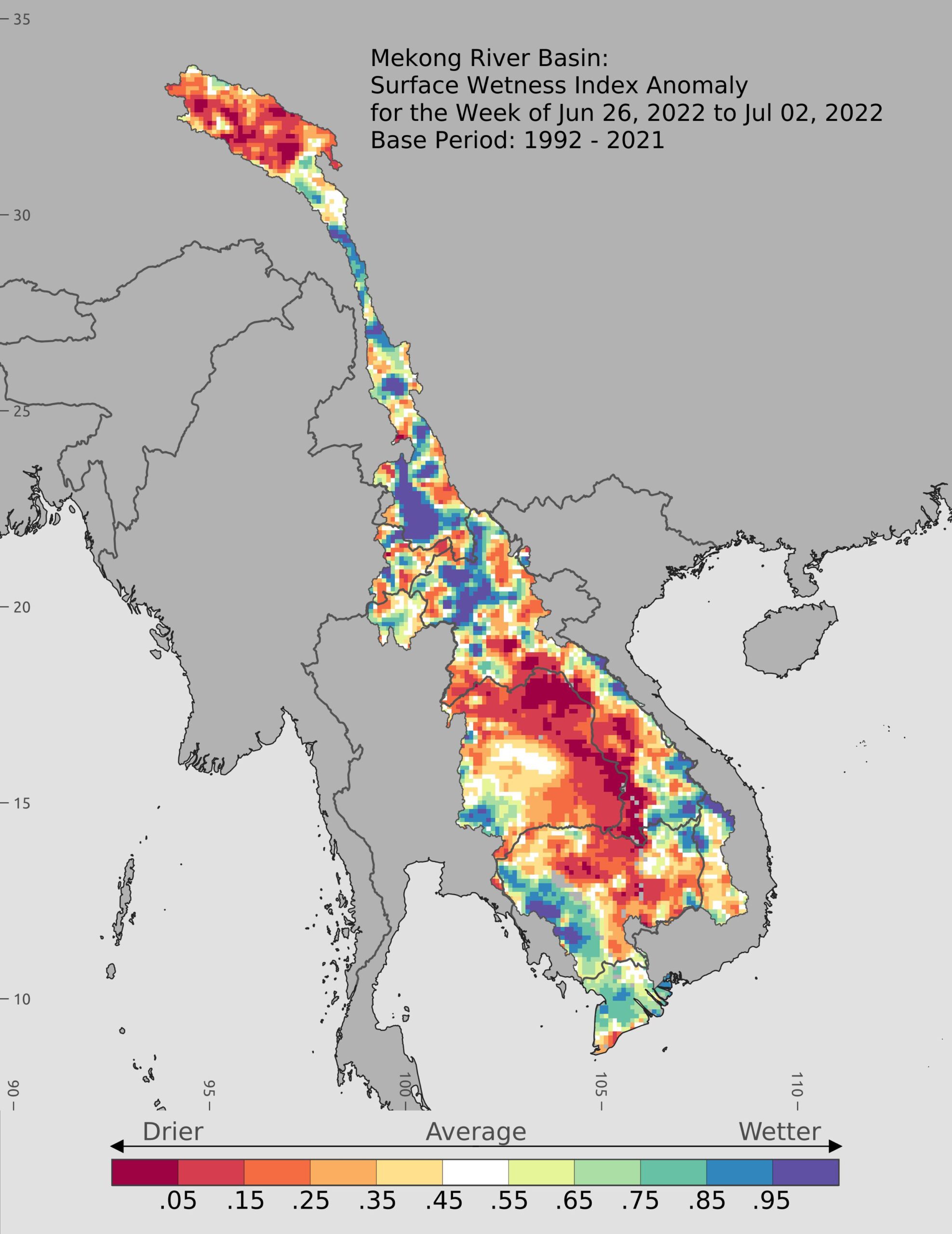
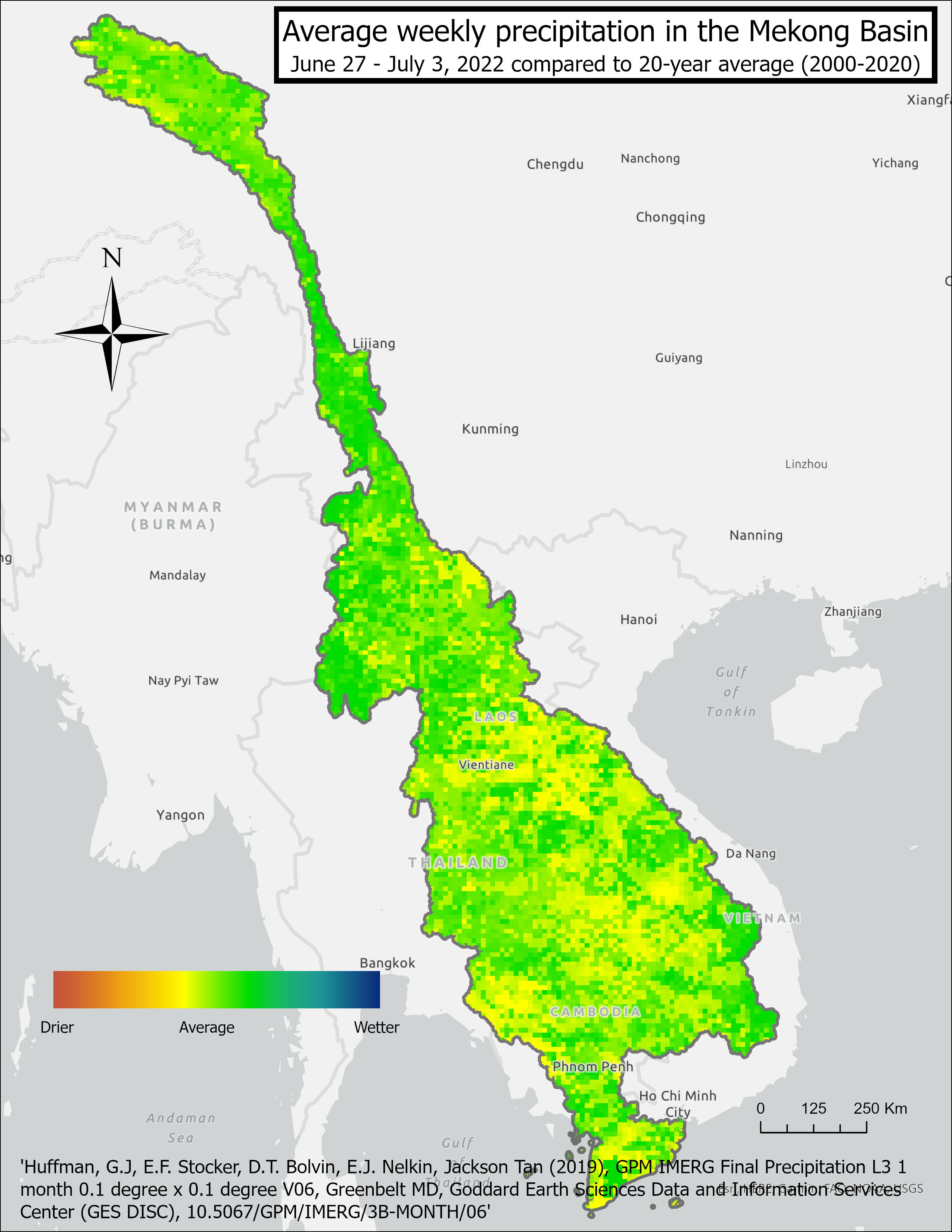
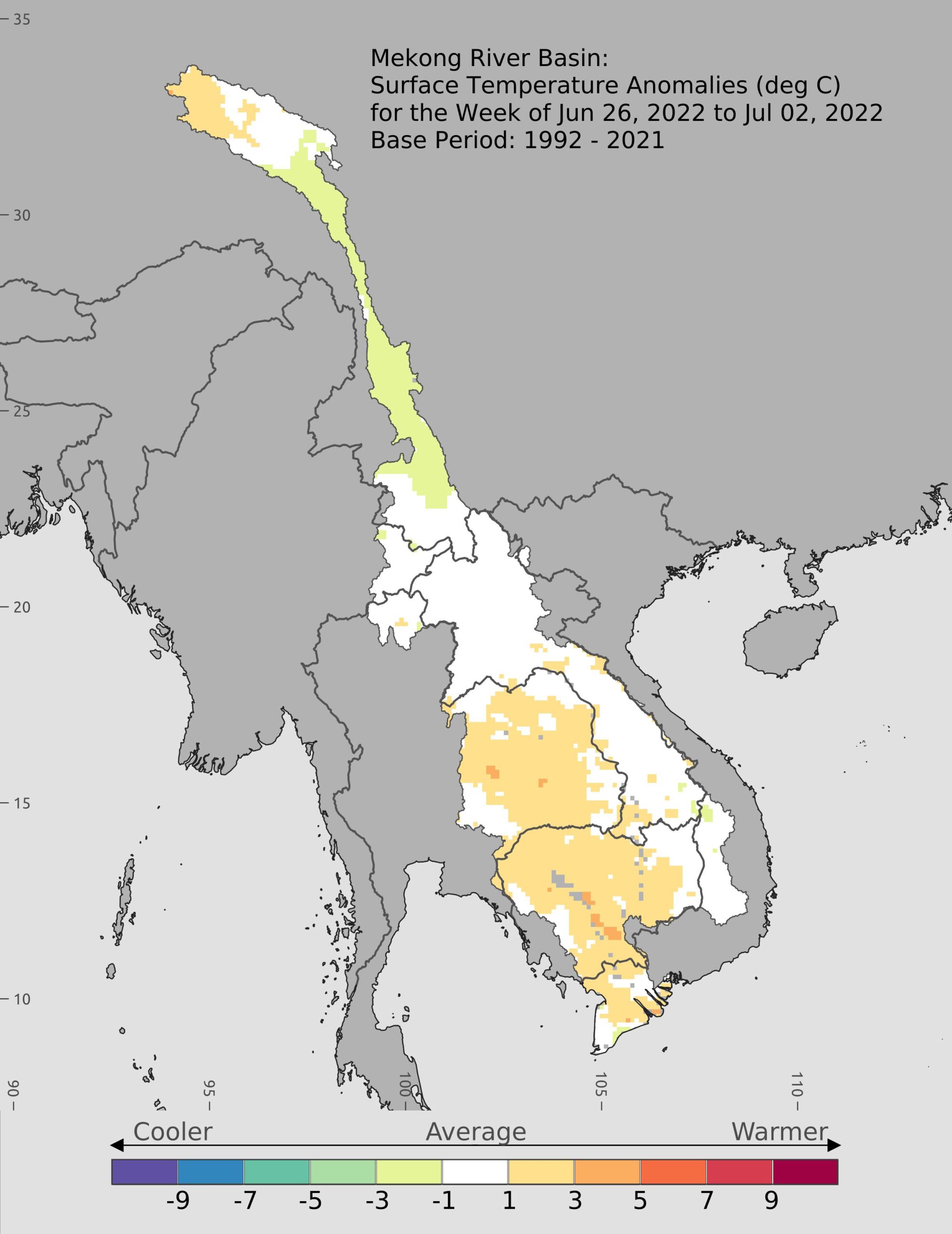
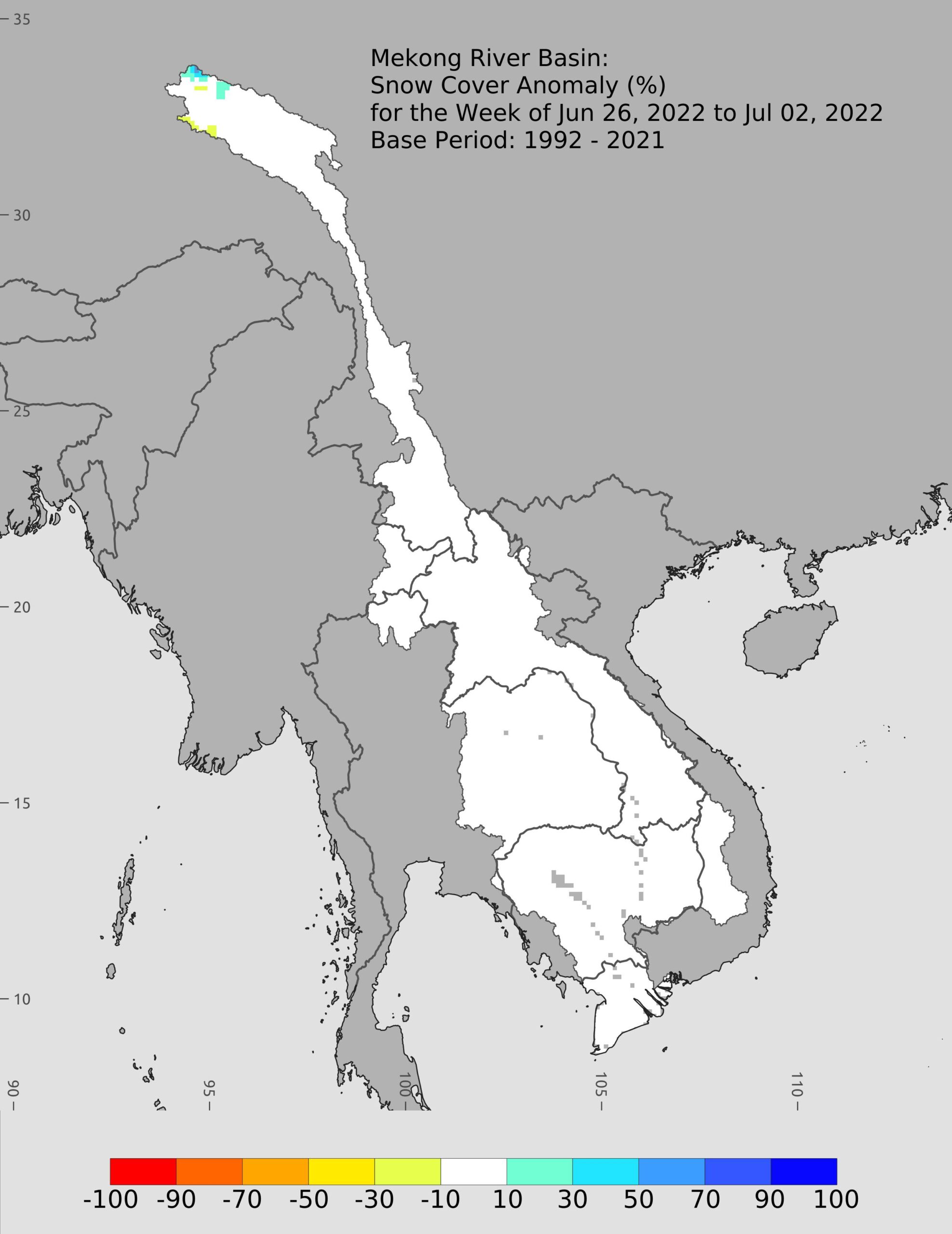
  • Wetness and Weather: Most of NE Thailand and central Cambodia are much drier than expected, which is a major reversal of the wet conditions they had been experiencing. It is also drier than expected in the headwaters of the Mekong Basin. Northern Laos and the 3S Basin are wetter than normal. Temperatures were generally above average in the lower basin, where it was drier than average. Temperatures were cooler than expected in areas of the upper basin where it was wetter than average. See the maps.

Image of the Week

Photo: Planet Lab

Xiaowan and Nuozhadu Dams in China begin wet season restrictions

China’s major dams at Nuozhadu and Xiaowan are starting restrictions earlier than normal this year. Together they restricted 2.5 billion cubic meters of water and the impact is clearly showing up as river levels in Chiang Saen and other points downstream are now going down at a time when they should be going up. Nuozhadu is currently at its typical late August reservoir level and Xiaowan is currently at its late July reservoir level. These dams will impact mainstream river levels much earlier than normal this wet season.   

Where is the Water?

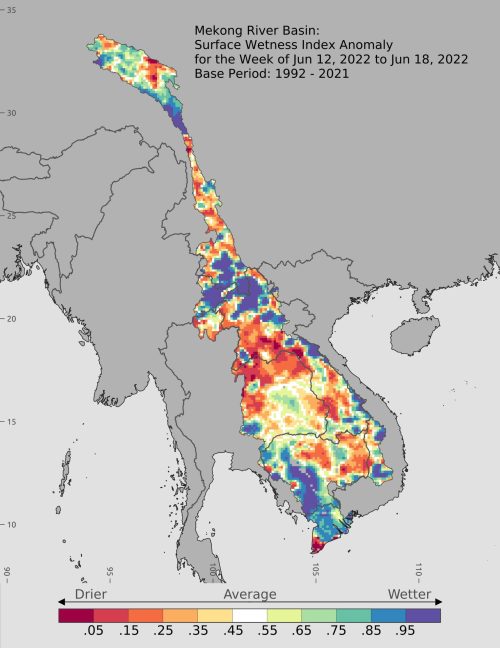
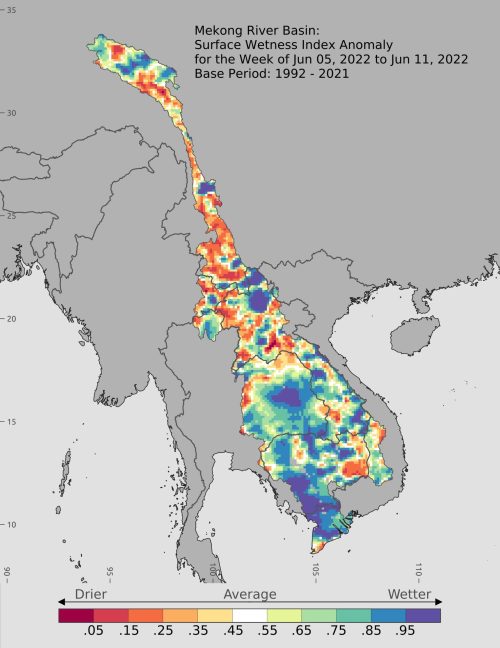
Surface Wetness Anomaly Map

How Much Water is in Reservoirs by Country?

Current volume (billion cubic meters) of usable water across the 45 largest reservoirs in the Mekong Basin. 

How Much Water is in Reservoirs over the Past Year?​

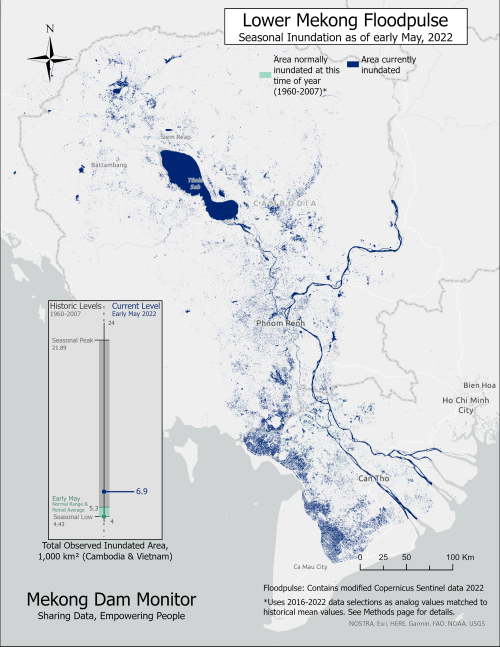
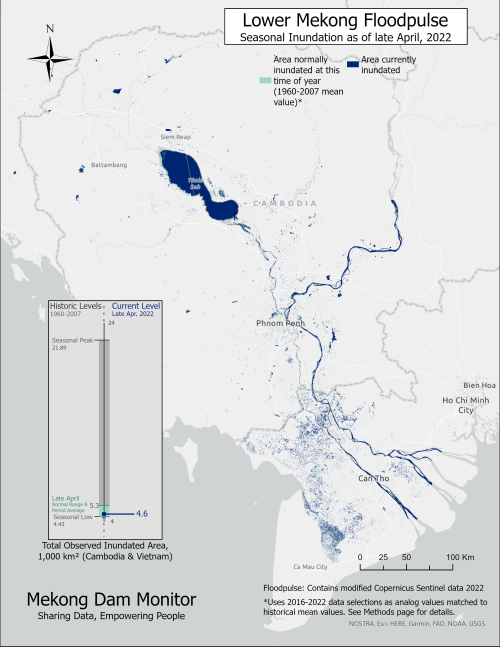
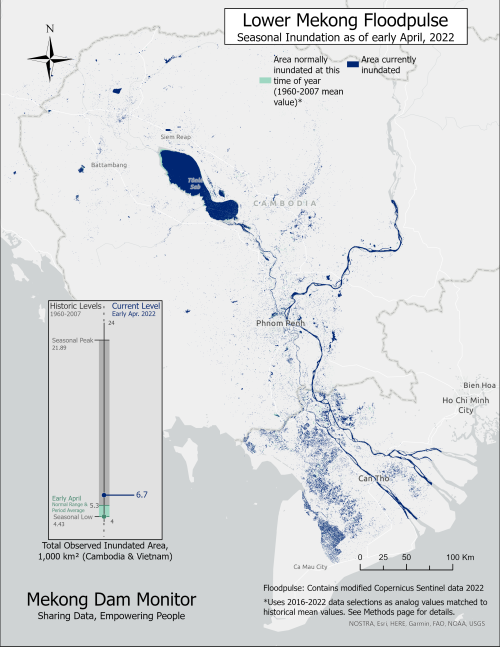
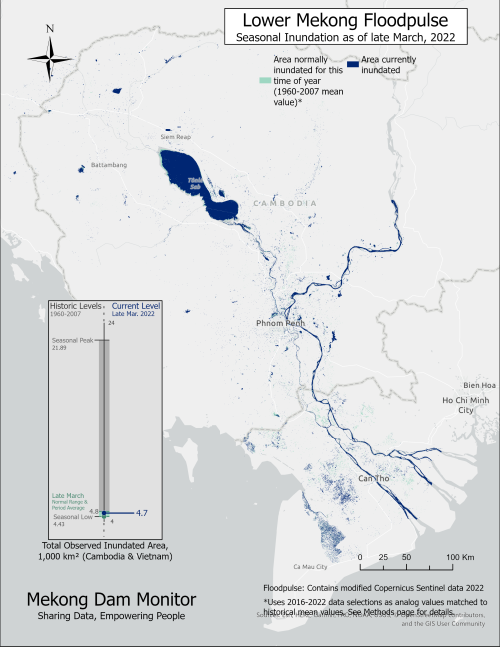
Lower Mekong Floodpulse

Lower Mekong Surface Wetness

What Should River Levels Be?

Chiang Saen Gauge (Thailand)

Stung Treng Gauge (Cambodia)

Chau Doc Gauge (Vietnam)

For more info, click Natural River Flow Models in the top menu.

How was the Weather Last Week?

For more information, click Compare Maps and Data in the top menu.

Which Dams Impacted the Most?

Reservoirs with an estimated change of more than 50 million cubic meters (m³) of water over last 7 days.

For more info, click Virtual Gauges in the top menu.

Current Reservoir Volume for 45 Dams

For more info, click Virtual Gauges in the top menu.

Subscribe to the Mekong Dam Monitor Update
Receive weekly alerts and advisories from the Mekong Dam Monitor
Emails come from the Stimson Center. Read our Privacy policy. You can opt-out of emails at any time.